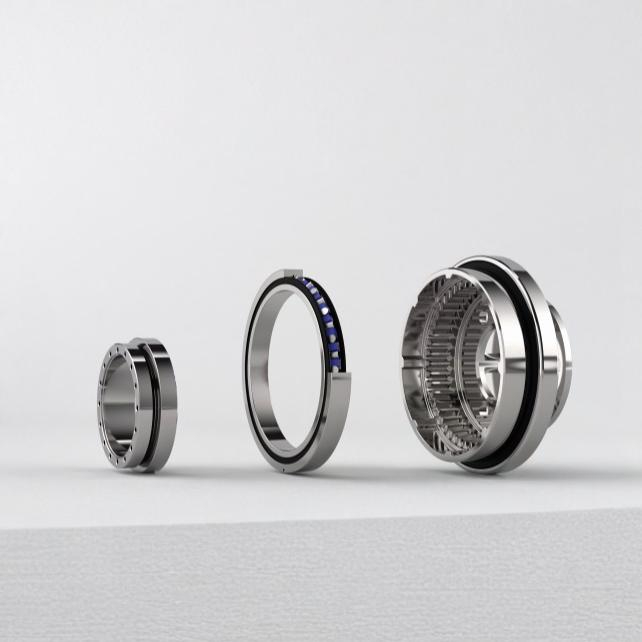
| In the ever-evolving landscape of smart manufacturing, integrated bearings have emerged as a pivotal component driving efficiency and innovation. As industries strive to optimize performance and reduce operational costs, the role of integrated bearings becomes increasingly significant. This article delves into the intricate world of integrated bearings, exploring their impact on smart manufacturing, with a focus on Gear Reducer Bearings, AGV Bearings, and Robotics Bearings. By examining the technological advancements and applications of these bearings, we aim to provide a comprehensive understanding of their contribution to modern manufacturing processes. The Evolution of Integrated BearingsIntegrated bearings have undergone significant transformation since their inception. Initially designed to support basic mechanical functions, they have evolved into sophisticated components that integrate multiple functionalities such as sensors, gears, and linear motion systems. This evolution is driven by the need for compact, high-performance systems that can meet the demands of modern manufacturing environments. Companies like BOM Bearing have been at the forefront of this innovation, leveraging advanced technology and precision engineering to redefine the capabilities of integrated bearings. Technological AdvancementsThe technological advancements in integrated bearings are largely attributed to the integration of cutting-edge materials and manufacturing processes. The use of high-grade materials such as bearing steel and low carbon steel enhances the durability and performance of these components. Additionally, advanced manufacturing techniques, including automated production and rigorous quality control, ensure exceptional precision and consistency. These innovations have enabled integrated bearings to achieve higher load capacities and reduced dimensions, catering to the unique demands of industries such as robotics and automation. Customization and FlexibilityOne of the key advantages of integrated bearings is their ability to be customized to meet specific application requirements. Manufacturers can tailor the dimensions, materials, and performance specifications of these bearings to suit the unique needs of their systems. This flexibility is particularly beneficial in industries where precision and reliability are paramount, such as aerospace and medical equipment. By offering bespoke solutions, integrated bearings empower engineers to optimize their designs and achieve superior performance. Applications in Smart ManufacturingIntegrated bearings play a crucial role in enhancing the efficiency and reliability of smart manufacturing systems. Their applications span a wide range of industries, including robotics, automation, and warehousing logistics. In robotic systems, for instance, integrated bearings are essential for ensuring precise power transmission and operational accuracy. They enable robots to operate in extreme environments, thanks to their advanced waterproof and dustproof capabilities. Gear Reducer BearingsGear reducer bearings are integral to the functionality of gearboxes and drive systems. These bearings are designed to support significant axial forces, ensuring smooth and efficient operation under heavy loads. Their robust construction and low friction design minimize wear and tear, extending the service life of the equipment. In addition, gear reducer bearings contribute to energy efficiency by reducing heat generation and energy loss. AGV BearingsAutomated Guided Vehicles (AGVs) rely on integrated bearings for reliable and continuous operation. These bearings provide superior assembly precision, ensuring exact fit and alignment while reducing installation costs. The compact design of AGV bearings is perfect for space-constrained applications, while their enhanced load capacity meets demanding weight requirements. This comprehensive approach enables manufacturers to build more efficient and reliable automated storage systems. Robotics BearingsIn the realm of robotics, bearings are crucial for achieving high precision and operational accuracy. Integrated bearings in robotic systems must handle both radial and axial loads, ensuring reliable support in demanding environments. Their innovative design reduces friction and heat generation, enhancing energy efficiency and prolonging service life. By optimizing entire drive systems, robotics bearings enable the creation of products that exceed design aspirations. Challenges and SolutionsDespite the numerous advantages of integrated bearings, manufacturers face several challenges in their implementation. These challenges include maintaining precision under extreme conditions, achieving compact designs without compromising performance, and ensuring long-term reliability. However, advancements in engineering and manufacturing have provided solutions to these challenges. Precision Under Extreme ConditionsTo maintain precision under extreme conditions, integrated bearings are engineered with advanced sealing technologies that prevent contaminants from entering the bearing chambers. This ensures maintenance-free operation and enhances durability. Additionally, the use of high-quality materials and rigorous quality control processes guarantees consistent performance even in harsh environments. Compact Design Without CompromiseThe drive toward equipment miniaturization presents unique challenges in maintaining performance within confined spaces. Integrated bearings address this challenge by optimizing entire assemblies rather than individual components. This approach transforms space constraints into opportunities for innovation, allowing manufacturers to achieve their space-saving goals while enhancing functionality. Ensuring Long-Term ReliabilityIn applications where failure is not an option, traditional approaches to durability often fall short. Integrated bearings tackle the challenges of extreme loads and harsh conditions through a comprehensive system approach. By leveraging advanced engineering capabilities, manufacturers can enhance not just bearing performance, but entire power transmission assemblies, setting new standards in equipment reliability and service life. ConclusionIntegrated bearings are at the heart of smart manufacturing, driving efficiency and innovation across industries. By combining advanced technology with precision engineering, these components offer unparalleled performance and reliability. As manufacturers continue to seek ways to optimize their systems, the role of integrated bearings will only grow in importance. For those looking to enhance their manufacturing processes, exploring the potential of integrated bearings is a worthwhile endeavor. FAQsQ: What are the key benefits of integrated bearings in smart manufacturing? Q: How do integrated bearings contribute to energy efficiency? Q: Can integrated bearings be customized for specific applications? Q: What industries benefit most from integrated bearings? Q: How do integrated bearings address the challenge of maintaining precision under extreme conditions? Q: What makes gear reducer bearings essential in smart manufacturing? Q: How do AGV bearings enhance automated storage systems? |