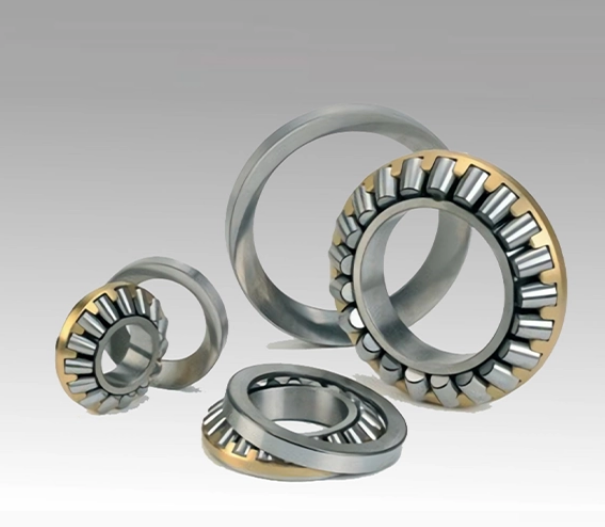
| The modern engineering landscape is witnessing a decisive shift toward compact precision. In industries ranging from medical imaging to semiconductor manufacturing, space has become a premium commodity, yet the demand for structural rigidity has never been higher. Engineers frequently face a "two-bearing" problem where traditional designs require separate radial and thrust bearings to stabilize a shaft. This approach consumes valuable vertical space and complicates assembly tolerances. The cross roller bearing (CRB) offers a sophisticated answer to this architectural challenge. By arranging cylindrical rollers perpendicularly, this component evolves from a simple bearing into a structural solution capable of handling radial, axial, and moment loads simultaneously. It simplifies mechanical design while often outperforming complex duplex bearing pairs. This article provides an evidence-based review of why you should consider this technology for your next high-precision project. We will analyze performance characteristics, evaluate Return on Investment (ROI) regarding assembly time versus component cost, and outline critical selection criteria such as cage types and mounting tolerances. Key Takeaways
The Primary Advantage: Handling Multi-Directional Loads in Single PlanesThe defining feature of a cross roller bearing is its internal geometry. Cylindrical rollers are arranged perpendicularly to one another in a 90° V-groove, separated by spacers. This orthogonal arrangement fundamentally changes how the bearing interacts with forces. In standard ball bearings, load transfer occurs through "point contact." Under heavy stress, this single point can deform, limiting stiffness. Cross roller bearings utilize "line contact." The cylindrical roller makes contact along its entire length. This results in exponentially higher rigidity and load-carrying capacity per unit of volume. Because the rollers are crossed, half of them handle loads in one direction while the other half handle loads in the opposing direction, yet they all contribute to the overall structural integrity. Solving the "Overturning Moment" ProblemThe most significant engineering advantage is the ability to handle moment loads—tilting forces that try to flip a rotating axis—without a second support bearing. In a traditional setup, resisting these moments requires spacing two bearings far apart to create a lever arm. This eats up shaft length. A cross roller bearing creates a "virtual" lever arm within its own raceway due to the angular contact of the rollers. This capability is critical in robotics, particularly in end-effectors and the waists of a humanoid robot. These applications involve high leverage forces but suffer from severe space constraints. By using a single CRB, designers can reduce the joint's axial length, making the robot lighter and more agile. Space and Weight EfficiencyEfficiency in design often comes down to reducing part counts and housing complexity. By eliminating the need for a second bearing and the associated spacers, shims, and housing bores, you significantly reduce the overall weight of the assembly. For applications like aerospace gimbals or portable medical devices, where every gram impacts performance, ultra-thin cross roller bearings provide a solution. These specialized units offer the same multidirectional load handling in profiles that are sometimes only a few millimeters thick, allowing for compact designs that were previously impossible with conventional angular contact bearings. Precision and Stiffness: The Engineering Case for CRBsWhen microns matter, stiffness becomes the primary metric for bearing selection. The elastic deformation of a bearing under load directly correlates to the positioning error at the tool point or sensor. Deflection MetricsDue to the line contact geometry mentioned earlier, CRBs exhibit minimal elastic deformation. When a moment load is applied, the rollers resist displacement far more effectively than balls. In optical alignment systems or semiconductor wafer handling, this stiffness ensures that the center of rotation remains fixed even when the payload shifts its center of gravity. This stability allows for faster settling times and higher throughput in automated manufacturing processes. Zero Clearance and PreloadPrecision applications rarely tolerate "play" or backlash. Cross roller bearings are frequently manufactured with negative clearance, also known as preload. This means the rollers are slightly larger than the space between the raceways, ensuring they are always under compression. This preloaded state eliminates the non-linear deflection zone that occurs when a bearing first takes up a load. It is particularly relevant for high precision cross roller bearings utilized in a harmonic reducer. In these reduction gears, any backlash translates to positioning errors at the robot output. The high stiffness of the CRB ensures that the motion input translates directly to output without hysteresis loss. Vibration DampingA less obvious but equally critical advantage is vibration characteristics. Linear guides often use recirculating balls, which can create small pulsations as the balls enter and exit the load zone. Cross roller bearings are non-recirculating. The rollers stay in continuous contact with the raceway. This design yields consistent friction torque and eliminates circulation vibration. For scanning applications, such as CT scanners or high-resolution surveillance cameras, this results in smoother motion and clearer data acquisition. Cage vs. Spacer vs. Full Complement: A Hidden Performance VariableSelecting a cross roller bearing is not just about size; the internal architecture dictates lifespan and suitability for specific environments. You must move beyond general advantages and choose the correct separation method for the rollers. Architecture TypeKey CharacteristicPrimary BenefitTypical LimitationResin Spacer / SeparatorSeparates rollers to prevent frictionLow friction, smooth rotation, higher RPMSlightly reduced load capacity due to fewer rollersMetal SpacerTemperature/Vacuum resistantSuitable for vacuum, high-heat, or cleanroomHigher cost, risk of metal-on-metal wear if unlubricatedFull ComplementNo cage; rollers touch directlyMaximum load capacity (high roller density)Higher friction, lower speed limitsSpacer Retainers (Resin/Plastic)For most general automation and robotic applications, resin spacers are the standard. They prevent rollers from rubbing against each other, which keeps friction torque low and stable. This allows for higher rotational speeds. However, the space taken by the separator means there are slightly fewer rollers in the raceway compared to a full complement design. Spacer Retainers (Metal)In environments where outgassing is a risk, such as high-vacuum chambers or semiconductor manufacturing, plastics are often prohibited. Metal spacers provide the necessary separation without releasing volatile compounds. They also withstand higher operating temperatures that would melt or deform resin cages. Full Complement (No Cage)When the application involves heavy lifting and slow speeds, high load cross roller bearings utilizing a full complement design are the optimal choice. By removing the cage entirely, manufacturers can pack more rollers into the raceway. This maximizes the contact area and static load rating. The trade-off is higher friction due to counter-rotational contact between adjacent rollers, making this unsuitable for high-speed continuous rotation. The "Cage Creep" PhenomenonA specific risk exists in applications involving vertical axis oscillation (short strokes up and down). Gravity can cause the cage or separator to drift from the load center over time, a phenomenon known as cage creep. Eventually, the cage hits the travel limit, causing sliding and premature wear. In these scenarios, "anti-creep" mechanisms, such as rack-and-pinion systems or stud rollers, are necessary to mechanically force the cage to stay aligned with the motion. TCO and Manufacturing: Is the Premium Cost Justified?Procurement teams often hesitate at the initial price tag of a cross roller bearing. A single unit is undeniably more expensive than a standard deep groove ball bearing. However, looking at the Total Cost of Ownership (TCO) and the total Bill of Materials (BOM) reveals a different story. Component Cost vs. System CostThe ROI argument relies on architectural simplification. Using a CRB allows you to eliminate a second bearing. This reduces machining time because you are boring one housing seat instead of two (which must be perfectly concentric). It also simplifies assembly by removing the need for complex shimming to establish preload between two separate bearings. When you factor in labor savings and reduced machining hours, the system cost often breaks even or drops below traditional designs. Customization PotentialManufacturers can further reduce costs through customized cross roller bearings. Standard bearings usually require a separate housing flange to clamp them in place. Customized versions can integrate mounting holes directly into the inner and outer rings. This feature allows the bearing to bolt directly to the robot arm or turntable, completely eliminating the need for intermediate flanges or housings. This integration drastically reduces the part count and potential failure points. Installation TimeMany CRBs feature split-ring designs (either the inner or outer ring is split) secured by a holding ring. This allows for easier insertion of rollers and adjustment of preload during manufacturing. For the end-user, this means consistent performance without the skilled labor required to match-grind spacers for duplex bearing pairs. Implementation Realities: Constraints and Trade-offsWhile powerful, cross roller bearings are not a universal fix. Implementing them requires strict adherence to engineering constraints. Trusting this technology means understanding where it fails.
Selection Checklist: Determining the Right SpecificationTo ensure a successful design, follow this checklist when specifying a cross roller bearing:
ConclusionCross roller bearings represent a strategic choice for high-moment, limited-space applications. They offer a "one-bearing" solution that dramatically simplifies mechanical design despite a higher initial component cost. By replacing complex dual-bearing setups with a single, rigid unit, engineers can achieve lighter, more compact, and more precise assemblies. Whether you are designing for medical imaging, precision rotation stages, or advanced robotics, the stiffness of the bearing often dictates the performance of the entire machine. While they demand precise mounting surfaces and careful lubrication, the performance payoff is undeniable. If you are navigating the trade-offs between rigidity and space, we encourage you to submit your shaft and housing constraints for a feasibility review before locking in a design. FAQQ: Can cross roller bearings handle high speeds?A: Generally, no. They are designed for high rigidity and load capacity, not high speed. The "line contact" of the rollers creates more friction and heat than the "point contact" of ball bearings. While resin cages can improve speed capabilities slightly by reducing friction, cross roller bearings are typically not suitable for high-speed spindles or applications requiring continuous high-RPM rotation. They excel in intermittent, oscillating, or slow-to-moderate speed precision motion. Q: What is the difference between a split ring and a solid ring CRB?A: A split ring design (where either the inner or outer ring is two pieces) allows for easier assembly and preload adjustment by the manufacturer. However, a solid ring (one-piece construction) offers higher structural rigidity and accuracy because there are no assembly gaps to distort under load. Solid rings are preferred when the bearing housing itself provides structural support, whereas split rings are often sufficient for standard rotary tables. Q: Do cross roller bearings require preload?A: Yes, preload is standard for most precision applications. Preload eliminates internal clearance (play) between the rollers and raceways. This ensures that when a load is applied, there is no initial movement or "slop" before the bearing resists the force. This is critical for maintaining high stiffness and positioning accuracy in robotics and harmonic reducers. However, excessive preload can increase friction and reduce bearing life. Q: How do I prevent cage creep in vertical applications?A: Cage creep occurs when the retainer drifts due to gravity or vibration in vertical oscillations. To prevent this, you should select cross roller bearings equipped with anti-creep mechanisms. These often involve a rack-and-pinion system or "stud rollers" (rollers with central protrusions) that mechanically lock the cage's position relative to the raceway, ensuring it cannot drift out of center even during short-stroke vertical movements. Q: Are cross roller bearings suitable for dirty environments?A: Not without protection. The internal construction is sensitive to contamination. Dust or chips entering the V-groove can cause immediate damage to the rollers and raceways. If used in dirty environments, the bearing must be equipped with high-quality seals (often available as an option) or enclosed within a sealed housing. Additionally, positive pressure systems can be used to keep contaminants out. |