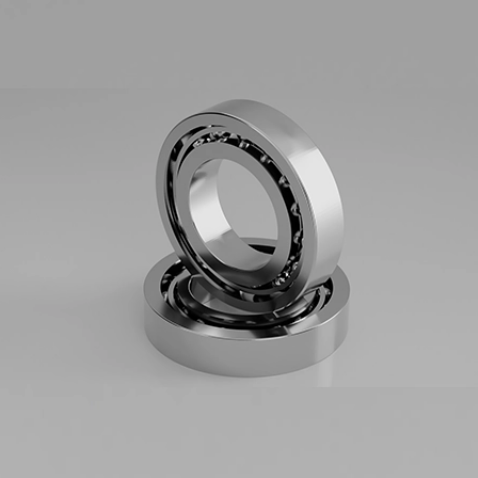
| Ball bearings are integral components in various mechanical systems, playing a crucial role in reducing friction and supporting loads. They are designed to facilitate smooth motion between moving parts, thereby enhancing the efficiency and longevity of machinery. The significance of ball bearings spans across multiple industries, including automotive, aerospace, and industrial machinery. This article delves into the various types of ball bearings, their applications, and the materials used in their construction, providing a comprehensive understanding of their purpose and functionality. For more insights into the types and applications of ball bearings, you can explore the Ball Bearings section on BOM Bearing's website. Understanding Ball BearingsBall bearings are mechanical components that consist of a series of balls placed between two rings, known as races. These balls act as the rolling elements that facilitate motion by reducing friction between the surfaces in contact. The primary function of ball bearings is to support radial and axial loads, enabling the smooth rotation of shafts and other components. The design and construction of ball bearings allow them to handle both light and heavy loads, making them versatile for various applications. Types of Ball BearingsThere are several types of ball bearings, each designed to cater to specific needs and applications. The most common types include:
For detailed specifications and a deep groove ball bearing size chart, you can visit BOM Bearing's product page. Applications of Ball BearingsBall bearings are utilized in a wide range of applications due to their ability to reduce friction and support loads. Some of the key applications include: Automotive IndustryIn the automotive industry, ball bearings are essential components in various systems, including transmissions, wheels, and engines. They help in reducing friction and wear, thereby enhancing the performance and efficiency of vehicles. Understanding What are ball bearings used for in cars is crucial for automotive engineers and designers. Aerospace IndustryIn the aerospace sector, ball bearings are used in aircraft engines, landing gear, and control systems. They are designed to withstand extreme conditions, including high temperatures and pressures, ensuring the reliability and safety of aircraft operations. Industrial MachineryBall bearings are widely used in industrial machinery, such as pumps, compressors, and conveyors. They help in maintaining smooth and efficient operation, reducing downtime and maintenance costs. For those interested in exploring more about ball bearing applications, the Angular Contact Ball Bearings section provides valuable insights.
Materials Used in Ball BearingsThe materials used in the construction of ball bearings play a critical role in their performance and durability. Common materials include:
Understanding What are ball bearings made of is essential for selecting the right material for specific applications. ConclusionBall bearings are indispensable components in modern machinery, offering solutions to reduce friction and support loads efficiently. Their diverse applications across industries highlight their versatility and importance. By understanding the different types of ball bearings, their applications, and the materials used in their construction, engineers and designers can make informed decisions to enhance the performance and reliability of their systems. FAQsQ1: What is the purpose of a ball bearing? Q2: What are ball bearings used for in cars? Q3: What are ball bearings made of? Q4: How do thrust ball bearings differ from other types? Q5: Can ball bearings be customized? Q6: What industries commonly use deep groove ball bearings? Q7: Where can I find a ball bearing size chart? |