
Roller Bearings Price Guide: What You Should Know Before Buying
Jun 10, 2026
BOM
_1781060364_WNo_1600d900.webp)
Understanding roller bearings price requires more than a quick search. The global roller bearings market reached $23.2 billion in 2025 and continues to expand in 2026 — driven by industrial automation, electric vehicle production, and growing manufacturing demand worldwide. Yet within this market, prices for the same bearing model can vary by 5× or more depending on type, precision grade, brand origin, and where you buy. A standard tapered roller bearing can cost $5 or $60 — and both quotes may be technically correct.
This guide cuts through that complexity. Whether you're evaluating a single model or planning a long-term procurement strategy, here's what actually determines what you pay — and how to make a smarter buying decision:
- How bearing type and geometry affect the base price
- What precision grades (P0 to P2) mean for cost and application fit
- Real price ranges for commonly sourced models — 30208, 30209, 32212, 22208, 22317, 22330, 7309, 7310, and more
- Why the same model number shows a 3–5× price spread across suppliers
- How to identify counterfeit bearings and avoid costly procurement mistakes
- Practical strategies to reduce per-unit cost without sacrificing reliability
This guide covers all major roller bearing types — tapered, cylindrical, spherical, angular contact, cross roller, and application-specific variants — because choosing the right bearing at the right price point is a decision that directly affects your equipment's performance and your bottom line. Read on to find the answers you need.
Table of Contents
- What Factors Determine Roller Bearing Prices?
- Roller Bearing Price by Type
- How Much Do Specific Bearing Models Cost?
- Bearings for Special Applications: Are They More Expensive?
- Why Do Roller Bearing Prices Vary So Much Between Suppliers?
- How to Get the Best Price on Roller Bearings
- Ready to Source Roller Bearings at Competitive Prices?
- Conclusion
What Factors Determine Roller Bearing Prices?
You've probably noticed that two bearings with the same model number can carry very different price tags. A standard 30209 tapered roller bearing might cost $8 from a Chinese supplier — while the same model from SKF or Timken runs $35 to $60+. What's really driving that gap?
Roller bearing prices are shaped by a layered set of variables. Understanding them is the difference between a smart procurement decision and an expensive mistake.
Bearing Type and Geometry
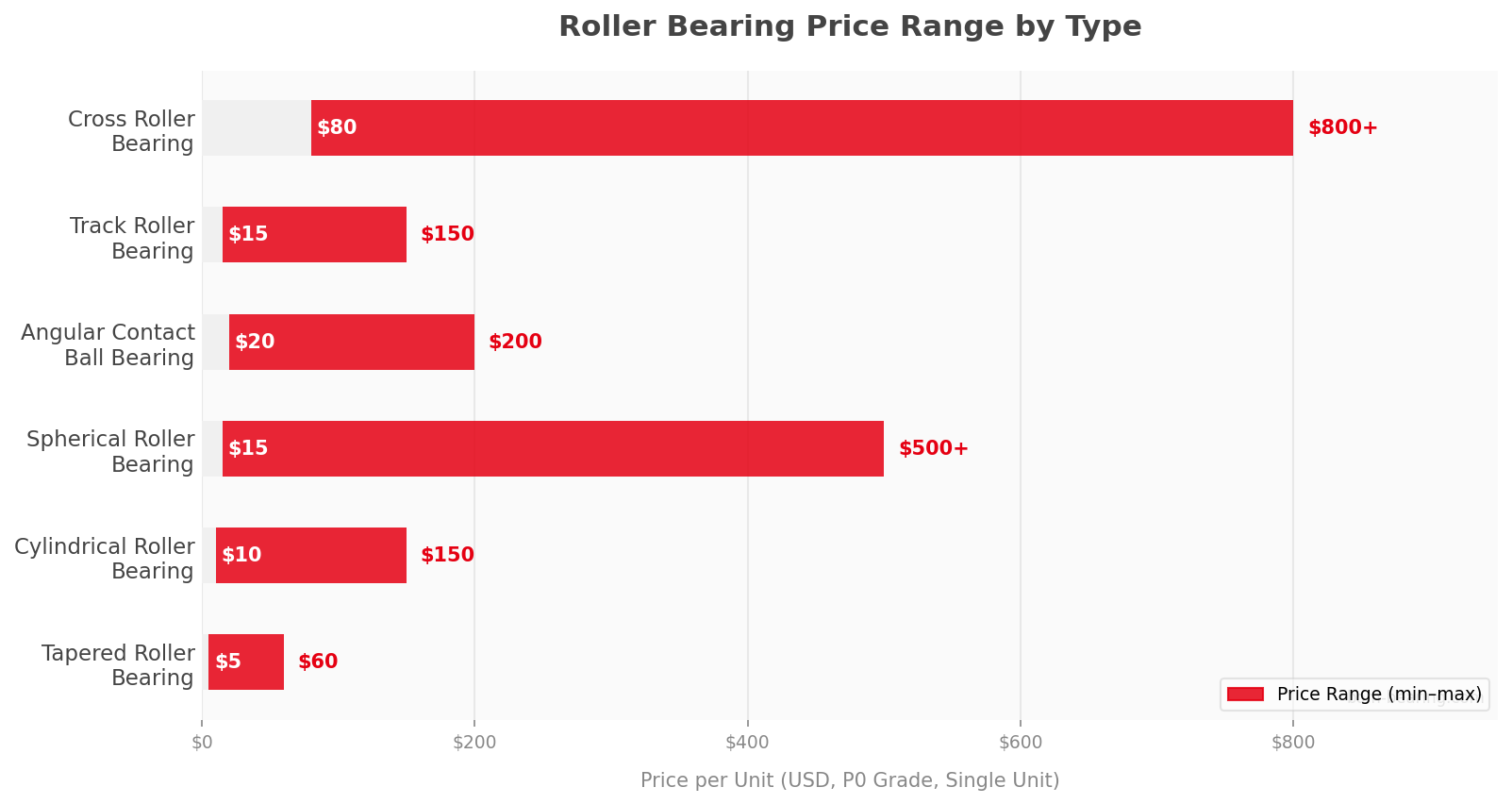
The first price signal is the bearing type itself. More complex geometry means more machining steps — and higher unit cost.
The table below gives a practical starting range for single-unit, P0-grade, mid-tier brand sourcing. Bulk orders and Chinese-origin bearings will come in noticeably lower.
| Bearing Type | Typical Unit Price (Single, P0) | Common Applications |
|---|---|---|
| Tapered Roller Bearing (e.g., 30208, 30209, 32212) | $5 – $60 | Trucks, gearboxes, agricultural machinery |
| Cylindrical Roller Bearing | $10 – $120 | Electric motors, pumps, conveyors |
| Spherical Roller Bearing (e.g., 22208, 22317, 22330) | $15 – $300+ | Mining, paper mills, heavy drives |
| Angular Contact Ball Bearing (e.g., 7309, 7310) | $20 – $200 | Spindles, pumps, compressors |
| Cross Roller Bearing | $80 – $800+ | Robotics, CNC rotary tables, medical arms |
| Track Roller Bearing | $15 – $150 | Cam followers, linear guides, conveyors |
A cross roller bearing uses alternating 90° roller arrangement — extremely tight tolerances are non-negotiable. That manufacturing difficulty is reflected directly in the price. A standard tapered roller bearing has simpler geometry and broad supplier availability, which keeps costs competitive.
Size, Load Capacity, and Dimensional Series
More steel, more cost. Larger bearings require heavier raw material, longer machining cycles, and more complex heat treatment.
Compare two spherical roller bearings from the same series:
22208 — 40×80×23 mm — handling moderate radial loads on a small conveyor shaft — typically $15 to $50 per unit.
22330 — 150×320×108 mm — built for a heavy mining crusher or large paper mill — typically $200 to $500+ per unit, more for premium brands.
The dimensional series (light, medium, heavy) also matters. A heavy-series bearing with a thicker outer ring handles heavier shock loads — and costs more than a light-series bearing of the same bore diameter.
Precision Grade: The Hidden Price Multiplier
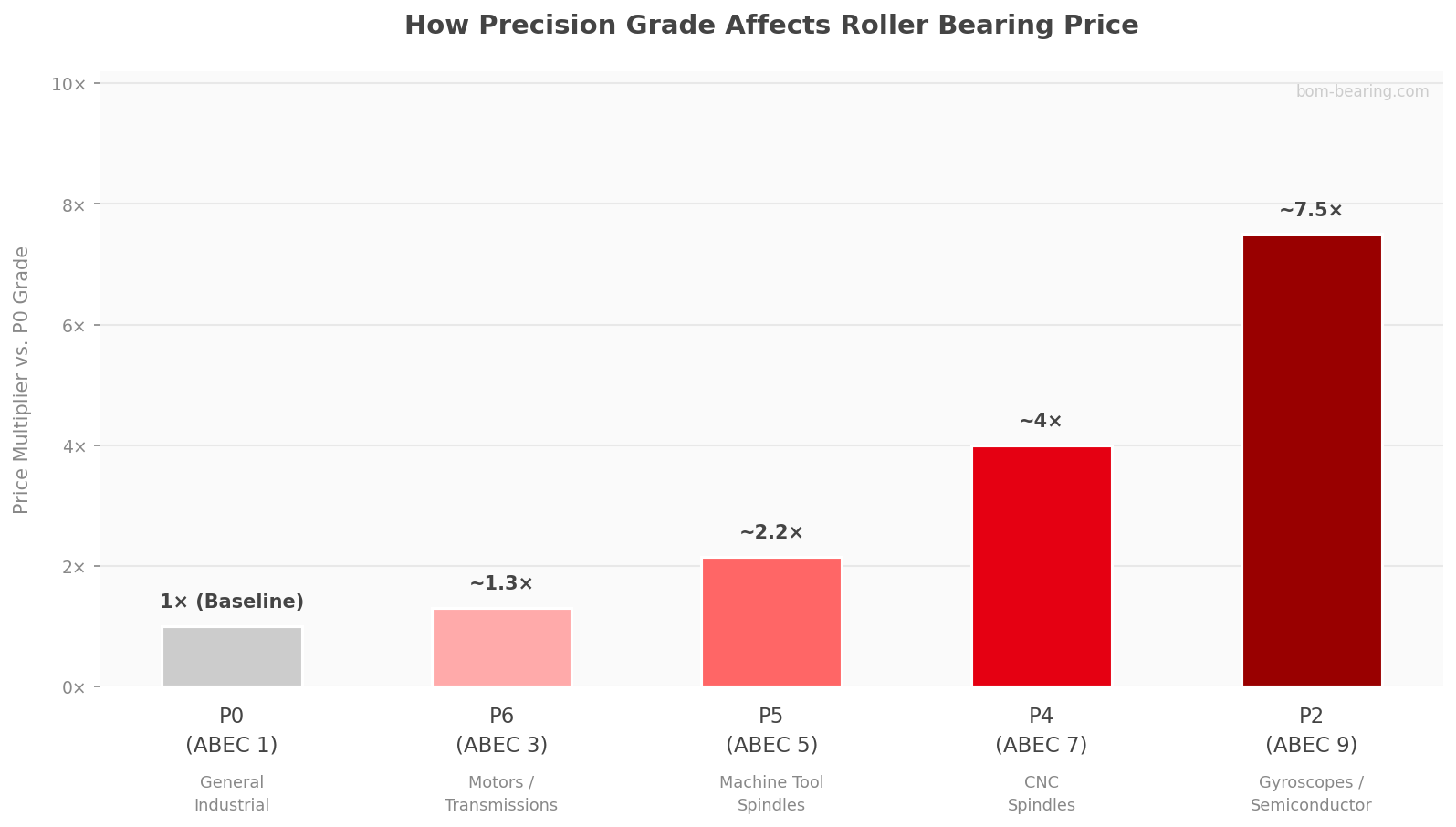
Most standard industrial roller bearings are P0 grade (ABEC 1) — the baseline. Affordable, widely available, and perfectly suited for general-purpose machinery.
Move up the precision ladder, and costs rise sharply.
Here's how grade steps affect both application fit and price:
| ISO Grade | ABEC Equivalent | Typical Application | Price vs. P0 |
|---|---|---|---|
| P0 | ABEC 1 | General industrial: conveyors, pumps | Baseline |
| P6 | ABEC 3 | Electric motors, automotive transmissions | +20% – 40% |
| P5 | ABEC 5 | Machine tool spindles, high-speed motors | +80% – 150% |
| P4 | ABEC 7 | CNC spindles, precision instruments | +200% – 400% |
| P2 | ABEC 9 | Gyroscopes, semiconductor equipment | 5× – 10×+ |
Precision grades aren't marketing — they're measurable tolerances down to microns. A P4-grade angular contact ball bearing for a CNC spindle can cost five times more than an identical-looking P0 bearing. The difference lives in the grinding precision you can't see, but your machine absolutely feels.
Brand and Origin: What Are You Actually Paying For?
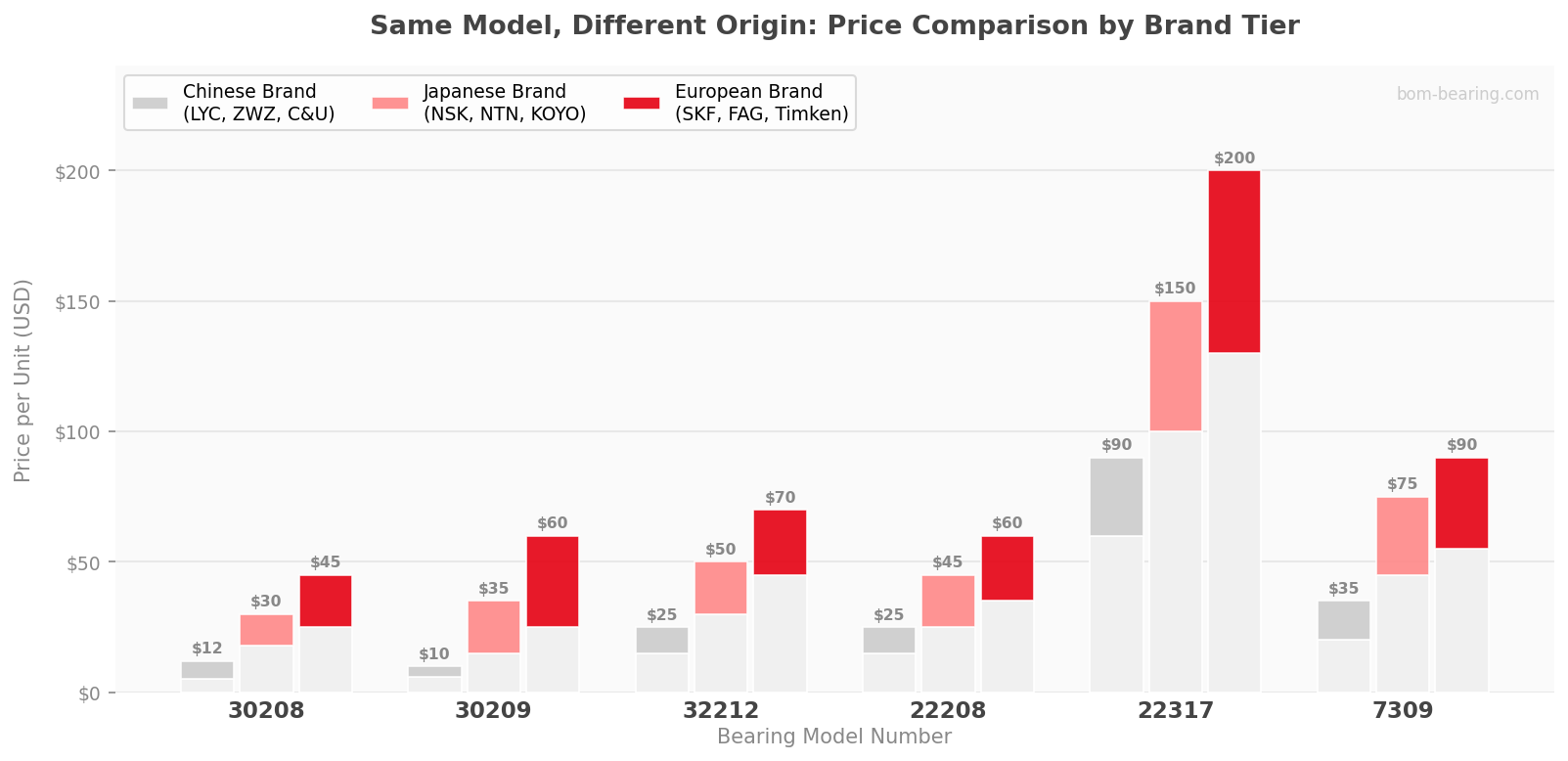
This is where most buyers feel the sharpest sticker shock — or make the costliest miscalculations.
Take the 30209 tapered roller bearing as a real example (45×85×20.75 mm, a widely standardized single-row design). The same model number tells very different stories depending on origin:
Chinese brands (LYC, ZWZ, C&U): ~$3 – $10/unit. Solid for standard industrial use. Widely deployed in OEM equipment across Asia.
Japanese brands (NSK, NTN, KOYO): ~$15 – $35/unit. Tighter internal tolerances, better batch-to-batch consistency. Preferred for motors and precision drives.
European brands (SKF, FAG/Schaeffler, Timken): ~$25 – $60/unit. Premium steel quality, extended service life data, broader warranty coverage. Often specified in critical applications where downtime is expensive.
Is a $50 SKF bearing always better than an $8 Chinese equivalent? Not for a conveyor carrying packaged goods. But in a gearbox running 24/7 under heavy load — the cost of one unplanned shutdown far exceeds the price difference. The right question isn't "which is cheaper?" — it's "what does a failure cost me?"
Order Quantity: The Most Controllable Cost Lever
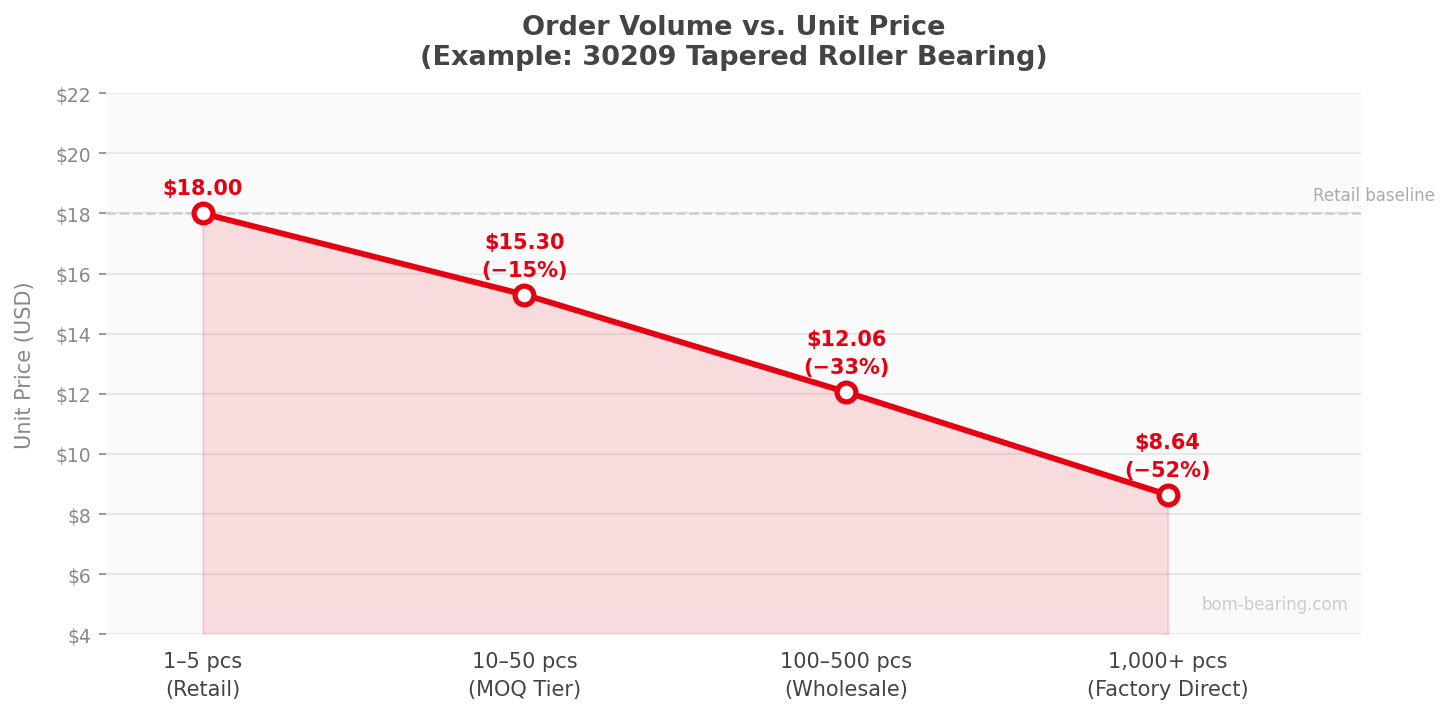
Bearing pricing responds strongly to volume — and this is the one factor entirely within your control.
| Order Volume | Typical Price Position | Notes |
|---|---|---|
| 1 – 5 pcs | Retail / spot price | Amazon, eBay, local distributor |
| 10 – 50 pcs | ~10% – 20% below retail | Distributor MOQ tiers |
| 100 – 500 pcs | ~25% – 40% below retail | Wholesale pricing, common for OEMs |
| 1,000+ pcs | ~40% – 60% below retail | Factory direct, custom packaging available |
If your demand is consistent, consolidating orders — even across models in the same series — is one of the fastest ways to reduce per-unit cost.
Material, Sealing, and Design Upgrades
Beyond grade and brand, specific design choices push prices higher:
- Cage material: Stamped steel (standard) vs. brass or polyamide cages for high-speed or corrosive environments — adds 15%–40% to unit cost.
- Sealing: Open bearings are cheapest. Single-shield (Z), double-shield (2Z), and rubber-contact-seal (2RS) variants step up in price — but reduce lubrication maintenance costs over time.
- Special steel: Stainless or ceramic options for food-grade, marine, or high-temperature use — often 3× to 8× standard price.
- Clearance class: C3 (greater clearance) is standard. Application-specific clearance classes for high-temperature or high-speed use add a modest premium.
A buyer sourcing sliding door bearings or rolling shutter ball bearings for coastal architectural hardware may find stainless or sealed variants at 2× the standard price. In salt-air environments, the corrosion resistance makes that premium worthwhile — the alternative is frequent replacement.
Roller Bearing Price by Type
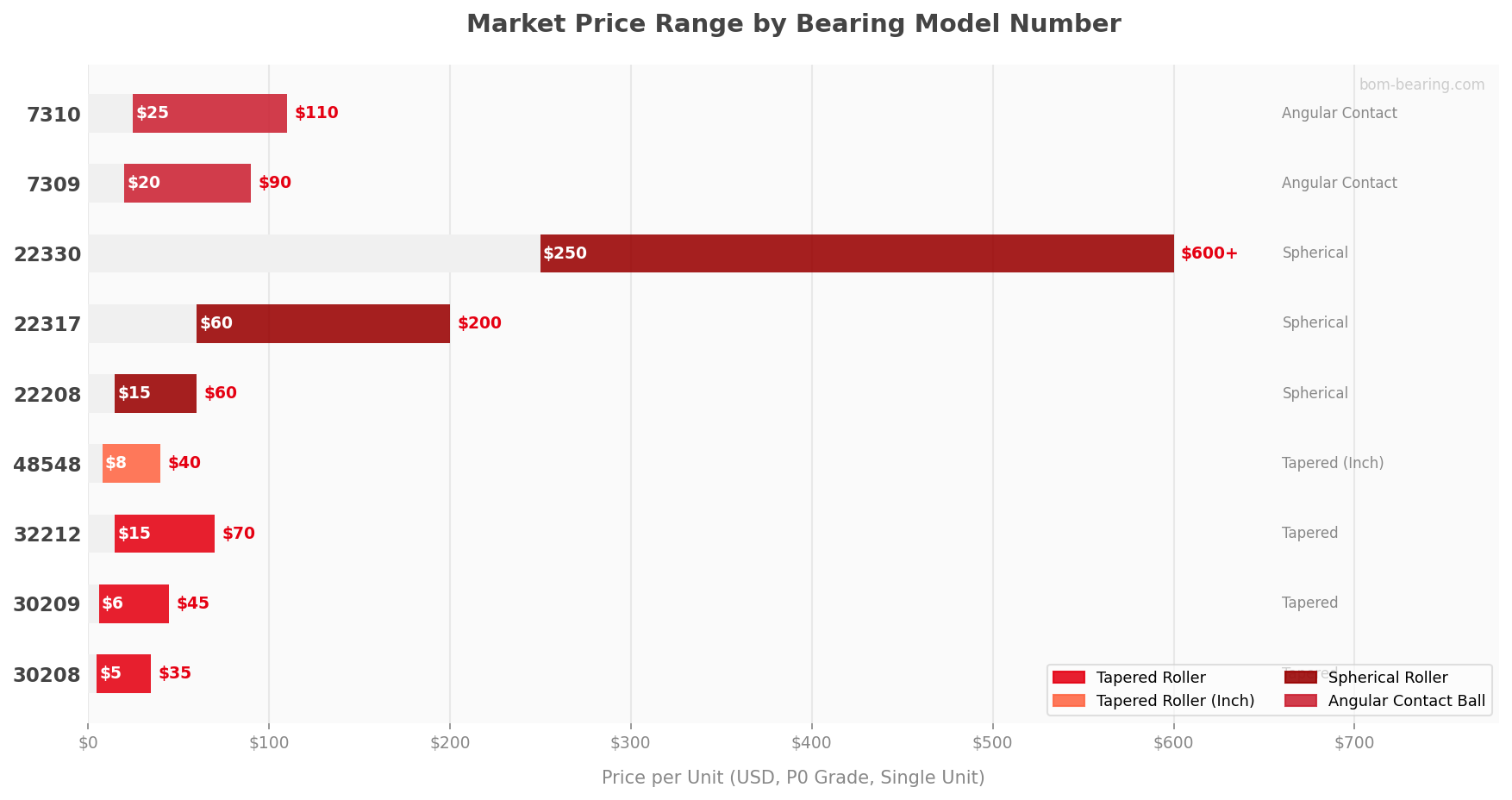
Not all roller bearings are built the same — and neither are their prices. Type determines geometry, machining complexity, and load-handling design. Each adds or subtracts cost in predictable ways.
Tapered Roller Bearings
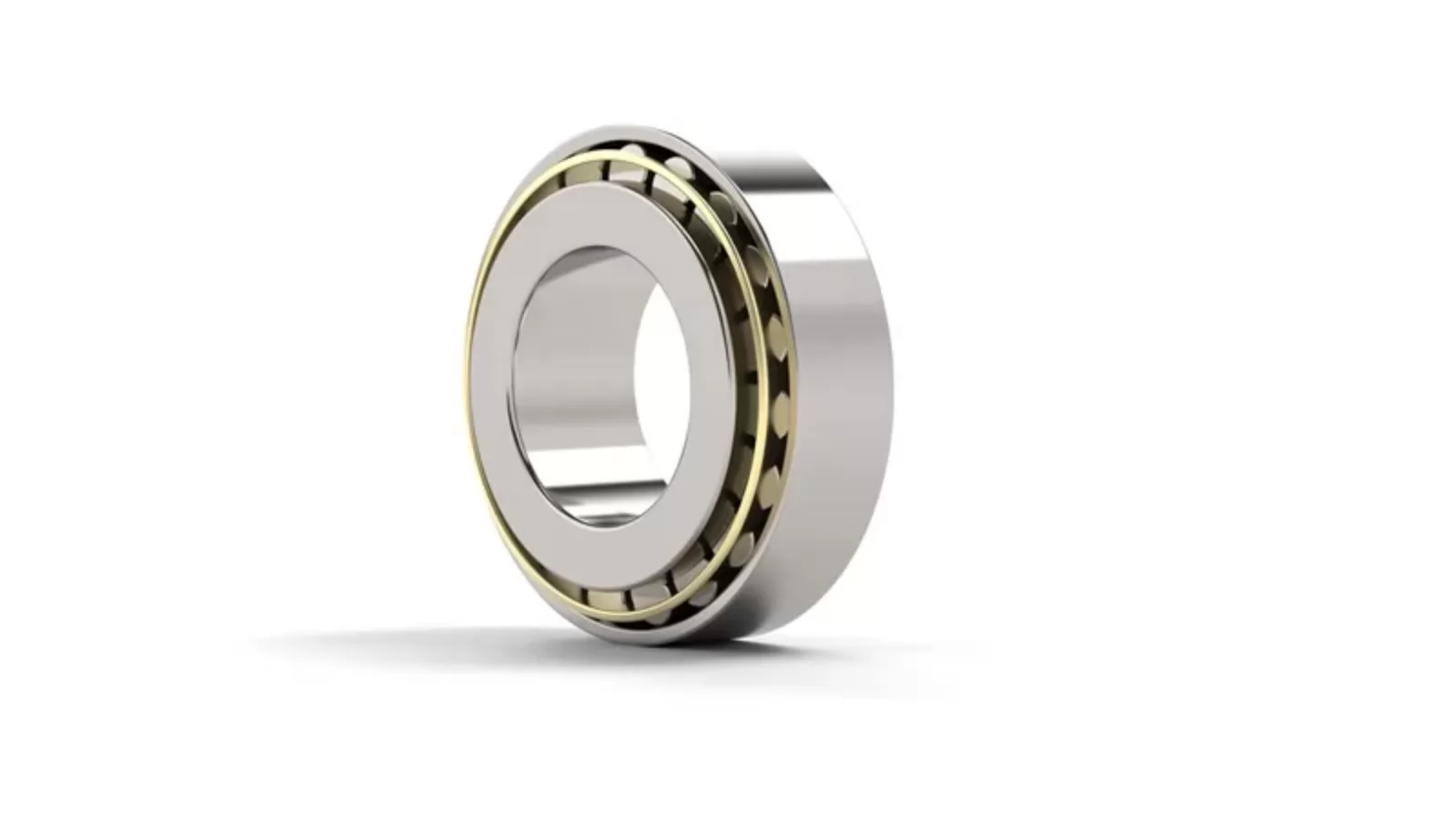
Tapered roller bearings are the most widely used type across automotive, agriculture, mining, and general industrial equipment. Their angled rollers handle both radial and axial loads simultaneously — making them a practical, cost-effective choice for most heavy-duty applications.
Price range: roughly $5 to $80 per unit for standard single-row metric series, depending on size, brand, and quantity. Larger or heavier-duty series push higher.
A procurement manager sourcing 30208 bearings (40×80×19.75 mm) for a gearbox assembly can expect to pay around $5–$12 for Chinese-origin stock, $18–$30 for Japanese brands like NSK or KOYO, and $25–$45+ for SKF or Timken. The same model number, a 4–8× price spread.
Common applications include truck axles, rolling mills, conveying equipment, and agricultural machinery — anywhere combined loads and durability are the priority.
Cylindrical Roller Bearings
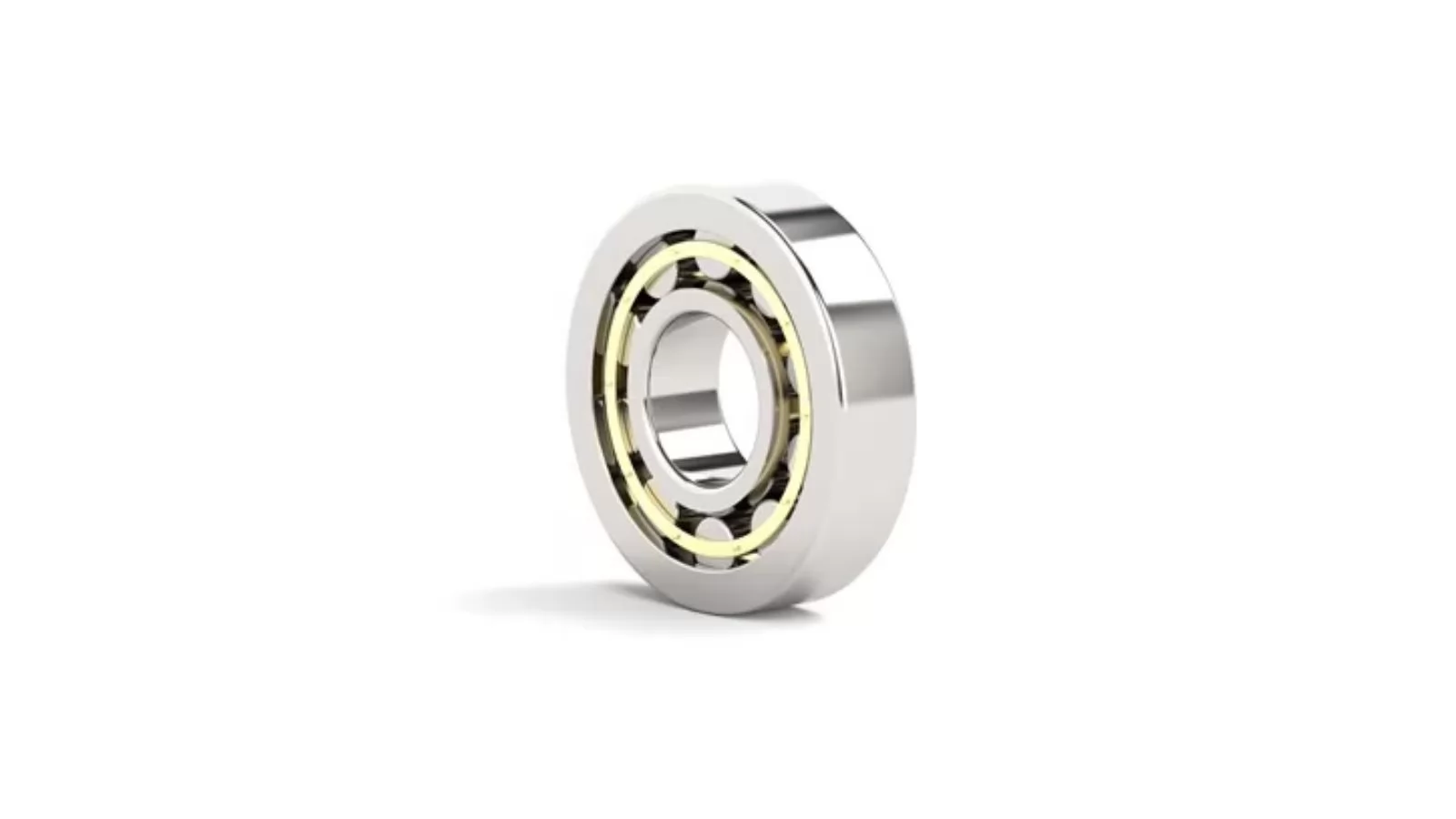
Cylindrical roller bearings carry high radial loads with low friction. They're the standard choice for electric motors, pumps, and industrial drives that run at speed.
Price range: $10 to $150+ per unit for common NU/NJ single-row series. Double-row and precision variants sit higher.
The cylindrical roller's larger contact area relative to ball bearings gives it better radial load capacity per unit size — which is why it dominates motor and pump applications where high rotational speed and radial load coexist. For angular contact ball bearings (7309, 7310 series), which handle combined radial and axial loads at high speed, expect a similar price band: $20 to $120 per unit for P0-grade single-row versions, rising sharply with precision grade.
Spherical Roller Bearings
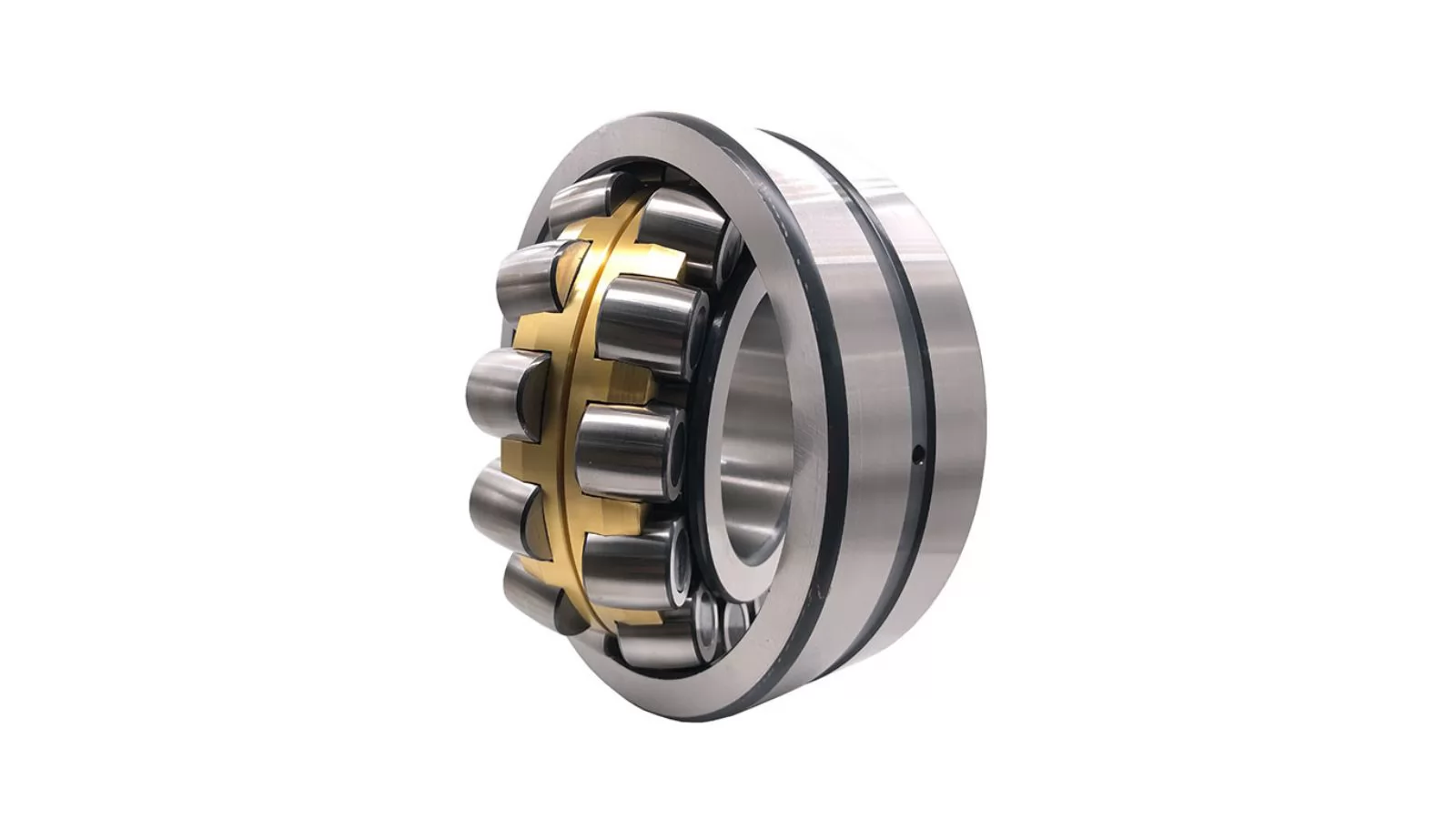
Spherical roller bearings are the go-to for heavy industry. Their self-aligning design absorbs shaft misalignment — critical in mining crushers, paper mills, and large industrial drives where perfect shaft alignment is impossible to maintain.
Price range: $15 to $500+ per unit, with heavy-series large-bore models regularly exceeding that. Size drives cost here more than almost any other variable.
A 22208 (40 mm bore, 80 mm OD) for a light conveyor costs $15–$50. A 22317 (85 mm bore, 180 mm OD) for a mid-range industrial gearbox runs $60–$180. A 22330 (150 mm bore, 320 mm OD) for a paper mill roll or mining crusher reaches $250–$500+ for premium brands. The jump from 22208 to 22330 isn't just size — it's also the amount of precision steel, heat treatment time, and quality control at each production step.
Cross Roller and Track Roller Bearings
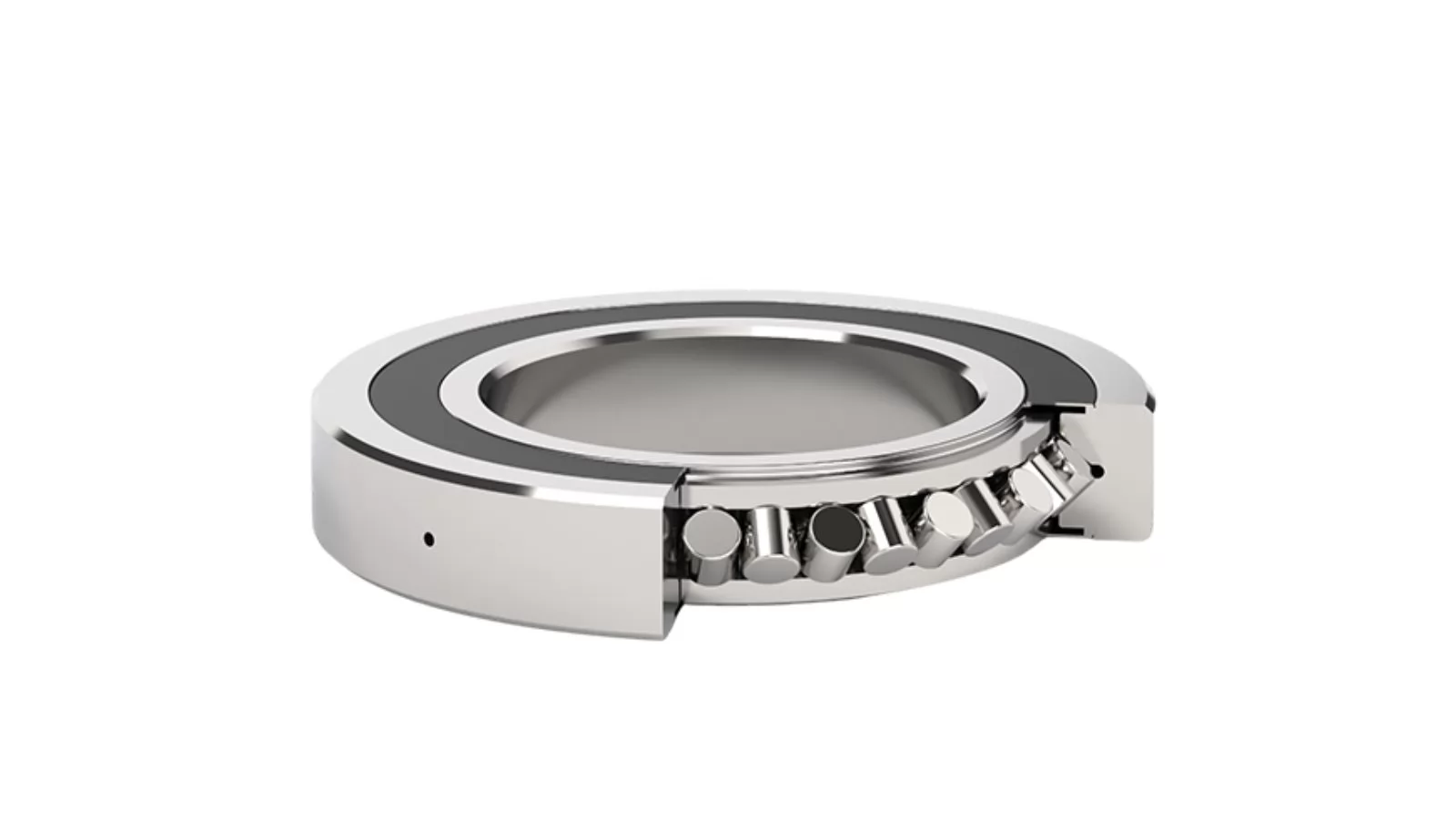
These are specialty types with narrow use cases — but the buyers who need them rarely have a substitute.
Cross roller bearings use alternating 90° roller arrangement on a single raceway. The result: exceptional rigidity, high accuracy, and minimal footprint. They're common in robotic joints, CNC rotary tables, and medical imaging arms. Price range: $80 to $800+ per unit, often more for precision grades or large diameters. One cross roller bearing can replace a combination of thrust and radial bearings — which partially justifies the premium.
Track roller bearings (cam followers, yoke-type rollers) are designed for linear guide systems, conveyor tracks, and cam mechanisms. They run directly on a surface rather than inside a housing. Price range: $15 to $150 per unit depending on stud or yoke type, diameter, and sealing.
How Much Do Specific Bearing Models Cost?
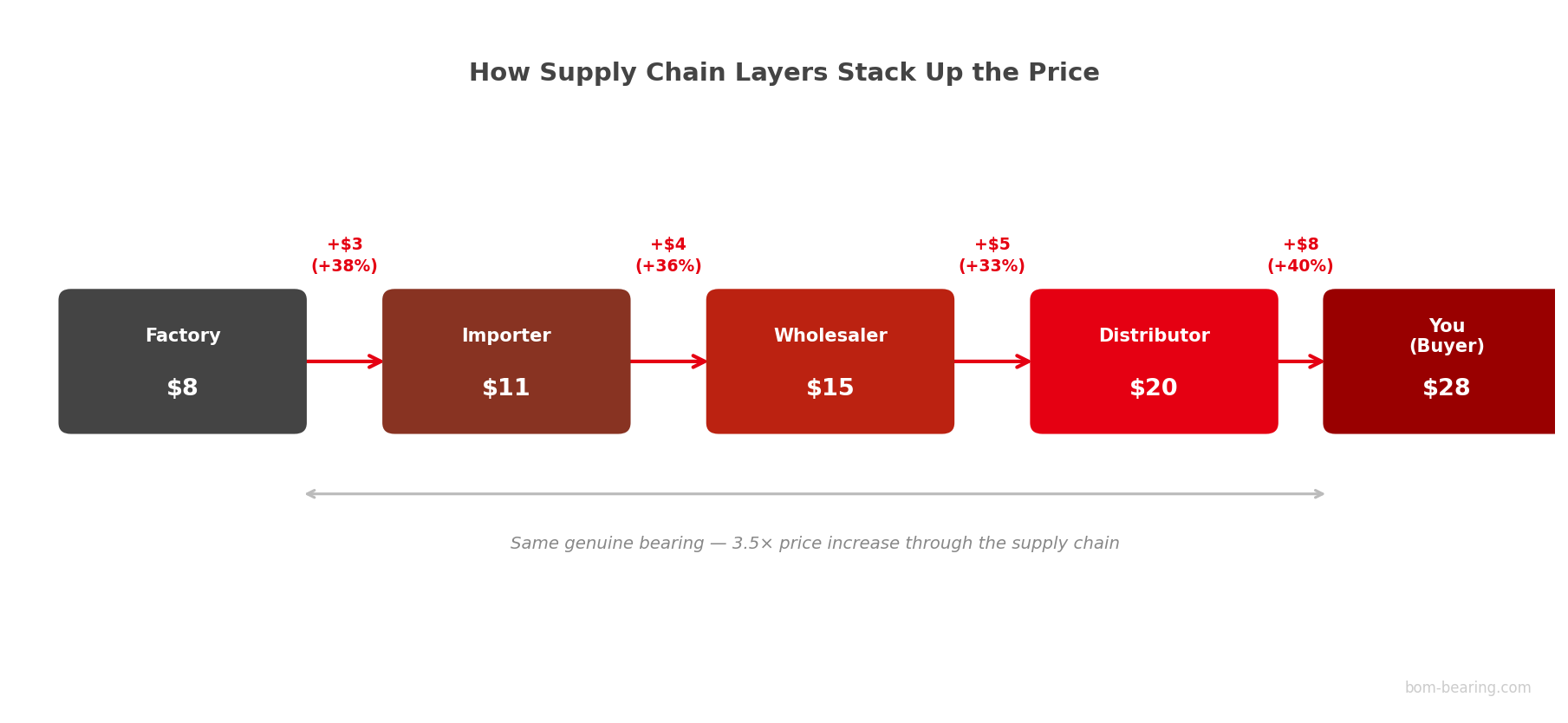
Generic price ranges only go so far. If you're sourcing a specific model, you need a number to benchmark against. The table below covers commonly searched bearing models with real-world market price ranges, based on single-unit retail and mid-tier distributor pricing as of 2024–2025.
Prices reflect P0 grade, standard steel, open or stamped-shield variants. Premium brands (SKF, NSK, Timken, FAG) will sit at or above the upper end; Chinese-origin brands (LYC, ZWZ, C&U) will come in at or below the lower end.
| Model | Type | Dimensions (d×D×T mm) | Market Price Range (Single Unit) | Typical Use |
|---|---|---|---|---|
| 30208 | Tapered Roller | 40×80×19.75 | $5 – $35 | Gearboxes, agricultural drives |
| 30209 | Tapered Roller | 45×85×20.75 | $6 – $45 | Trucks, conveying equipment, motors |
| 32212 | Tapered Roller | 60×110×29.75 | $15 – $70 | Heavy gearboxes, axle assemblies |
| 48548 / LM48548 | Tapered Roller (Inch) | 34.93×65.09×18.03 | $8 – $40 | Trailers, agricultural equipment, tractors |
| 22208 | Spherical Roller | 40×80×23 | $15 – $60 | Small conveyors, grinders, agri machines |
| 22317 | Spherical Roller | 85×180×60 | $60 – $200 | Industrial gearboxes, vibrating screens |
| 22330 | Spherical Roller | 150×320×108 | $250 – $600+ | Mining crushers, paper mills, heavy drives |
| 7309 (AC/B) | Angular Contact Ball | 45×100×25 | $20 – $90 | Pumps, compressors, spindles |
| 7310 (AC/B) | Angular Contact Ball | 50×110×27 | $25 – $110 | High-speed motors, machine tool spindles |
These ranges represent market reality across multiple sourcing channels. A single-unit retail purchase (e.g. Amazon or a local distributor) will sit toward the upper end. Factory-direct bulk pricing for 100+ units will come in considerably lower.
Why Does the Same Model Number Show Different Prices Everywhere?
It's a question almost every buyer asks. You search "30209 bearing price" and see $6, $18, and $45 all on the same page. All three claim to be 30209 bearings. Are they?
Technically, yes — dimensionally. The 30209 standard defines the bore, OD, and width. What it does not standardize is steel grade, cage quality, heat treatment depth, raceway finish, or internal clearance consistency. Two bearings can share a model number and differ significantly in actual performance life.
Think of it like a car tire. A 225/45R17 from a premium brand and a discount no-name brand are both technically "225/45R17." Same dimensions, different everything else. A bearing is the same story. The model number tells you where it fits. The brand and grade tell you how long it lasts.
For non-critical applications — a garden gate, a light conveyor running one shift a day — the lower-cost option is perfectly reasonable. For a pump running 24/7 in a chemical plant, or a gearbox in a mining truck, the cost of an unexpected failure vastly exceeds the price difference between a $12 and a $45 bearing.
Bulk Pricing: What Changes at Volume?
Single-unit pricing is rarely what industrial buyers pay. Once you move past 50 units, the economics shift noticeably. At 500+ units ordered directly from a manufacturer or authorized distributor, it's common to see 40–55% below retail on standard metric series bearings.
For context: a 30209 bearing that retails at $18 per unit can often be sourced at $7–$9 at 500-unit volume from a reputable mid-tier supplier. That difference compounds fast across a production line. If your annual consumption is predictable, consolidating orders and negotiating blanket purchase agreements is one of the clearest cost levers available.
Bearings for Special Applications: Are They More Expensive?
The short answer is: it depends on what "special" means. Some application-specific bearings are only marginally more expensive than standard ones. Others carry a significant premium — not because of branding, but because the operating environment genuinely demands more from the bearing.
Sliding Door and Rolling Shutter Bearings
These are among the most price-accessible bearings in any category. Sliding door bearings and rolling shutter ball bearings are typically simple deep-groove ball bearing designs — compact, lightly loaded, and produced in enormous volume.
Retail unit prices for standard carbon steel variants start as low as $0.25 to $1.50 at bulk factory pricing, and $4 to $15 at retail for branded assembly units (housing included). The higher end of retail largely reflects the housing and mounting hardware, not the bearing itself.
A coastal commercial property manager sourcing replacement bearings for 40 rolling security shutters quickly learns the real cost driver isn't the bearing — it's corrosion. Standard carbon steel shutters bearings installed in a beachfront environment can fail within 18 months. Switching to stainless steel or zinc-plated variants at 2–3× the unit cost extends service life to 5+ years. The "expensive" option is frequently the cheaper long-term choice.
For architectural and construction hardware applications, the key pricing variables are material (carbon steel vs. stainless) and whether the bearing is a raw insert or comes as a complete assembled roller unit. Raw bearings are cheap; assembled roller units with housings are not.
Cross Roller Bearings: Precision Comes at a Price
Cross roller bearings occupy a very different price bracket. Their alternating 90° roller arrangement delivers exceptional rigidity, zero backlash, and high positioning accuracy in a compact footprint. That capability comes from a manufacturing process that is fundamentally more demanding than standard roller bearing production.
Typical price range: $80 to $800+ per unit for standard catalog sizes. Larger diameters and higher precision grades from brands like IKO, THK, and HIWIN regularly exceed $500 for mid-sized units. Chinese-manufactured alternatives (built to replace IKO/THK equivalents) are available at 20–40% lower cost for buyers willing to qualify a new supplier.
The economic case for cross roller bearings isn't just unit price — it's what they replace. A single cross roller bearing can consolidate the function of a separate thrust bearing, radial bearing, and moment bearing into one compact component. For robotic joints and CNC rotary tables, that simplification often justifies the premium many times over.
Track Roller Bearings: Built for Surface Contact
Track roller bearings (cam followers, yoke-type rollers) are designed to run directly on a surface — conveyor rails, cam profiles, guide channels. They need a hardened outer ring and robust sealing to survive that kind of direct contact exposure. Standard roller bearings do not.
Price range: $15 to $150 per unit, varying by stud vs. yoke type, diameter, and sealing design. Heavy-duty sealed versions with stainless components sit at the top of that range. For most standard conveyor and automation line applications, mid-range sourcing from reputable Asian manufacturers provides reliable performance without the premium of Japanese or European brands.
When Are Special-Application Bearings Worth the Premium?
The pattern across all special-application bearings is consistent: the premium is justified when the cost of early failure — downtime, refit labor, collateral damage — significantly exceeds the cost difference between standard and specialized variants.
| Application | Standard Option | Specialized Option | Price Difference | When to Upgrade |
|---|---|---|---|---|
| Rolling shutter / sliding door | Carbon steel, open | Stainless / zinc-plated, sealed | 2× – 3× | Coastal, wet, or high-cycle environments |
| CNC rotary table / robotics | Separate thrust + radial bearings | Cross roller bearing | 5× – 10× | Precision positioning, space constraints |
| Conveyor / cam follower | Standard cylindrical roller | Track roller bearing (sealed stud type) | 2× – 4× | Direct surface contact, dirty environments |
If the application is light-duty, low-cycle, and easily accessible for replacement, the standard option is usually the right call. If downtime is expensive or the bearing is difficult to access, the specialized variant earns its cost quickly.
Why Do Roller Bearing Prices Vary So Much Between Suppliers?
Search any bearing model number and you'll find quotes that differ by 5× or more. Same model, same dimensions — wildly different prices. Understanding what's behind that spread is one of the most practically useful things a buyer can know.
The Supply Chain Layer Problem
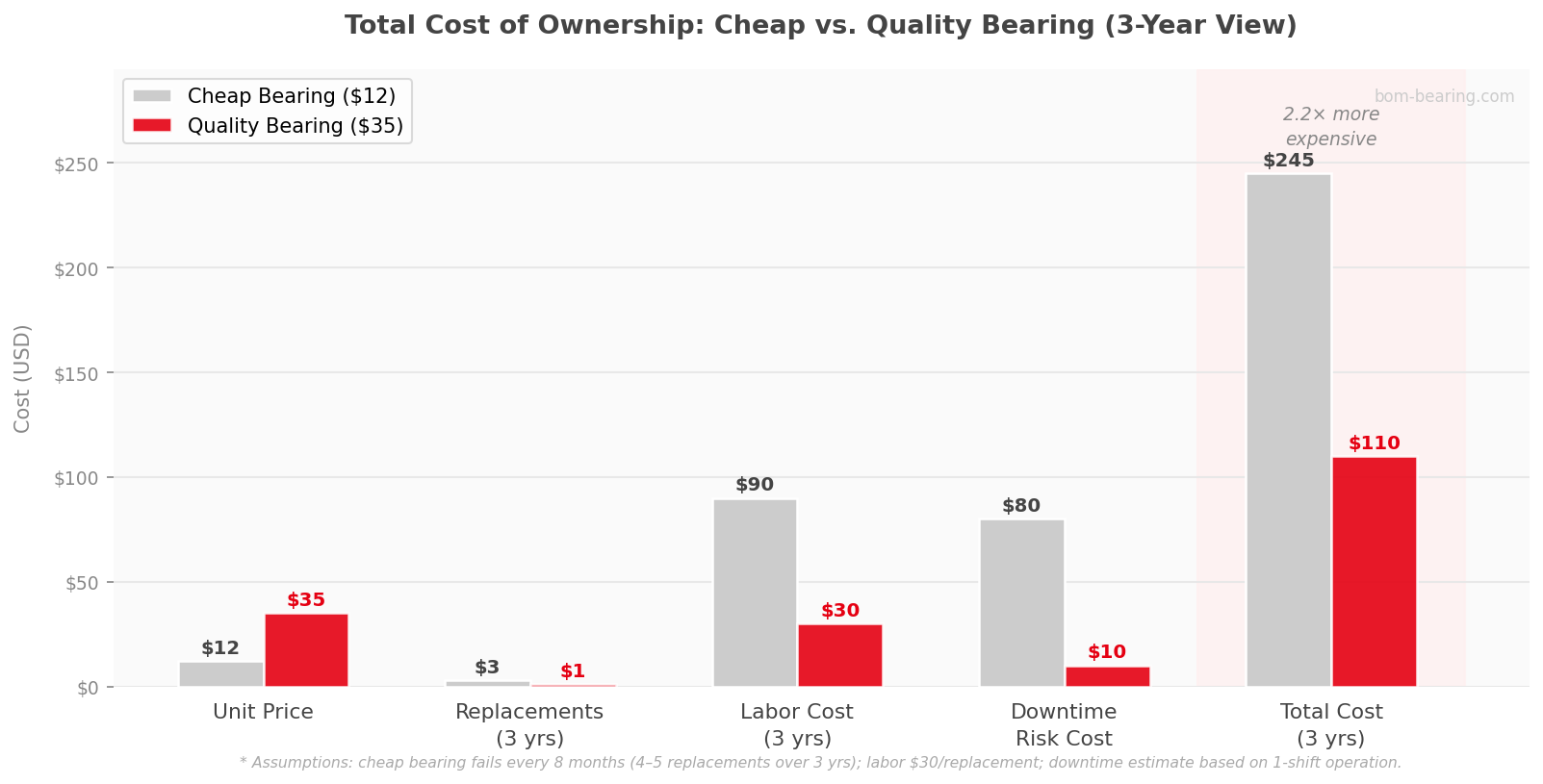
Most bearing buyers don't purchase directly from the manufacturer. They buy from a distributor — who bought from a regional wholesaler — who bought from an importer — who sourced from a factory. Each layer adds margin.
Industry data puts average distributor markup at 30–40% over their cost. Add an additional wholesaler layer and an importer layer, and a bearing that left the factory at $8 can easily retail at $22–$28 without any fraud involved — just margin stacking through a long supply chain.
A maintenance buyer for a food processing plant once compared quotes for the same NSK cylindrical roller bearing from three suppliers: $47 from a local industrial distributor, $29 from an online specialist, and $19 from a factory-direct source in Asia. All three were quoting the same genuine model. The difference was entirely supply chain depth — not product quality.
The practical implication: if you're seeing a 2× price spread between reputable suppliers for a standard model, it's almost always worth tracing closer to the source before assuming the cheaper option is inferior.
Counterfeit and Substandard Bearings: The Real Risk
Price variation has a darker side. The global bearing counterfeit problem is substantial — and it disproportionately affects premium brands like SKF, FAG, NSK, and Timken, whose model numbers are widely recognized and easy to imitate.
Counterfeit bearings typically use lower-grade steel (carbon steel instead of GCr15 chrome steel), skip precise heat treatment, and use inferior cage materials. They may look nearly identical to genuine products. The failure mode is not immediately obvious — they often function adequately under light load, then fail prematurely under real operating conditions.
NSK research has found counterfeit products can fail up to 20× faster than genuine equivalents. The financial impact is rarely just the replacement bearing — it's the damaged shaft, the housing refit, and the production downtime that follows.
A reliable rule of thumb: if a supplier is offering a name-brand bearing (SKF, FAG, Timken) at 40–60% below the standard market distributor price, treat it as a red flag. Genuine tier-1 brand bearings do not exist at those discounts through legitimate channels.
Stock Availability and Lead Time Premiums
Bearings in stock ship fast. Bearings that need to be ordered carry a wait — and sometimes a premium for urgency.
Less common models (large-bore spherical roller bearings, specific precision grades, non-standard dimensions) may have lead times of 4–12 weeks from manufacturers. A distributor with that model in stock can charge a meaningful premium over spot market and find willing buyers who need the bearing now rather than next quarter.
This is a legitimate form of price variation — you're paying for availability, not just the bearing. For buyers who can plan ahead and carry safety stock, this premium is avoidable. For buyers managing reactive maintenance, it often isn't.
How to Benchmark a Quote You Receive
Three practical checks before accepting any bearing quote:
- Verify the brand: Ask for documentation — authorized distributor certificates, QR codes, or manufacturer batch traceability. Reputable suppliers provide this without hesitation.
- Cross-check price: Compare against at least two established distributors for the same model and grade. A 20–30% spread is normal. A 50%+ spread in either direction deserves scrutiny.
- Clarify grade and origin: "30209 bearing" is not a complete specification. Confirm precision grade (P0, P6, P5), clearance class (C3 or standard), and country of manufacture. Two bearings with identical model numbers but different specifications are not the same product.
Price is one data point in a buying decision, not the only one. The right bearing at a fair price from a verifiable source is almost always the better outcome than the cheapest bearing from an unknown channel.
How to Get the Best Price on Roller Bearings
Getting the best price on roller bearings isn't about finding the cheapest supplier. It's about removing unnecessary cost from the supply chain while keeping quality where it needs to be. These are the levers that actually work.
1. Match Grade to Application — Don't Over-Specify
One of the most common ways buyers overpay is by specifying a higher precision grade or a premium brand for an application that doesn't require it.
A P5-grade angular contact ball bearing costs 80–150% more than a P0 equivalent. If the machine is a low-speed conveyor running one shift a day, that premium buys nothing. If it's a CNC spindle running at 8,000 RPM, the P5 grade is non-negotiable.
A mid-sized pump manufacturer reviewed their bearing specifications across 12 product lines and found that 4 of them had P6-grade bearings installed in applications where P0 would perform identically. Switching those four lines to P0 reduced bearing cost by 28% on those models — with zero change in field performance or warranty claims over the following two years.
The same logic applies to brand selection. For non-critical applications — light conveyors, sliding doors, low-load fans — a quality Chinese-origin bearing from a reputable manufacturer delivers acceptable performance at a fraction of the cost of SKF or NSK. Reserve premium brands for applications where service life and reliability directly impact production output.
2. Consolidate Orders and Negotiate Volume Tiers
Volume is the most controllable cost lever in bearing procurement. The price break structure is steep at key thresholds — typically 10, 50, 100, and 500+ units — and the savings compound fast across a product line.
Two practical approaches that work:
- Cross-model consolidation: If you use 80 units of a 30208 and 60 units of a 30209 annually, ordering both from the same supplier in a single PO often qualifies for a better tier than ordering each separately. Many suppliers price by total order value, not per-SKU quantity.
- Blanket purchase agreements: Negotiate an annual volume commitment with a supplier in exchange for a fixed per-unit price. You get price certainty; they get predictable revenue. This works especially well for bearings you consume consistently — cylindrical roller bearings for motors, spherical roller bearings for standard drive applications.
3. Source Closer to the Factory
Every layer between the factory and your warehouse adds margin. A bearing that leaves the production line at $8 can reach a local industrial distributor at $22 after passing through an importer, regional wholesaler, and local distributor — all adding 20–40% at each step.
For standard metric series bearings (tapered, cylindrical, spherical), factory-direct or authorized distributor sourcing from Chinese manufacturers cuts that chain significantly. Quality-tier Chinese brands — LYC, ZWZ, C&U, HRB — are manufactured to ISO standards and are widely used in OEM equipment globally. For buyers who can qualify a supplier and accept slightly longer lead times, the cost reduction is real and substantial.
For Japanese or European brands (SKF, NSK, FAG, Timken), sourcing through authorized distributors is still the safest route — it's the only reliable protection against counterfeit product in those premium tiers.
4. Plan Ahead — Avoid Urgency Premiums
Reactive maintenance is expensive. When a bearing fails unexpectedly and the machine is down, the buyer pays whatever the nearest in-stock distributor charges. That urgency premium can be 30–60% above standard pricing for less common models.
Carrying a modest safety stock of your highest-consumption bearing models is one of the most straightforward ways to avoid this. It doesn't require large capital — knowing which 5–10 models you consume most frequently and holding 20–30% of annual usage in stock changes your negotiating position entirely. You buy on your schedule, not the machine's schedule.
5. Evaluate Total Cost of Ownership, Not Unit Price
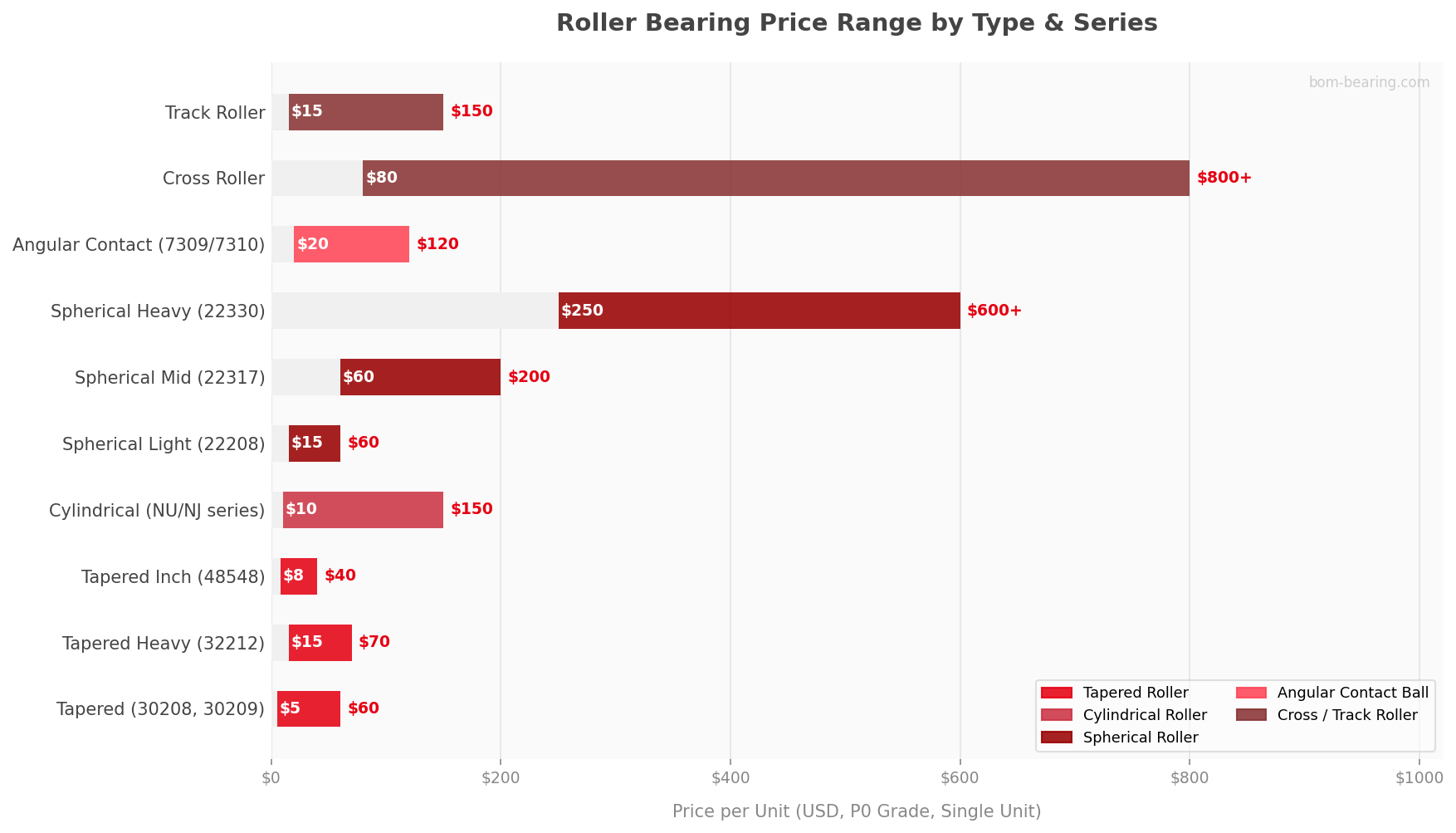
Unit price is the easiest number to see, and often the wrong one to optimize.
| Cost Factor | Cheap Bearing (Low Unit Price) | Quality Bearing (Higher Unit Price) |
|---|---|---|
| Unit price | Lower | Higher |
| Replacement frequency | Higher (shorter service life) | Lower (longer service life) |
| Labor cost per replacement | Multiplied by more replacements | Minimized |
| Downtime risk | Higher (unpredictable failure) | Lower (predictable service interval) |
| Collateral damage on failure | Potential shaft/housing damage | Minimal with planned replacement |
A bearing that costs $12 and fails every 8 months is more expensive than a $35 bearing that runs 3 years — before counting the labor, downtime, and potential collateral damage. Total cost of ownership is the number that matters. Unit price is just the starting point.
Ready to Source Roller Bearings at Competitive Prices?
Roller bearing prices span a wide range — from a few dollars for a standard tapered roller bearing to hundreds for a large-bore spherical or precision cross roller unit. That range reflects real differences in type, size, grade, brand, and supply chain depth. None of it is arbitrary.
The buyers who consistently get the best outcomes are the ones who understand what they're actually paying for. They match precision grade to application. They source at the right supply chain depth for their volume. They distinguish between a cheap bearing and a cost-effective one. And they know when a higher unit price is the smarter procurement decision.
Whether you need a few units of a specific model or a long-term supply arrangement for a production line, the right supplier makes a significant difference — not just in price, but in lead times, documentation, and product traceability.
We supply a comprehensive range of roller bearings — tapered, cylindrical, spherical, angular contact, cross roller, track roller, and application-specific variants for sliding doors, rolling shutters, and more. Standard and custom precision grades available. Competitive pricing on single units and bulk orders.
Tell us what you need — model number, quantity, required grade, and application — and we'll come back with a clear, specific quote.
Conclusion
Roller bearing prices are never arbitrary. As this guide has shown, what you pay is determined by a predictable set of variables — bearing type, dimensional series, precision grade, brand origin, order volume, and how many layers exist between the factory and your door. A $6 bearing and a $60 bearing with the same model number are not the same product. Understanding the difference is what separates a smart procurement decision from an expensive one.
The right sourcing strategy starts with matching specification to application — not over-specifying, not cutting corners where reliability matters, and sourcing at the supply chain depth that fits your volume and quality requirements. Whether you need a standard tapered roller bearing for agricultural equipment, a spherical roller bearing for heavy industrial drives, or a precision cross roller bearing for a robotic joint, the principles are the same: know what you're buying, know who you're buying from, and know what failure costs you.
At Bom Bearing, we supply a comprehensive range of roller bearings direct from China — competitive pricing, verified quality, and support for both standard catalog models and custom requirements. If you're ready to source with confidence, we're here to help.


Hot Article
-
Top 10 Chinese Bearing Brands: How to Choose?
-
Top 10 Custom Ball Bearing Factories in the USA 2026
-
Top 10 Bearing Brands in the World: 2026 Rankings
-
Top 10 Ball Bearing Manufacturers & Suppliers in China 2026
-
Top 10 Slewing Ring Bearing Manufacturers and Suppliers in China (2026)
-
Top 10 Roller Bearing Suppliers in China (2026)
-
Top 10 Cross Roller Bearing Manufacturers 2026
-
List of Custom Bearing Manufacturers: Our Top 10 Picks
Speak to One of Our Experts
Name can't be empty
Email error!
Message can't be empty
Send Message
*We respect your confidentiality and all information are protected.
People Also Viewed
-
 Top 10 Chinese Bearing Brands: How to Choose?
Looking for the best Chinese bearing brands? This guide reviews the top 10 bearing manufacturers in China — covering certifications, product range, and application fit — to help distributors, engineers, and procurement teams source the right bearing supplier with confidence.
Read More -
 Top 10 Ball Bearing Manufacturers & Suppliers in China 2026
Below you'll find profiles of ten verified ball bearing manufacturers and suppliers in China — each selected for export track record, product depth, and accessibility for international buyers.
Read More -
 5 Best Bearing Units Manufacturers in the USA 2026
Explore 5 leading bearing unit manufacturers serving the U.S. market in 2026, with key products, applications, and practical buying factors for OEMs, MRO teams, distributors, and industrial buyers.
Read More


