
What Are Ball Bearings? Function, Types, Materials & Applications Explained
Jul 15, 2026
BOM
_1770097119_WNo_1600d900.webp)
From the wheels of a high-speed train to the drum of your washing machine, ball bearings are at work in virtually every rotating system on the planet. The global ball bearing market is projected to exceed $40 billion by 2030 — a clear signal of just how indispensable these components have become across modern industry.
This guide covers everything you need to know about ball bearings — what they are, how they work, and where they're used. Whether you're an engineer sourcing components, a buyer comparing options, or simply trying to understand what's inside your equipment, you'll find direct answers here. Key topics at a glance:
- How ball bearings reduce friction and support load
- The main types — deep groove, angular contact, thrust, and more
- Materials from chrome steel to ceramic, and when each applies
- Real-world applications across automotive, industrial, medical, and consumer sectors
- How to select the right bearing for your specific operating conditions
Choosing the right ball bearing isn't just a technical decision — it directly affects equipment lifespan, energy efficiency, and maintenance costs. Read on to make a more informed choice.
Table of Contents
- What Is a Ball Bearing, Exactly?
- How Does a Ball Bearing Work?
- What Are Ball Bearings Made Of?
- Main Types of Ball Bearings
- What Are Ball Bearings Used For?
- What Everyday Items Have Ball Bearings in Them?
- Ball Bearings vs. Roller Bearings — What's the Difference?
- How to Choose the Right Ball Bearing
- Conclusion
What Is a Ball Bearing, Exactly?
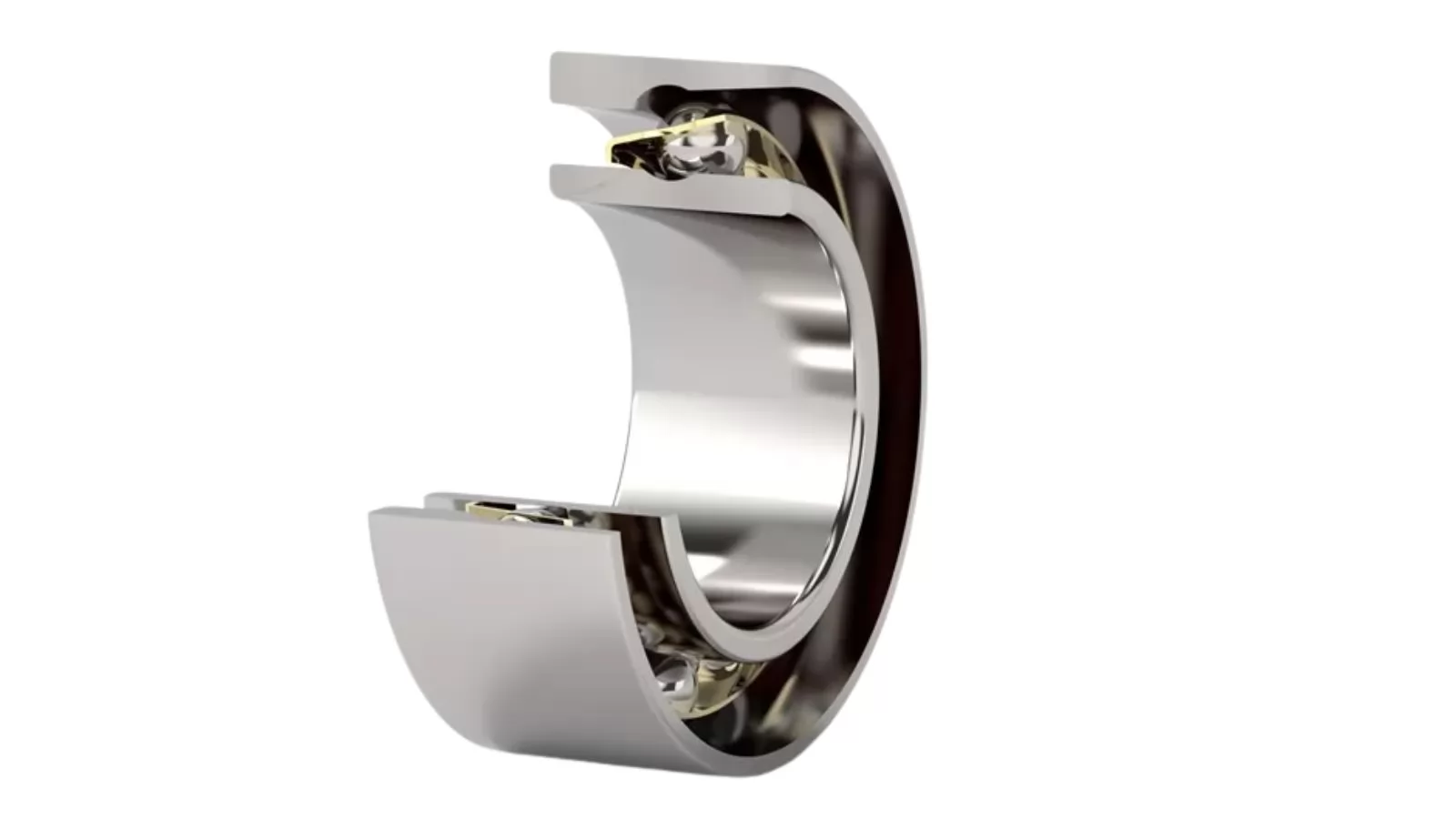
Spin a skateboard wheel. Feel how effortlessly it turns? There's a small but mighty component making that happen — a ball bearing.
At its core, a ball bearing is a mechanical device that reduces friction between two moving parts. It lets things rotate smoothly, quietly, and with minimal energy loss.
You'll find them everywhere — inside your washing machine, your car's wheels, your office chair, even the hard drive in your computer.
The Four Parts That Make It Work
A ball bearing looks simple. But every part has a job.
| Component | What It Does |
|---|---|
| Outer Race | The fixed outer ring — stays in place inside the housing |
| Inner Race | The rotating inner ring — spins with the shaft |
| Balls | Spherical rolling elements — carry the load between races |
| Cage (Retainer) | Keeps balls evenly spaced — prevents them from grinding together |
Together, these four components form a self-contained unit that handles rotation with remarkable efficiency.
What Loads Can It Handle?
Not all forces act the same way. Ball bearings are designed to manage two distinct types.
| Load Type | Direction | Everyday Example |
|---|---|---|
| Radial Load | Perpendicular to the shaft | Weight pressing down on a bicycle wheel axle |
| Axial (Thrust) Load | Parallel to the shaft | Sideways push on a lazy Susan turntable |
Most standard ball bearings handle both — which is exactly why they're so widely used across industries.
How Small Can They Get?
Smaller than you'd expect.
Ball bearings range from under 1mm in diameter — used in dental drills and micromachines — to over 1 meter wide in heavy industrial equipment like wind turbines.
Ball Bearing vs. Plain Bearing
Before ball bearings, machines used plain bearings — two surfaces sliding directly against each other. It worked, but it came with problems.
| Plain Bearing | Ball Bearing | |
|---|---|---|
| Friction Type | Sliding | Rolling |
| Energy Loss | Higher | Lower |
| Heat Generation | More | Less |
| Wear Over Time | Faster | Slower |
| Best For | Heavy, slow loads | High-speed, precision applications |
The switch to ball bearings changed what machines could do — higher speeds, less heat, longer service life.
Why it matters: Choosing the wrong bearing type means premature failure, unexpected downtime, and higher maintenance costs. The right bearing is matched to your specific load, speed, and environment.
How Does a Ball Bearing Work?
It comes down to one simple principle: rolling beats sliding.
When two surfaces slide against each other, friction builds up fast — generating heat, wearing down material, wasting energy. Ball bearings eliminate that problem by introducing rolling elements between the two surfaces.
As the inner race spins with the shaft, the balls roll along the grooved raceways. No direct metal-to-metal sliding. Just smooth, efficient rotation.
The result? Less heat. Less wear. Less energy wasted. That's why ball bearings are found in everything from hard drives spinning at 7,200 RPM to massive wind turbine generators.
What Are Ball Bearings Made Of?
The material determines everything — load capacity, speed tolerance, corrosion resistance, and lifespan.
Most ball bearings are made from SAE 52100 chrome steel, a high-carbon alloy known for hardness and durability. But not every application calls for the same material.
| Material | Best For | Typical Use |
|---|---|---|
| Chrome Steel (52100) | General-purpose, high load | Motors, gearboxes, automotive |
| Stainless Steel | Corrosion resistance | Food processing, medical equipment |
| Ceramic (Si₃N₄) | High speed, high temperature | Aerospace, machine tool spindles |
| Plastic / Polymer | Lightweight, chemical resistance | Lab equipment, low-load applications |
The cage — the component that keeps balls evenly spaced — is typically made from steel, brass, or nylon, depending on the speed and environment.
Main Types of Ball Bearings
Not all ball bearings are built the same. Each type is designed for a specific load condition, speed range, or installation requirement.
| Type | Key Feature | Common Application |
|---|---|---|
| Deep Groove Ball Bearing | Handles radial + axial loads; most versatile | Electric motors, pumps, conveyors |
| Angular Contact Ball Bearing | Designed for combined loads at high speed | Machine tool spindles, compressors |
| Thrust Ball Bearing | Axial loads only; single or double direction | Automotive steering, crane hooks |
| Self-Aligning Ball Bearing | Compensates for shaft misalignment | Agricultural machinery, conveyors |
| Double Row Ball Bearing | Higher load capacity in the same space | Wheel hubs, gearboxes |
When in doubt, deep groove ball bearings are the go-to choice — they cover the widest range of everyday applications.
Roller bearing vs. ball bearing: Roller bearings use cylindrical rollers instead of balls, giving them higher radial load capacity. Ball bearings, however, handle higher speeds and mixed loads more efficiently — making them the preferred choice for most precision applications.
What Are Ball Bearings Used For?
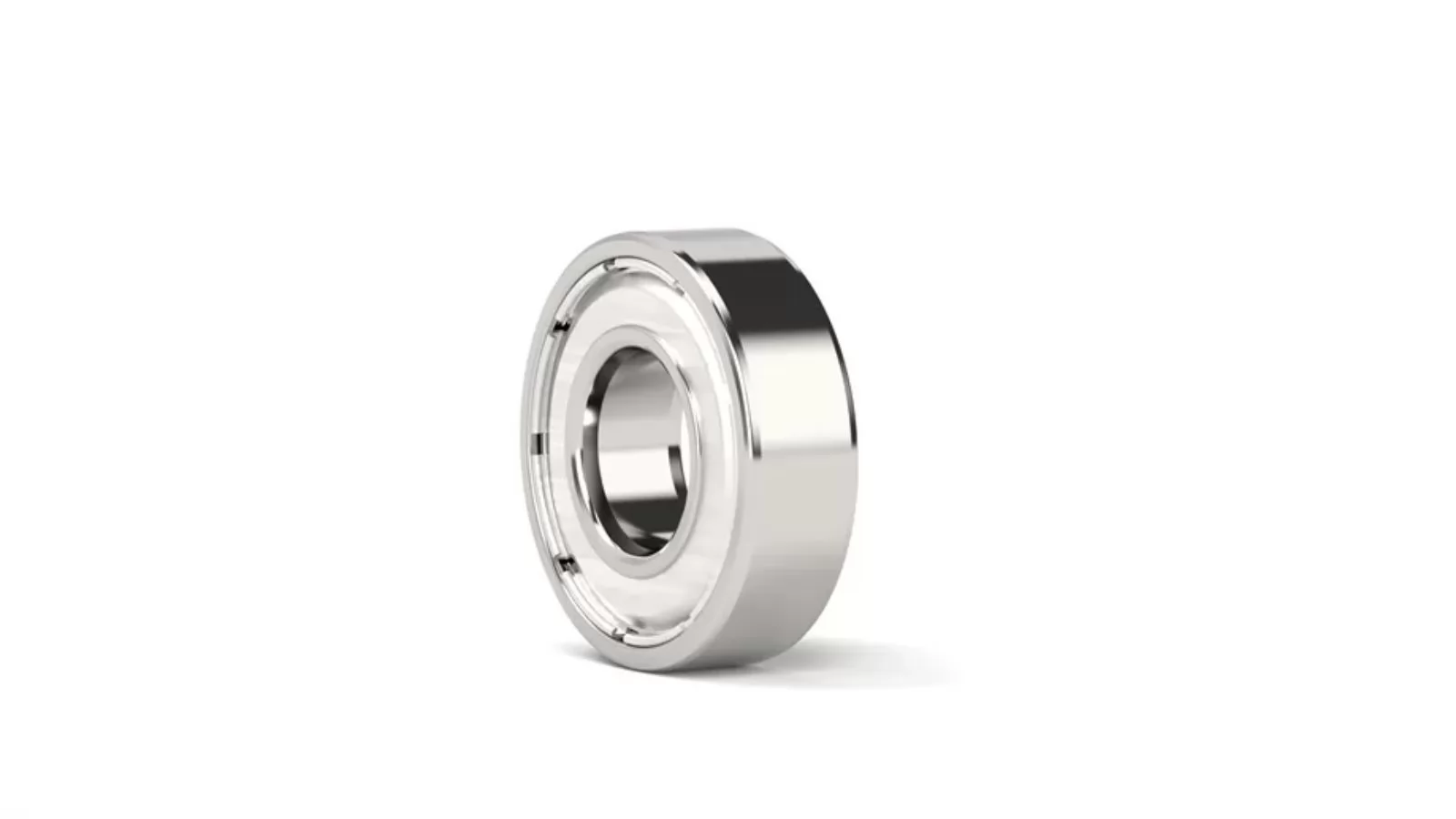
Ball bearings show up wherever smooth, reliable rotation matters — across nearly every industry.
Automotive
Wheel hubs, transmissions, engines, steering systems — your car contains dozens of ball bearings. They keep every rotating component running efficiently, reducing energy loss and heat buildup at high speeds.
Industrial Machinery
Electric motors, pumps, fans, and gearboxes all rely on ball bearings. In a factory running 24/7, bearing failure means downtime — and downtime means money lost. Reliability here is non-negotiable.
Aerospace & Defense
Precision is everything at 35,000 feet. Aircraft engines, navigation systems, and landing gear all use high-grade ball bearings — often manufactured to ABEC 7 or ABEC 9 tolerances.
Medical Equipment
Dental drills, surgical tools, and imaging equipment demand ultra-quiet, contamination-free performance. Stainless steel or ceramic bearings are standard here.
Consumer Electronics
Hard drives, cooling fans, printers — compact, high-speed ball bearings keep these devices running quietly and efficiently for years.
What Everyday Items Have Ball Bearings in Them?
More than you'd think. Ball bearings are hiding in plain sight all around your home.
| Household Item | Where the Bearing Is |
|---|---|
| Washing Machine | Drum shaft — handles high-speed spin cycles |
| Electric Fan | Motor shaft — enables quiet, continuous rotation |
| Skateboard | Each wheel — two bearings per wheel, eight total |
| Office Chair | Swivel base — allows 360° smooth rotation |
| Bicycle | Wheels, pedals, and headset |
| Hard Drive | Spindle motor — spins platters at 5,400–7,200 RPM |
| Vacuum Cleaner | Motor — supports the high-speed impeller |
Ball Bearings vs. Roller Bearings — What's the Difference?
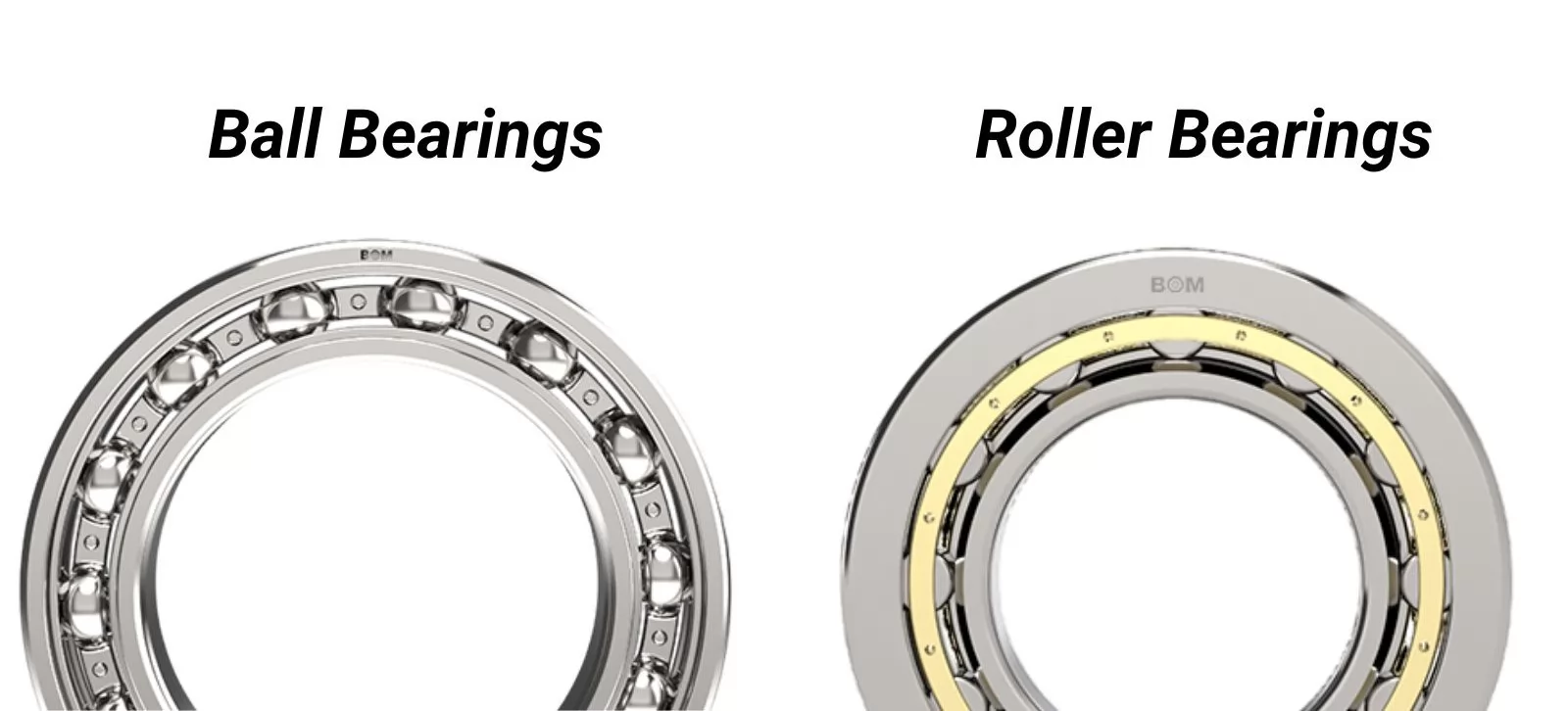
Both reduce friction. Both handle loads. But they're not interchangeable — and choosing the wrong one has real consequences.
| Ball Bearings | Roller Bearings | |
|---|---|---|
| Rolling Element | Spherical balls | Cylindrical or tapered rollers |
| Contact Area | Point contact — smaller | Line contact — larger |
| Load Capacity | Moderate | High — handles heavier loads |
| Speed Tolerance | Higher speeds | Lower speeds |
| Noise Level | Quieter | Slightly louder |
| Typical Use | Motors, electronics, precision tools | Heavy machinery, axles, gearboxes |
The core trade-off: roller bearings carry more weight, ball bearings move faster. Match the bearing to the job — not the other way around.
How to Choose the Right Ball Bearing
The right bearing isn't always the most expensive one — it's the one that fits your exact operating conditions.
Five Factors That Drive the Decision
| Factor | What to Consider |
|---|---|
| Load Type | Radial, axial, or combined? Match bearing geometry to load direction. |
| Speed | Higher RPM demands tighter tolerances and better lubrication. |
| Precision Grade | ABEC ratings (1 to 9) — higher grade means tighter tolerances and higher cost. |
| Environment | Moisture, chemicals, or extreme heat? Choose stainless steel or ceramic accordingly. |
| Lubrication | Grease-packed for sealed bearings; oil lubrication for open, high-speed applications. |
Getting these five factors right upfront prevents premature failure — and avoids costly replacements down the line.
Conclusion
Ball bearings are one of the most quietly essential components in modern machinery. They sit inside your car, your appliances, your tools — doing their job without complaint, often for years.
Understanding what they are, how they work, and what they're made of helps you make smarter decisions — whether you're sourcing bearings for industrial equipment or simply curious about what keeps the world spinning.
Need help selecting the right bearing for your application? Our team is ready to assist — from standard catalog bearings to fully customized solutions.

Hot Article
-
Top 10 Chinese Bearing Brands: How to Choose?
-
Top 10 Custom Ball Bearing Factories in the USA 2026
-
Top 10 Ball Bearing Manufacturers & Suppliers in China 2026
-
Top 10 Slewing Ring Bearing Manufacturers and Suppliers in China (2026)
-
Top 10 Bearing Brands in the World: 2026 Rankings
-
Top 10 Cross Roller Bearing Manufacturers 2026
-
Top 10 Roller Bearing Suppliers in China (2026)
-
List of Custom Bearing Manufacturers: Our Top 10 Picks
Speak to One of Our Experts
Name can't be empty
Email error!
Message can't be empty
Send Message
*We respect your confidentiality and all information are protected.
People Also Viewed
-
 Top 10 Cylindrical Roller Bearing Manufacturers & Suppliers in 2026: The Buyer's Guide to Choosing Right
Top 10 cylindrical roller bearing manufacturers & suppliers in 2026 — ranked by application, with specs, certifications, and pricing to help engineers and procurement teams choose the right supplier.
Read More -
 Top 10 Roller Bearing Manufacturers and Companies in the USA (2026 Review)
Discover the top 10 roller bearing manufacturers and companies in the USA (2026). Compare products, certifications, and find the right supplier for your needs.
Read More -
 Top 10 Tapered Roller Bearing Manufacturers in the USA (2026 Updated)
Looking for the top tapered roller bearing manufacturers in the USA? This guide covers 10 leading brands — from Timken to SKF — with key specs, certifications, and industry applications to help you find the right supplier faster.
Read More


