
What Are Roller Bearings? A Complete Guide for Engineers and Buyers
Jul 01, 2026
BOM
_1782870910_WNo_1600d900.webp)
What are roller bearings, and why are they found in everything from automotive transmissions to mining equipment? As industrial machinery becomes faster, heavier, and more energy-efficient, the demand for reliable rolling contact bearings continues to grow. This guide is based on authoritative industry knowledge and follows EEAT principles to provide practical, trustworthy information for real-world applications.
In simple terms, roller bearings use rolling elements instead of sliding surfaces to reduce friction and carry loads more efficiently. They are often preferred for heavy-duty applications because they can support higher radial loads, improve equipment efficiency, and help extend service life. With manufacturers increasingly focusing on energy savings and predictive maintenance, understanding roller bearing types and selection criteria has become more important than ever for:
- Mechanical engineers
- OEM equipment manufacturers
- Maintenance and MRO teams
- Industrial buyers and sourcing managers
- Students and industry newcomers
This article explains the core concepts of roller bearings, their common types, applications, comparisons, and selection methods, helping you choose the right bearing for your equipment and operating conditions—so keep reading to make a more informed and cost-effective decision.
Table of Contents
- Understanding Roller Bearings and How They Work
- Why Are Roller Bearings Used in Industrial Equipment?
- What Types of Roller Bearings Are Available?
- Roller Bearings vs Ball Bearings: What's the Difference?
- Roller Bearings vs Angular Contact Bearings: Which Should You Choose?
- How to Choose the Right Roller Bearing?
- How to Read Roller Bearing Codes
- Frequently Asked Questions About Roller Bearings
- Conclusion
Understanding Roller Bearings and How They Work
_1782876393_WNo_1600d900.webp)
Before choosing the right bearing, it helps to understand what a roller bearing is and why it performs so well under heavy loads.
A roller bearing is a type of rolling contact bearing designed to reduce friction between moving parts. Instead of allowing two metal surfaces to slide against each other, it uses cylindrical or specially shaped rollers to create rolling motion. This simple design greatly reduces wear, improves efficiency, and extends equipment life.
If you've ever pushed a heavy cabinet across a floor, you've probably noticed how difficult it is. Now imagine placing several steel pipes underneath it. Suddenly, the cabinet rolls forward with much less effort. Roller bearings work in much the same way. The rollers replace sliding friction with rolling friction, making movement smoother while supporting much heavier loads.
In simple terms, a roller bearing allows machine parts to rotate smoothly while carrying radial loads, axial loads, or a combination of both, depending on its design.
A typical roller bearing consists of four basic components:
| Component | Function |
|---|---|
| Inner Ring | Fits onto the rotating shaft and provides the inner raceway. |
| Outer Ring | Fits inside the housing and supports the outer raceway. |
| Rollers | Carry the load by rolling between the raceways. |
| Cage (Retainer) | Keeps the rollers evenly spaced and prevents contact between them. |
Each part has a specific role. Together, they create a durable and efficient bearing system.
The working principle is straightforward:
- The shaft begins to rotate.
- The inner ring rotates with the shaft.
- The rollers roll between the inner and outer rings.
- The cage guides the rollers and keeps them evenly spaced.
- Rolling contact replaces sliding contact, reducing friction and heat.
This rolling action is why roller bearings are often preferred in heavy-duty industrial equipment.
For example, consider a mining conveyor carrying several tons of ore every hour. The conveyor pulleys generate significant radial loads throughout the day. A ball bearing may struggle under these conditions, while a cylindrical roller bearing distributes the load over a larger contact area, improving durability and reducing maintenance intervals.
Different roller bearing designs are built for different operating conditions.
| Bearing Type | Main Load Type | Typical Applications |
|---|---|---|
| Cylindrical Roller Bearing | High radial loads | Electric motors, gearboxes, steel mills |
| Needle Roller Bearing | High radial loads in limited space | Automotive transmissions, compressors |
| Tapered Roller Bearing | Combined radial and axial loads | Wheel hubs, construction equipment |
| Spherical Roller Bearing | Heavy loads with shaft misalignment | Mining equipment, vibrating screens |
Each design serves a different purpose, which is why selecting the right type is essential for reliable machine performance.
Did you know? A needle roller bearing uses long, thin rollers to maximize load capacity while keeping the bearing compact. This makes it an excellent choice when installation space is limited but high radial loads are expected.
In the next section, we'll look at where roller bearings are commonly used and why they are found in everything from factory machinery to wind turbines.
Why Are Roller Bearings Used in Industrial Equipment?
Now that you know how roller bearings work, let's see why they are widely used across so many industries.
Industrial machines often operate under heavy loads, high speeds, and demanding environments. Roller bearings help reduce friction while supporting these loads, allowing equipment to run more efficiently and with less downtime.
Compared with many other bearing types, roller bearings offer several practical advantages:
- Support higher radial loads.
- Reduce friction and heat generation.
- Improve machine efficiency.
- Extend equipment service life.
- Lower maintenance costs.
- Handle continuous operation in harsh conditions.
For example, a quarry conveyor may run for 20 hours a day, carrying thousands of kilograms of crushed stone. Roller bearings help keep the rollers turning smoothly despite constant vibration, dust, and heavy loads.
Their versatility also makes them suitable for many industries.
| Industry | Typical Equipment |
|---|---|
| Mining | Conveyors, crushers, vibrating screens |
| Manufacturing | Gearboxes, motors, production lines |
| Agriculture | Harvesters, tractors, seeders |
| Construction | Excavators, loaders, cranes |
| Energy | Wind turbines, generators |
| Automotive | Wheel hubs, transmissions, differentials |
Different applications require different bearing designs. A compact gearbox may need a needle roller bearing, while a wheel hub typically uses a tapered roller bearing to support both radial and axial loads.
Choosing the right roller bearing is not just about load capacity. Speed, available space, alignment, lubrication, and the operating environment all play an important role in bearing performance.
What Types of Roller Bearings Are Available?
Although all roller bearings reduce friction through rolling elements, their designs are not the same. Each type is developed for specific load conditions and operating environments.
Cylindrical Roller Bearings
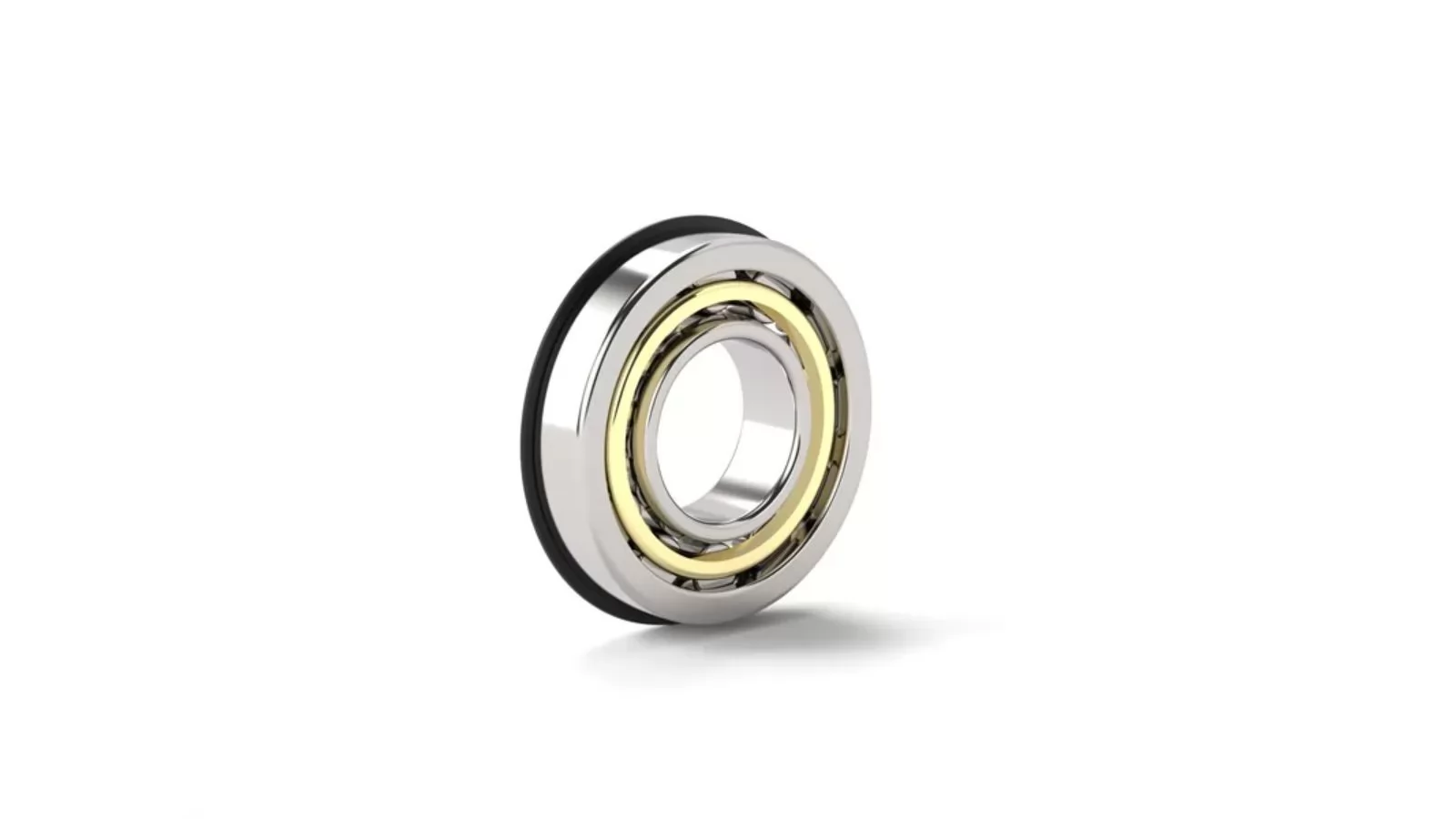
Cylindrical roller bearings use straight rollers with a large contact area. They are designed primarily for heavy radial loads and high-speed operation.
Many electric motors, pumps, and industrial gearboxes use this design because of its high load capacity and low friction.
Some cylindrical roller bearings are available in NU bearing configurations. In this design, one ring has no flanges, allowing limited axial displacement caused by thermal expansion.
Needle Roller Bearings
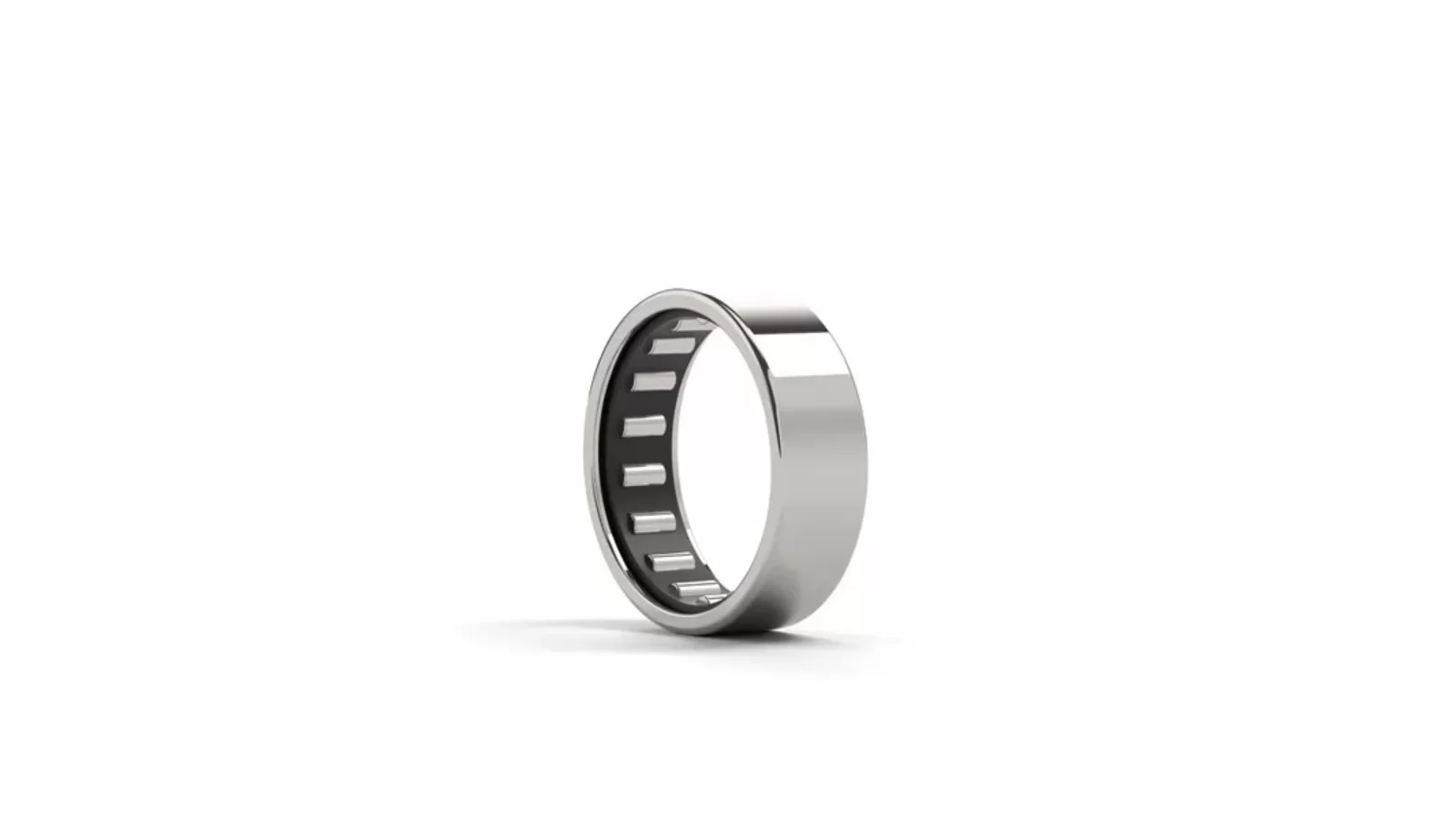
Needle roller bearings use long, slender rollers that provide excellent radial load capacity while occupying very little space.
They are often selected for compact equipment where standard bearings cannot fit.
Common applications include:
- Automotive transmissions
- Motorcycles
- Power tools
- Compressors
- Agricultural machinery
Some applications also use loose needle roller bearings, where the rollers are installed directly without a cage to maximize load capacity.
Tapered Roller Bearings
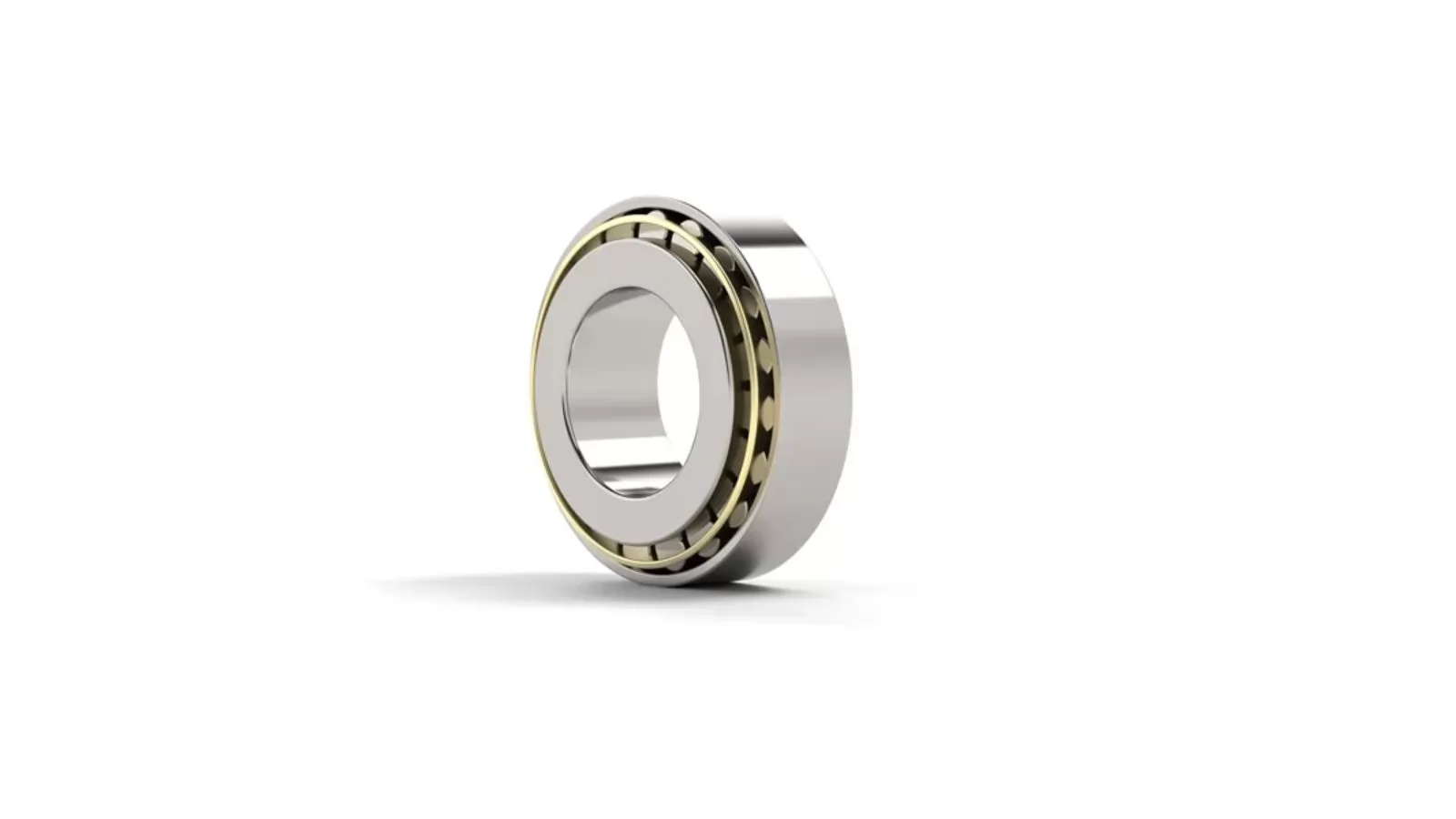
Tapered roller bearings feature conical rollers and raceways. This design allows them to support both radial and axial loads simultaneously.
They are widely used in automotive wheel hubs, truck axles, and heavy construction equipment where combined loads are common.
Spherical Roller Bearings
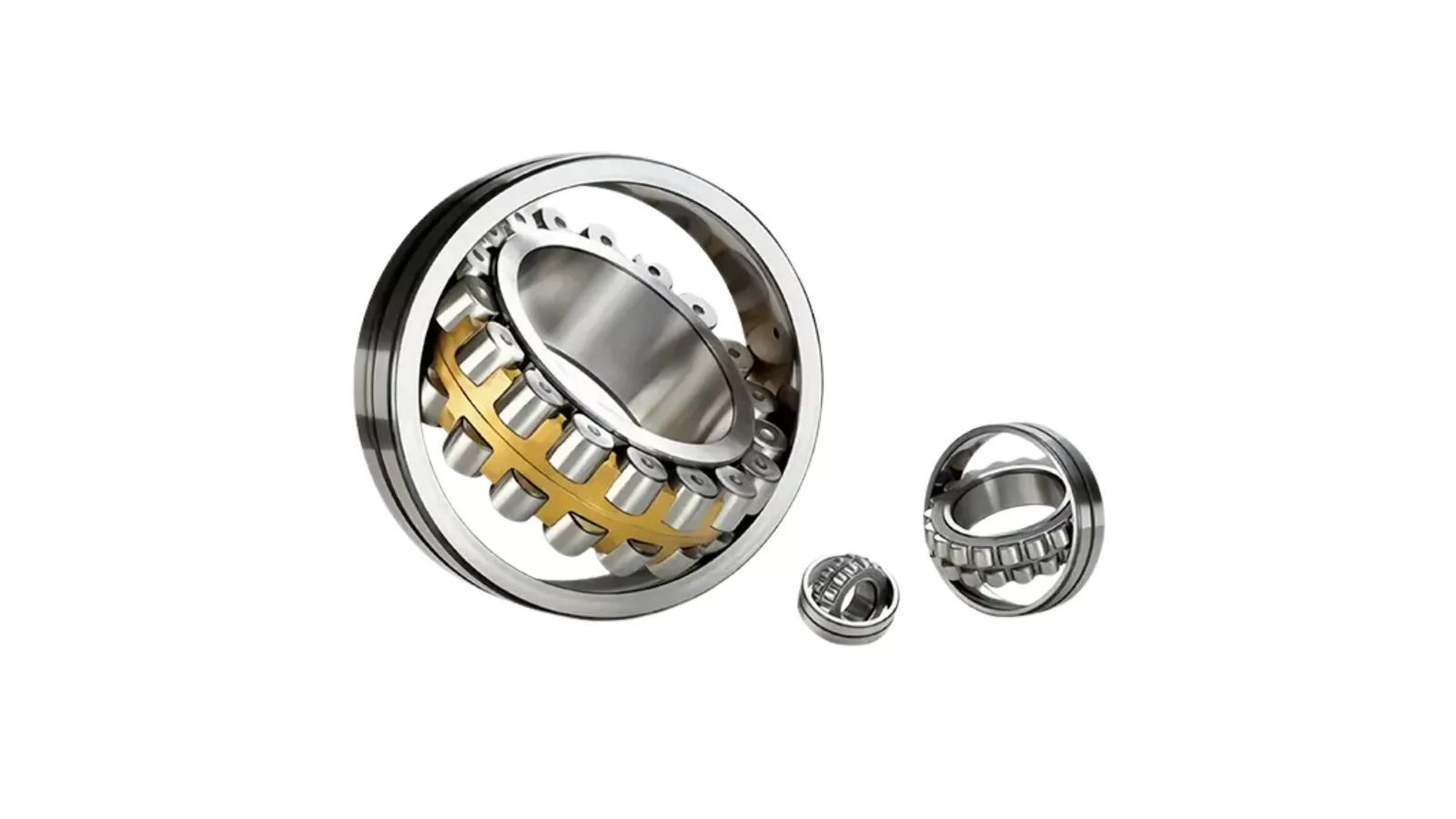
Spherical roller bearings have two rows of barrel-shaped rollers that automatically compensate for shaft misalignment.
They are an excellent choice for harsh environments with heavy loads and vibration, such as mining equipment, paper mills, and cement plants.
The table below provides a quick comparison of the four common roller bearing types.
| Bearing Type | Main Advantage | Best For |
|---|---|---|
| Cylindrical Roller Bearing | High radial load capacity | Motors, gearboxes, pumps |
| Needle Roller Bearing | Compact design | Limited installation space |
| Tapered Roller Bearing | Handles radial and axial loads | Wheel hubs, heavy machinery |
| Spherical Roller Bearing | Self-aligning capability | Mining and vibrating equipment |
Besides these four common types, manufacturers also offer specialized roller bearings for unique operating conditions. Selecting the right design depends on load direction, speed, space limitations, and working environment.
Roller Bearings vs Ball Bearings: What's the Difference?
Both roller bearings and ball bearings are rolling contact bearings. Their main purpose is the same—to reduce friction and support rotating components. The biggest difference lies in the shape of the rolling elements.
Ball bearings use spherical balls, while roller bearings use cylindrical, tapered, or barrel-shaped rollers. Because rollers have a larger contact area, they can generally carry heavier loads.
The comparison below highlights the key differences.
| Feature | Roller Bearings | Ball Bearings |
|---|---|---|
| Rolling Element | Rollers | Balls |
| Load Capacity | Higher | Moderate |
| Best for | Heavy-duty applications | High-speed, light-duty applications |
| Contact Area | Larger | Smaller |
| Typical Equipment | Gearboxes, crushers, conveyors | Electric motors, fans, pumps |
For example, a warehouse conveyor carrying heavy pallets usually relies on roller bearings because they can withstand continuous heavy loads. In contrast, a household electric fan typically uses ball bearings, where speed and low noise are more important than maximum load capacity.
Quick Tip: If your application mainly carries heavy radial loads, roller bearings are often the better choice. If high rotational speed and lower friction are the priority, ball bearings may be more suitable.
Neither design is universally better. The right choice depends on the operating conditions.
Roller Bearings vs Angular Contact Bearings: Which Should You Choose?
An angular contact bearing, also called an angular contact ball bearing, is a type of ball bearing designed to carry both radial and axial loads. Unlike standard ball bearings, it has specially designed raceways that create a contact angle between the balls and the rings.
Although both bearing types can support combined loads, they are designed for different applications.
The following comparison makes the differences easier to understand.
| Feature | Roller Bearings | Angular Contact Bearings |
|---|---|---|
| Main Strength | Heavy load capacity | High-speed precision |
| Load Type | Mainly radial or combined loads | Combined radial and axial loads |
| Operating Speed | Medium to high | Very high |
| Typical Applications | Mining, construction, gearboxes | Machine tools, pumps, robotics |
Imagine two different machines. An excavator gearbox experiences heavy shocks and constant loading. A roller bearing is the preferred solution. A CNC machine spindle, however, rotates at extremely high speed and requires precise positioning. In this case, an angular contact bearing is the better option.
In short, choose roller bearings for higher load capacity and durability. Choose angular contact bearings when speed, accuracy, and axial load performance are the primary requirements.
How to Choose the Right Roller Bearing?
There is no single roller bearing that fits every application. Selecting the right one requires evaluating both the machine and its working conditions.
Start by considering these key factors.
| Selection Factor | Why It Matters |
|---|---|
| Load Direction | Determine whether the bearing carries radial, axial, or combined loads. |
| Load Magnitude | Heavier loads usually require larger or stronger bearing designs. |
| Operating Speed | Some bearings perform better at high speeds than others. |
| Installation Space | Compact spaces may require needle roller bearings. |
| Alignment | Misalignment may call for spherical roller bearings. |
| Working Environment | Dust, moisture, vibration, and high temperatures affect bearing selection. |
Here is a simple guide for common applications.
| Application Requirement | Recommended Bearing Type |
|---|---|
| Heavy radial loads | Cylindrical Roller Bearing |
| Limited installation space | Needle Roller Bearing |
| Combined radial and axial loads | Tapered Roller Bearing |
| Misalignment and vibration | Spherical Roller Bearing |
For instance, if you are designing a compact automotive transmission, a needle roller bearing can provide high load capacity without increasing the gearbox size. If you're maintaining equipment in a cement plant, a spherical roller bearing is often a better choice because it tolerates vibration and shaft misalignment.
Selection Tip: Always consider the complete operating condition instead of focusing on load capacity alone. The correct bearing improves efficiency, reduces maintenance, and helps avoid unexpected downtime.
How to Read Roller Bearing Codes
Roller bearing model numbers are more than just product IDs. They provide valuable information about the bearing's design, dimensions, internal clearance, and special features.
Although coding systems may vary slightly between manufacturers, many follow international standards such as ISO.
| Bearing Code | Meaning |
|---|---|
| 22320 | Bearing series and bore size |
| K | Tapered bore (1:12 taper) |
| EJ | Reinforced internal design with a steel cage (may vary by manufacturer) |
| W33 | Lubrication groove and three lubrication holes on the outer ring |
| C3 | Greater internal clearance than Normal |
Among these suffixes, W33 is one of the most common. It indicates that the bearing has lubrication grooves and holes, making it easier to distribute grease or oil during operation. This feature is widely used in heavy industrial equipment that requires regular lubrication.
Note: The exact meaning of suffixes such as EJ may differ between bearing manufacturers. Always check the supplier's technical catalog when selecting a replacement bearing.
Understanding bearing codes can help you identify compatible products, avoid installation errors, and simplify maintenance.
Frequently Asked Questions About Roller Bearings
Here are some of the most common questions about roller bearings.
What are roller bearings used for?
Roller bearings are used in equipment that carries heavy radial or combined loads, including gearboxes, conveyors, electric motors, mining machinery, construction equipment, agricultural machines, and automotive transmissions.
When should you use roller bearings?
Roller bearings are the best choice when an application requires high load capacity, long service life, and reliable performance under demanding operating conditions.
What are the five main types of bearings?
The five common bearing types are ball bearings, cylindrical roller bearings, needle roller bearings, tapered roller bearings, and spherical roller bearings. Each is designed for different load and operating conditions.
How can you tell if a roller bearing is bad?
Common signs include unusual noise, excessive vibration, overheating, visible wear, corrosion, or reduced machine performance. Regular inspection helps prevent unexpected failures.
What is the life expectancy of a roller bearing?
The service life depends on load, speed, lubrication, and operating conditions. Properly selected and maintained roller bearings can operate reliably for many years.
Conclusion
Roller bearings play a vital role in modern machinery by reducing friction, supporting heavy loads, and improving operating efficiency.
Whether you need a cylindrical, needle, tapered, or spherical roller bearing, understanding how each type works will help you make a more informed selection.
Selecting the right bearing is not only about choosing the correct size. Load conditions, operating speed, available space, lubrication, and the working environment should all be considered to achieve the best performance and longest service life.
If you're unsure which roller bearing is best for your application, our engineering team can help you identify the most suitable solution based on your equipment and operating conditions.


Hot Article
-
Top 10 Chinese Bearing Brands: How to Choose?
-
Top 10 Custom Ball Bearing Factories in the USA 2026
-
Top 10 Ball Bearing Manufacturers & Suppliers in China 2026
-
Top 10 Slewing Ring Bearing Manufacturers and Suppliers in China (2026)
-
Top 10 Bearing Brands in the World: 2026 Rankings
-
Top 10 Cross Roller Bearing Manufacturers 2026
-
Top 10 Roller Bearing Suppliers in China (2026)
-
List of Custom Bearing Manufacturers: Our Top 10 Picks
Speak to One of Our Experts
Name can't be empty
Email error!
Message can't be empty
Send Message
*We respect your confidentiality and all information are protected.
People Also Viewed
-
 Top 10 Cylindrical Roller Bearing Manufacturers & Suppliers in 2026: The Buyer's Guide to Choosing Right
Top 10 cylindrical roller bearing manufacturers & suppliers in 2026 — ranked by application, with specs, certifications, and pricing to help engineers and procurement teams choose the right supplier.
Read More -
 Top 10 Roller Bearing Manufacturers and Companies in the USA (2026 Review)
Discover the top 10 roller bearing manufacturers and companies in the USA (2026). Compare products, certifications, and find the right supplier for your needs.
Read More -
 Top 10 Tapered Roller Bearing Manufacturers in the USA (2026 Updated)
Looking for the top tapered roller bearing manufacturers in the USA? This guide covers 10 leading brands — from Timken to SKF — with key specs, certifications, and industry applications to help you find the right supplier faster.
Read More


