
What Is a Slewing Ring Bearing? A Complete Guide to Types, Working Principle, and Applications
Jul 02, 2026
BOM
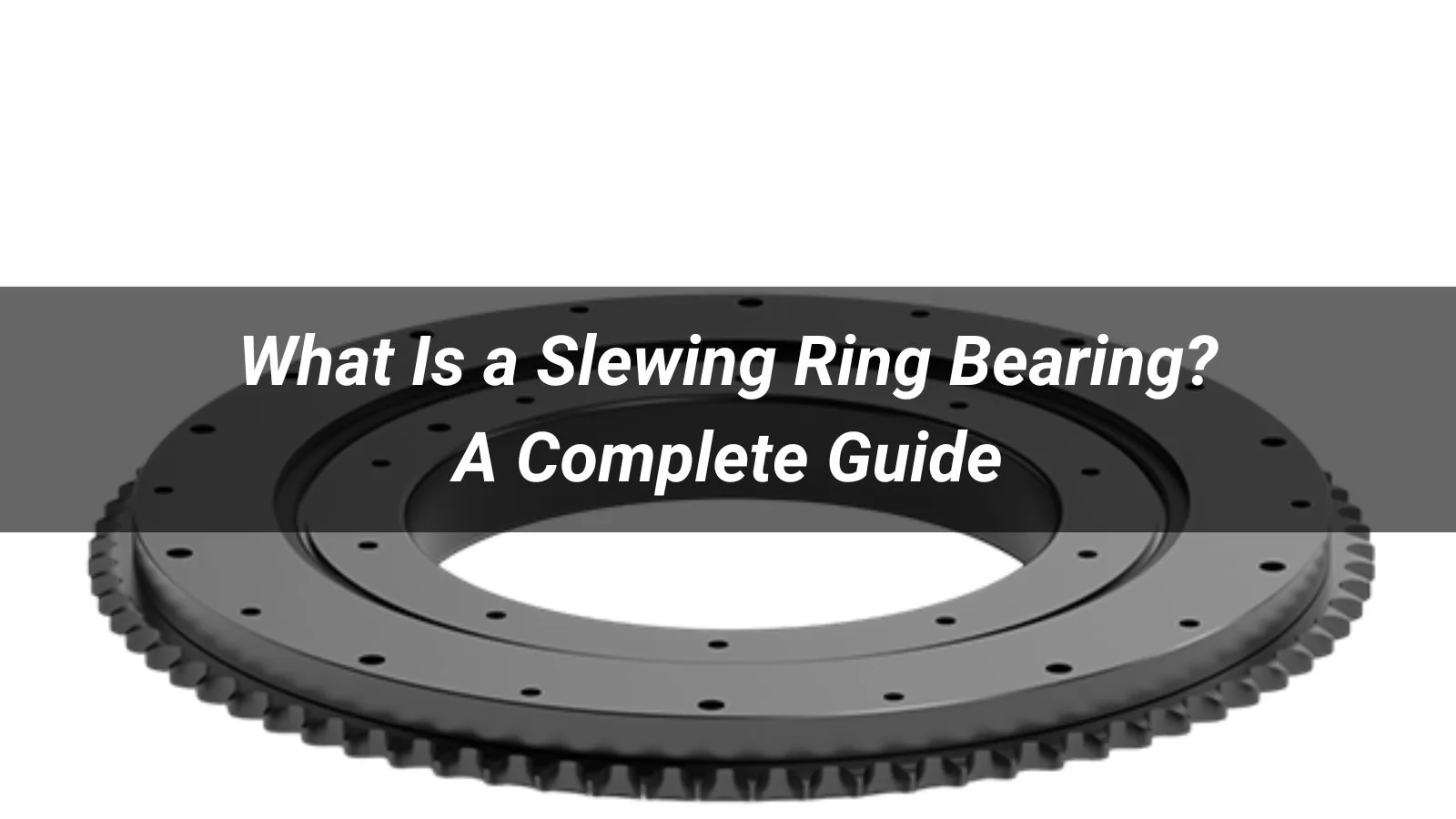
In modern heavy machinery design, what is a slewing ring bearing has become a key question for engineers dealing with large-scale rotational systems. From excavators on construction sites to wind turbines on remote fields, this component quietly supports some of the most demanding motion tasks in industry.
The slewing ring bearing is widely used across industries where stability, load capacity, and controlled rotation are critical. It helps solve core engineering challenges for:
- Construction and mining equipment requiring high load and impact resistance
- Renewable energy systems such as wind turbines and solar trackers needing precise alignment
- Industrial automation and robotics that demand smooth and accurate rotation
- Heavy lifting and material handling machinery operating under continuous stress
This guide explains how slewing ring bearings work, the main types available, and how to choose the right solution for different applications. Understanding these factors is essential for improving equipment reliability and reducing long-term operational costs. Continue reading to explore the key principles and selection insights in detail.
Table of Contents
- What Is the Purpose of a Slewing Ring Bearing?
- What Makes a Slewing Ring Bearing Different from Standard Bearings?
- How Does a Slewing Ring Bearing Work?
- What Are the Main Types of Slewing Ring Bearings?
- Where Are Slewing Ring Bearings Used?
- How Do You Choose the Right Slewing Bearing?
- SKF, INA, or China Slewing Ring Bearing: What's the Difference?
- How to Evaluate Slewing Bearing Manufacturers?
- Are Cheap Slewing Ring Bearings Worth Buying?
- Frequently Asked Questions
- Conclusion
What Is the Purpose of a Slewing Ring Bearing?
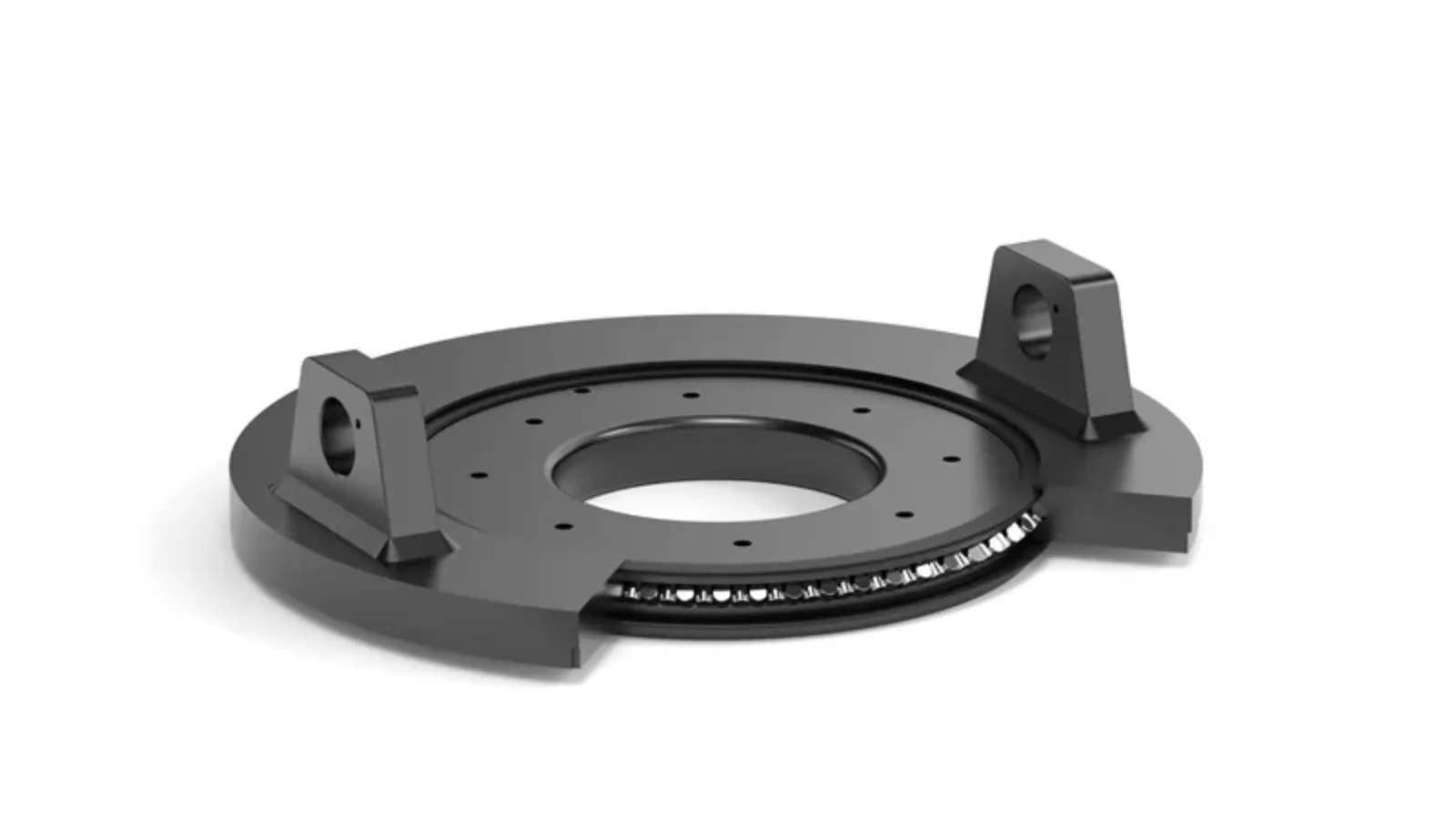
Before looking at its design, it's important to understand what a slewing ring bearing is designed to do.
A slewing ring bearing supports heavy loads while allowing smooth rotational movement. Unlike conventional bearings, it can simultaneously withstand axial loads, radial loads, and overturning moments, making it ideal for large rotating equipment.
Think about an excavator on a construction site. Every time the operator swings the upper structure to move soil from one side to another, the slewing ring bearing supports the machine's weight, the digging force, and the continuous rotation—all at once.
This combination of strength and controlled movement is why slewing bearings are widely used in heavy-duty machinery.
The table below shows several typical applications.
| Equipment | Purpose of the Slewing Ring Bearing |
|---|---|
| Excavators | Allows the upper structure to rotate 360° while carrying the boom and bucket loads. |
| Tower cranes | Supports heavy lifting loads and enables precise boom rotation. |
| Wind turbines | Rotates the nacelle to face changing wind directions. |
| Solar trackers | Adjusts the position of solar panels throughout the day. |
| Industrial turntables | Provides stable and accurate rotation for manufacturing processes. |
Although these machines serve different industries, they all rely on the same component to achieve reliable rotation under heavy loads.
Many slewing ring bearings also integrate gear teeth directly into the bearing ring. Depending on the equipment design, engineers can choose an internal gear, an external gear, or a gearless configuration. For example, an external gear slewing bearing is commonly used in cranes and excavators because it is easy to drive with a pinion gear and simplifies maintenance.
In simple terms: A slewing ring bearing is more than a bearing. It is a load-carrying, rotating structural component that connects major parts of a machine while ensuring smooth, safe, and precise movement.
What Makes a Slewing Ring Bearing Different from Standard Bearings?
At first glance, both allow rotational movement. However, they are designed for completely different working conditions.
A standard bearing is typically installed on a shaft and supports either radial loads or limited axial loads. A slewing ring bearing, on the other hand, is a large structural component that connects two major parts of a machine while carrying multiple loads simultaneously.
The comparison below highlights the main differences.
| Feature | Standard Bearing | Slewing Ring Bearing |
|---|---|---|
| Main purpose | Support rotating shafts | Support large rotating structures |
| Load capacity | Mainly radial loads | Axial, radial, and overturning moment loads |
| Structure | Mounted inside a housing | Acts as both a bearing and a structural connection |
| Rotation angle | Continuous high-speed rotation | Slow, controlled rotation |
| Typical applications | Motors, pumps, gearboxes | Cranes, excavators, wind turbines, turntables |
For example, an electric motor may spin at thousands of revolutions per minute using standard bearings. A tower crane rotates much more slowly, but it must safely support dozens of tons while resisting strong wind and uneven loads. This is exactly the job a slewing ring bearing is built for.
Key takeaway: Standard bearings focus on rotational speed. Slewing ring bearings focus on carrying heavy loads while maintaining smooth and stable rotation.
How Does a Slewing Ring Bearing Work?
Understanding its working principle makes it easier to choose the right bearing for your application.
A typical slewing ring bearing consists of two rings, rolling elements, raceways, seals, and mounting holes. Some models also include internal or external gear teeth for direct power transmission.
The main components are listed below.
| Component | Function |
|---|---|
| Inner ring | Connects to one part of the machine. |
| Outer ring | Supports the mating structure. |
| Rolling elements | Reduce friction and carry loads. |
| Raceways | Guide the rolling elements during rotation. |
| Seals | Keep grease in and contaminants out. |
| Gear teeth (optional) | Transmit driving force from a motor or pinion. |
During operation, one ring remains fixed while the other rotates. The rolling elements move smoothly between the raceways, distributing forces across the entire bearing. This design allows the bearing to support heavy equipment without excessive friction.
For instance, when a crawler crane lifts a steel beam, the boom rotates slowly as the load changes direction. The slewing ring bearing transfers the weight evenly through the rolling elements, helping the crane rotate safely and precisely.
Many construction machines use an external gear slewing bearing. A small pinion gear driven by a hydraulic motor meshes with the external teeth, providing smooth and accurate rotational control.
What Are the Main Types of Slewing Ring Bearings?
Not all slewing ring bearings are built the same. Different designs are optimized for different loads, installation spaces, and operating conditions.
Types by Rolling Elements
The rolling elements determine how the bearing carries loads. The table below compares the most common designs.
_1782971059_WNo_1600d900.webp)
| Type | Characteristics | Typical Applications |
|---|---|---|
| Single-row ball | Compact, economical, suitable for combined loads | Excavators, cranes, aerial platforms |
| Double-row ball | Higher load capacity and improved stability | Port equipment, heavy machinery |
| Crossed roller | High rigidity and positioning accuracy | Robotics, medical equipment, machine tools |
| Three-row roller | Excellent load capacity for very large machines | Mining equipment, offshore cranes |
Each design balances load capacity, precision, and cost differently.
Types by Gear Design
Another important difference is the gear configuration. The following options are commonly available.
_1782971536_WNo_1600d900.webp)
| Gear Type | Best For |
|---|---|
| External gear | Easy installation and direct pinion drive. |
| Internal gear | Compact equipment with protected gearing. |
| Without gear | Applications using friction or external drive systems. |
For example, most excavators use an external gear slewing bearing because it allows the hydraulic drive motor to mesh directly with the bearing. Wind turbines and specialized industrial equipment may choose other configurations depending on their structural design.
There is no universal "best" slewing ring bearing. The right choice depends on load capacity, available space, rotation speed, drive method, and service life requirements.
Where Are Slewing Ring Bearings Used?
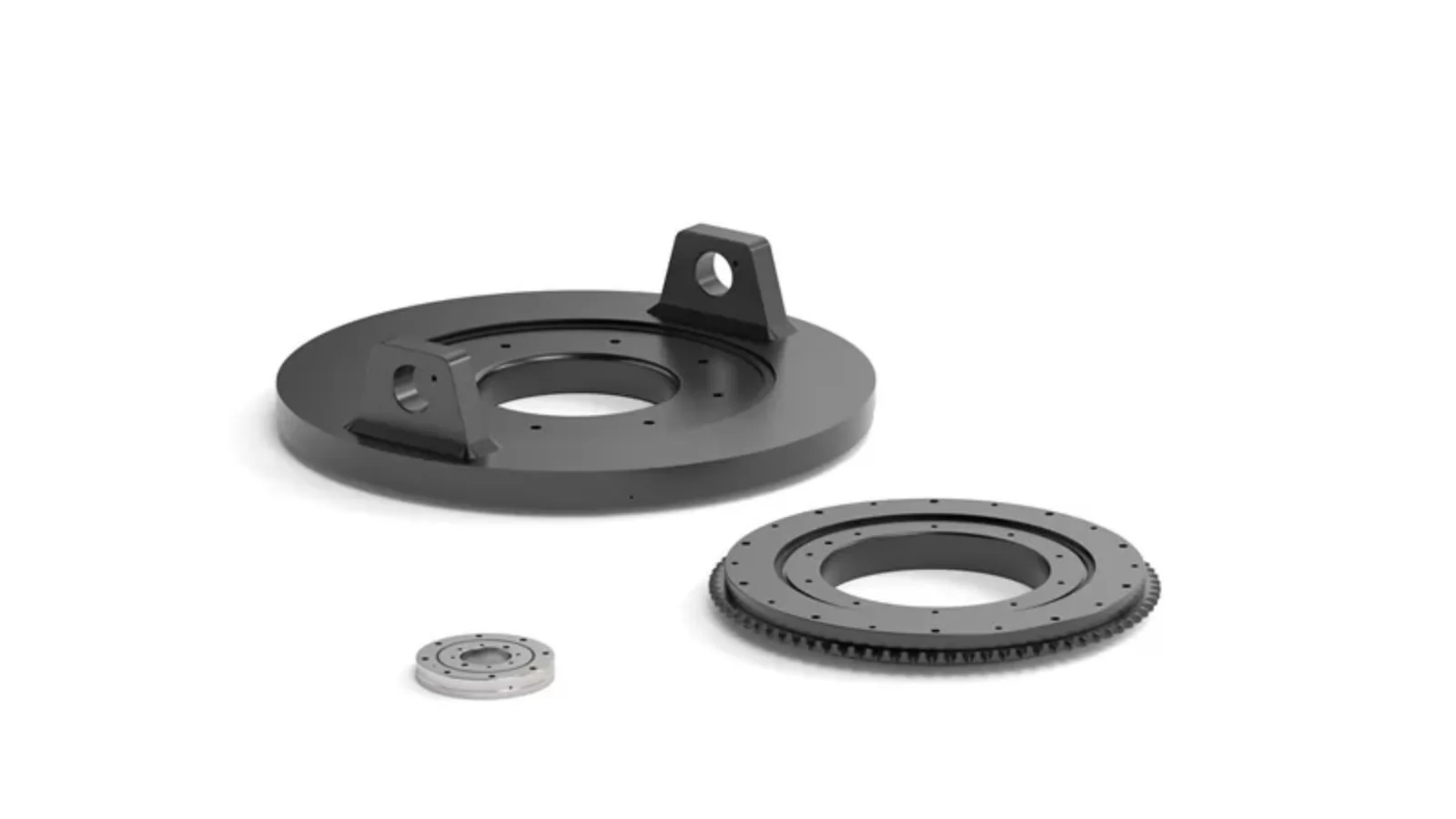
Slewing ring bearings are used wherever machines need controlled rotation under heavy loads. They are essential in systems that combine strength, precision, and stability.
Typical industries include construction, energy, mining, and automation, where equipment must operate reliably under continuous stress.
| Industry | Application Example | Function of Slewing Bearing |
|---|---|---|
| Construction | Excavators, tower cranes | Enable 360° rotation under heavy loads |
| Energy | Wind turbines, solar trackers | Adjust direction for wind or sunlight efficiency |
| Mining | Stackers, reclaimers | Support continuous high-load operation |
| Automation | Robotic arms, rotary tables | Provide precise positioning and smooth motion |
| Port equipment | Crane systems | Ensure stable lifting and rotation |
For example, in a wind turbine, the nacelle slowly rotates to face the wind. Although the movement is slow and almost invisible, the slewing bearing is constantly carrying large structural loads while maintaining alignment accuracy.
How Do You Choose the Right Slewing Bearing?
Choosing the right slewing bearing requires more than matching dimensions. It involves evaluating load conditions, working environment, and service expectations.
Engineers usually consider the following key factors:
| Selection Factor | Why It Matters |
|---|---|
| Load type | Determines whether axial, radial, or moment loads dominate |
| Gear type | External, internal, or gearless design affects drive system compatibility |
| Rotation speed | Influences heat generation and lubrication requirements |
| Environment | Dust, humidity, and temperature impact service life |
| Precision requirement | Important for robotics and positioning systems |
For instance, a crane operating offshore requires corrosion resistance and high load capacity, while a rotary table in a factory prioritizes precision and smooth motion.
In many cases, the best solution is not a standard product but a customized slewing bearing designed for the specific operating condition.
SKF, INA, or China Slewing Ring Bearing: What's the Difference?
Different suppliers offer different strengths in terms of performance, cost, and delivery capability. Understanding these differences helps buyers make better sourcing decisions.
| Brand | Key Strength | Typical Use Case |
|---|---|---|
| SKF | High precision and global reliability | Premium industrial and heavy-duty applications |
| INA | Strong engineering design and stability | Automation and precision machinery |
| China manufacturers | Cost efficiency and customization flexibility | OEM equipment and large-volume projects |
For example, European brands are often chosen for standardized high-end projects, while Chinese suppliers are widely used in OEM production due to shorter lead times and competitive pricing.
Today, many experienced China-based manufacturers can provide OEM-level quality with flexible engineering support, making them a strong alternative for global buyers seeking cost-performance balance.
How to Evaluate Slewing Bearing Manufacturers?
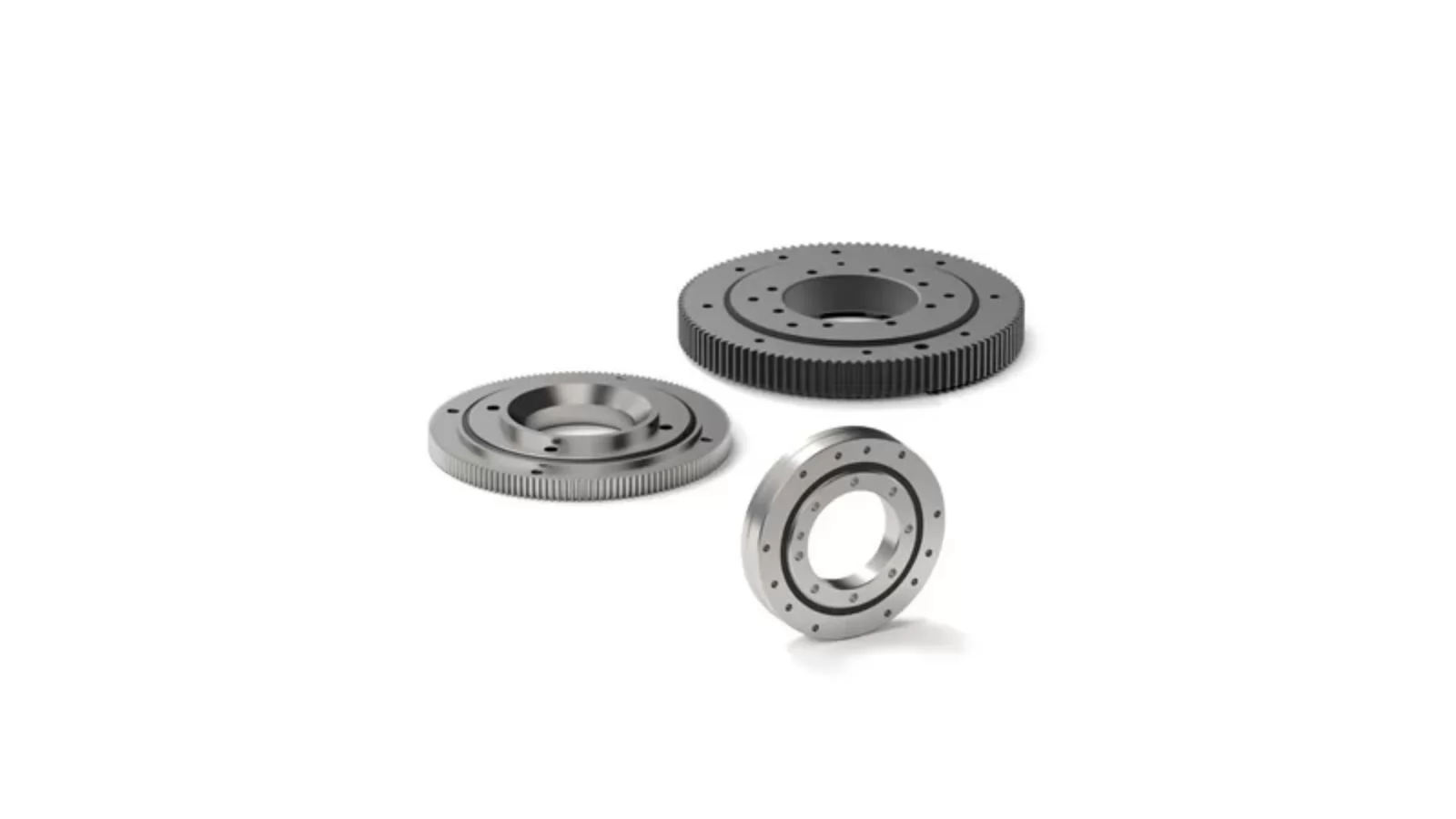
Choosing a reliable slewing bearing manufacturer is critical for ensuring product performance, safety, and long service life. Beyond price, buyers should evaluate technical capability and production consistency.
In real applications such as cranes or mining machinery, even small manufacturing deviations can lead to uneven load distribution or early failure.
| Evaluation Factor | What to Check |
|---|---|
| Material quality | Steel grade, heat treatment process, hardness consistency |
| Machining accuracy | Raceway precision, gear accuracy, tolerance control |
| Production equipment | CNC machines, grinding systems, heat treatment lines |
| Quality control | Inspection reports, load testing, ISO certification |
| Engineering support | Ability to provide design and customization assistance |
| Export experience | Stability in delivery and international project handling |
For example, a manufacturer supplying wind turbine components must maintain extremely stable quality control due to long-term continuous operation requirements.
A strong manufacturer is not just a supplier but also an engineering partner that helps reduce design and operational risks.
Are Cheap Slewing Ring Bearings Worth Buying?
Low-cost slewing bearings can be attractive for budget-sensitive projects, but their suitability depends heavily on the application.
In light-duty or low-frequency systems, cost-effective bearings may perform adequately. However, in heavy-duty machinery, the risks of failure often outweigh the initial savings.
| Application Type | Cheap Bearing Suitability | Reason |
|---|---|---|
| Light machinery | Suitable | Low load and limited operating cycles |
| General industrial equipment | Conditional | Depends on duty cycle and safety requirements |
| Construction machinery | Not recommended | High loads and safety-critical operation |
| Energy equipment | Not recommended | High cost of downtime and maintenance |
For example, a low-cost bearing used in a rotary display platform may be acceptable, but the same choice in a crane system could lead to costly downtime and safety risks.
In most engineering projects, total lifecycle cost is more important than initial purchase price.
Frequently Asked Questions
What is the purpose of the slewing bearing?
It supports heavy loads while enabling controlled rotational movement in large equipment.
Who is the largest bearing manufacturer in the world?
SKF is widely recognized as one of the largest global bearing manufacturers.
What are common causes of slewing errors?
Improper lubrication, overload, installation misalignment, and wear.
What is the life of a slewing bearing?
It varies by application, typically ranging from several years to over a decade with proper maintenance.
What are the benefits of slewing?
It enables heavy load rotation, structural stability, and precise positioning.
Conclusion
Slewing ring bearings play a critical role in modern heavy machinery, enabling stable rotation while supporting axial, radial, and overturning loads at the same time. From construction equipment and wind turbines to industrial automation systems, their performance directly affects safety, efficiency, and service life.
Choosing the right bearing is not just a technical decision, but also a cost and reliability decision. Factors such as load conditions, gear type, operating environment, and manufacturer capability all need to be carefully evaluated. In many cases, working directly with an experienced supplier can significantly reduce project risk and improve long-term performance.
If you are looking for a reliable solution, direct factory support and OEM customization are often the most efficient way to ensure both quality and cost control. As a China-based manufacturer, Bom provides slewing ring bearings with flexible design options, stable production capability, and engineering support for different industrial applications.
For project inquiries, technical selection, or bulk quotation requests, feel free to contact us. A properly selected slewing bearing can make a significant difference in machine stability, service life, and overall operating cost.


Hot Article
-
Top 10 Chinese Bearing Brands: How to Choose?
-
Top 10 Custom Ball Bearing Factories in the USA 2026
-
Top 10 Ball Bearing Manufacturers & Suppliers in China 2026
-
Top 10 Slewing Ring Bearing Manufacturers and Suppliers in China (2026)
-
Top 10 Bearing Brands in the World: 2026 Rankings
-
Top 10 Cross Roller Bearing Manufacturers 2026
-
Top 10 Roller Bearing Suppliers in China (2026)
-
List of Custom Bearing Manufacturers: Our Top 10 Picks
Speak to One of Our Experts
Name can't be empty
Email error!
Message can't be empty
Send Message
*We respect your confidentiality and all information are protected.
People Also Viewed
-
 Top 10 Cylindrical Roller Bearing Manufacturers & Suppliers in 2026: The Buyer's Guide to Choosing Right
Top 10 cylindrical roller bearing manufacturers & suppliers in 2026 — ranked by application, with specs, certifications, and pricing to help engineers and procurement teams choose the right supplier.
Read More -
 Top 10 Roller Bearing Manufacturers and Companies in the USA (2026 Review)
Discover the top 10 roller bearing manufacturers and companies in the USA (2026). Compare products, certifications, and find the right supplier for your needs.
Read More -
 Top 10 Tapered Roller Bearing Manufacturers in the USA (2026 Updated)
Looking for the top tapered roller bearing manufacturers in the USA? This guide covers 10 leading brands — from Timken to SKF — with key specs, certifications, and industry applications to help you find the right supplier faster.
Read More


