Double Shielded vs Double Sealed Bearings: Which One Should You Choose?
Jul 16, 2026
BOM
_1784167632_WNo_1600d900.webp)
Double shielded vs double sealed bearings is one of the most common questions procurement teams and maintenance engineers ask when replacing a failed bearing or sourcing parts for new equipment. The two look almost identical on a spec sheet, yet they perform very differently once installed in real working conditions.
In short: double sealed bearings offer stronger protection against dust, water, and grime, while double shielded bearings run cooler and handle higher speeds. The right choice depends on where the bearing operates and how it will be used. This distinction matters more than ever as industries push equipment harder and demand longer service intervals with less downtime. This guide is especially useful for:
- Maintenance engineers replacing worn bearings in the field
- Procurement teams sourcing parts for new equipment builds
- Machine designers specifying components for harsh or high-speed environments
- Anyone unsure whether their current bearing choice matches its operating conditions
This guide breaks down how sealed and shielded bearings are built, marked, and applied across common industrial and mechanical settings, because picking the wrong one can mean the difference between years of reliable service and a costly early failure. Keep reading to find the right fit for your application.
Table of Contents
- What Are Shielded Bearings?
- What Are Sealed Bearings?
- How Do Double Sealed (2RS) and Double Shielded (2ZZ) Bearings Differ?
- What Are the Main Types of Bearing Sealing Methods?
- Which Environments Favor Sealed vs Shielded Bearings?
- What Types of Bearings Come in Sealed Versions?
- So, What Is Better — Sealed or Shielded Bearings?
- Frequently Asked Questions
- Conclusion
What Are Shielded Bearings?
Now picture a different machine — a cooling fan motor spinning at high RPM in a clean workshop. No mud, no wash-down, just air and dust. A shielded bearing fits this job perfectly.
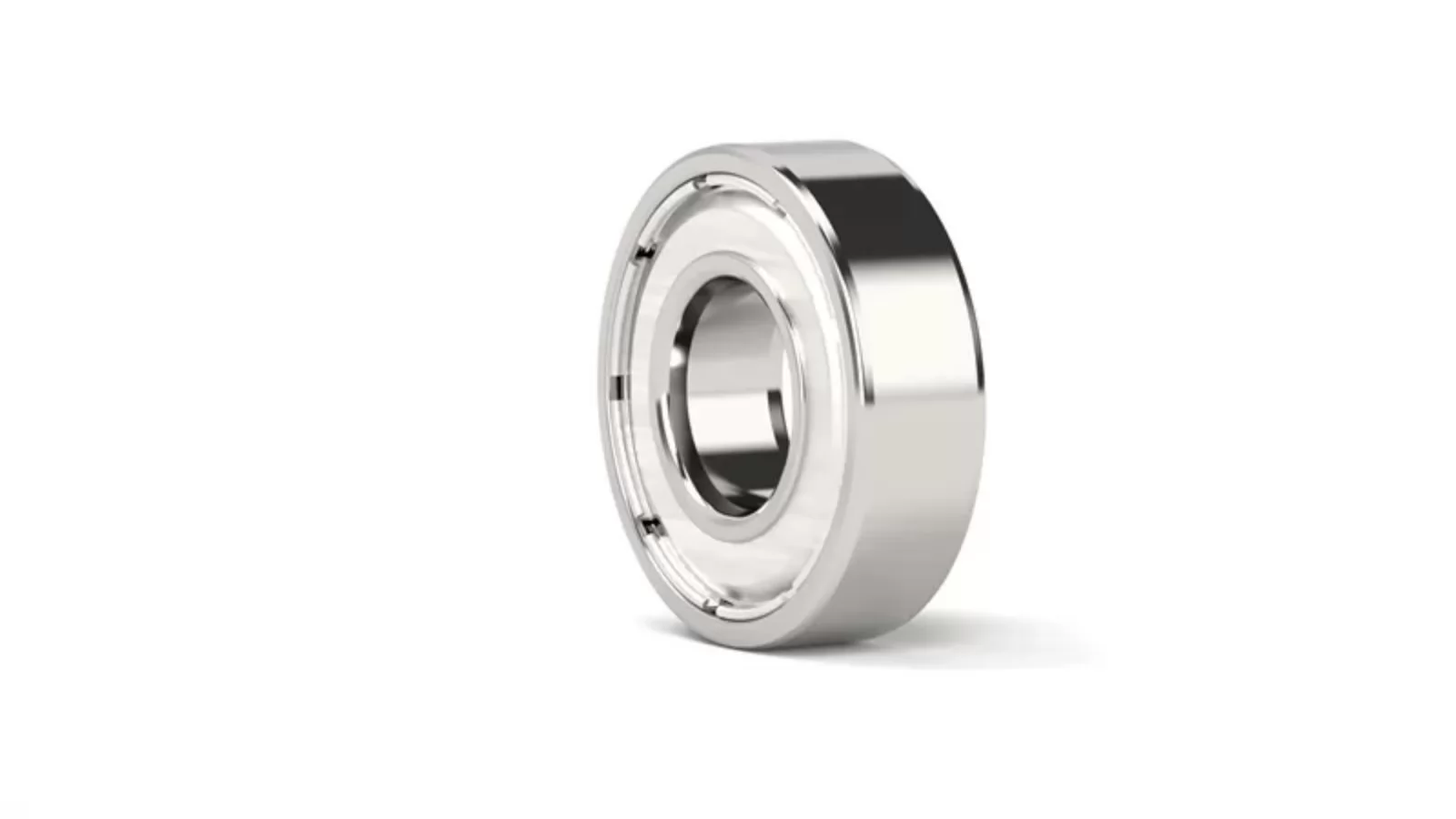
A shielded bearing uses a thin metal cover on one or both sides instead of rubber. The shield sits close to the inner ring but never touches it. That small gap is the whole point — it keeps friction low.
So what is a shielded bearing, in plain terms? It's a bearing with a metal barrier that blocks larger debris while letting the bearing spin fast and cool.
Quick example: A 6203-ZZ bearing has two metal shields. Same base bearing as the 6203-2RS, different protection style entirely.
Shielded bearings also come with their own suffix system, worth knowing before you order.
How Shielded Bearings Are Marked
Just like sealed bearings, the code sits right in the part number.
Here's a quick reference for the common ones.
| Suffix | Meaning | Contact Type |
|---|---|---|
| Z | Shielded on one side | Non-contact metal shield |
| ZZ | Shielded on both sides | Non-contact metal shield |
| ZZNR | Shielded, with snap ring | Non-contact metal shield |
Now let's look at where this design actually shines.
Where Shielded Bearings Earn Their Keep
Electric motors. Fans. Blowers. Appliances running indoors, away from moisture. These are shielded bearing territory.
The lack of contact means less drag, less heat buildup, and higher speed capability. The trade-off: no barrier against fine dust or water. It's a good bearing for a controlled environment, not a wet or gritty one.
What Are Sealed Bearings?
Picture a bearing running inside a conveyor at a gravel yard. Dust hangs in the air all day. Without protection, that dust works its way in, grinds against the balls, and kills the bearing in weeks.
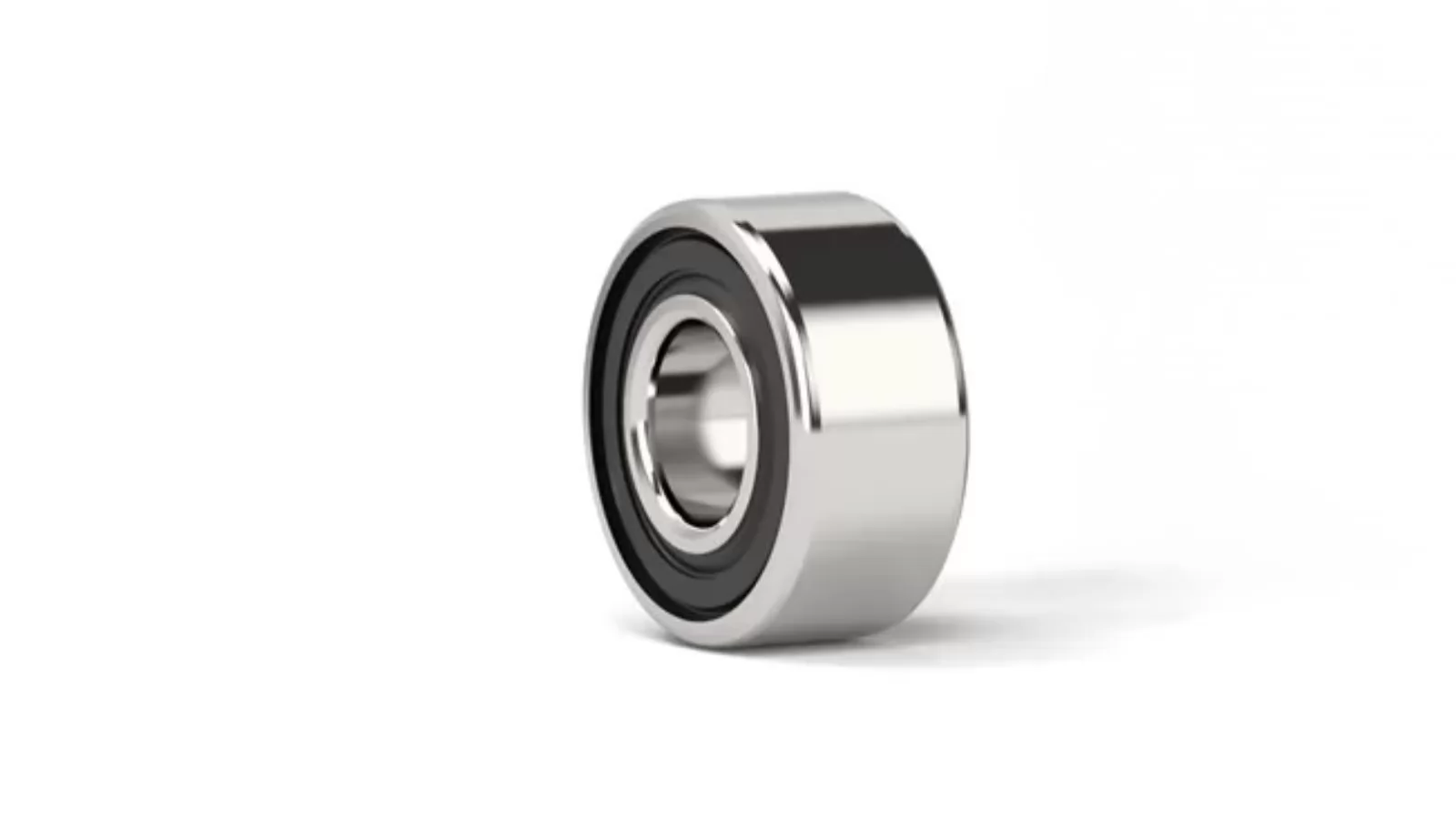
A sealed bearing stops that. It's a bearing fitted with a rubber or synthetic seal on one or both sides. The seal presses lightly against the inner ring. No gap. No easy way in for dirt, water, or grit.
That's the short answer to what is a sealed bearing: a bearing built to keep contamination out and grease in, for good.
Quick example: A 6203-2RS bearing has two rubber seals — one on each side. The "2RS" tells you that at a glance. No guessing, no catalog needed.
How Sealed Bearings Are Marked
Manufacturers use simple suffix codes. They show up right in the part number.
| Suffix | Meaning | Seal Type |
|---|---|---|
| RS | Sealed on one side | Contact rubber seal |
| 2RS | Sealed on both sides | Contact rubber seal |
| RZ / 2RZ | Sealed, low-friction design | Non-contact seal |
Where Sealed Bearings Earn Their Keep
Think food processing lines. Hose-down wash cycles every shift. Or an outdoor irrigation pump, sitting in mud half the year. Sealed bearings shrug that off.
They also skip maintenance. Grease goes in once, at the factory. It stays put. No re-lubrication schedule to track.
How Do Double Sealed (2RS) and Double Shielded (2ZZ) Bearings Differ?
Same bearing size. Same bore. Same steel balls inside. The only difference is what covers the outside — and that difference changes everything about how the bearing performs.
This is the real question behind double shielded vs double sealed bearings: rubber contact versus metal gap. Here's how that plays out.
This table breaks down the core trade-offs side by side.
| Factor | Double Sealed (2RS) | Double Shielded (2ZZ) |
|---|---|---|
| Contact with inner ring | Yes, light contact | No, small gap |
| Contaminant protection | High — blocks dust and moisture | Moderate — blocks larger debris only |
| Friction | Slightly higher | Lower |
| Max speed | Lower, drops as bearing size increases | Higher, not size-limited the same way |
| Heat tolerance | Lower — rubber softens under heat | Higher — metal handles more heat |
| Maintenance | None needed for bearing life | May need re-greasing over time |
A short example makes this easier to picture.
Real-world case: A double sealed 6205-2RS bearing on a farm equipment axle keeps dirt out through an entire harvest season. Swap it for a double shielded 6205-ZZ, and the same axle would need dust shields or more frequent checks to survive that environment.
So double sealed vs double shielded bearings really comes down to one trade: protection versus speed. Neither wins outright — it depends on the job.
What Are the Main Types of Bearing Sealing Methods?
Not all seals are built the same. Manufacturers use a handful of core designs, each tuned for a different balance of protection and speed.
Here's a rundown of the main bearing sealing types you'll come across.
| Sealing Method | How It Works | Best For |
|---|---|---|
| Contact seal (RS, 2RS) | Rubber lip presses against inner ring | Dirty, wet, or dusty conditions |
| Non-contact seal (RZ, 2RZ) | Rubber seal with a tiny gap, no direct contact | Moderate protection with lower friction |
| Metal shield (Z, ZZ) | Steel cover, no contact with inner ring | Clean, high-speed environments |
| Labyrinth seal | Interlocking grooves create a winding path | High-speed applications needing extra protection |
These fall into two broader categories worth understanding.
Sealed Bearing Types by Contact Method
Everything above sorts into two buckets. Contact designs touch the inner ring and seal tighter. Non-contact designs leave a gap and run cooler, but let more through.
Knowing which bucket a part falls into tells you most of what you need before checking a full spec sheet.
Which Environments Favor Sealed vs Shielded Bearings?
Think about where the bearing actually lives. That answer usually decides the choice before anything else does.
Here's how common environments line up with each option.
| Environment | Better Choice | Why |
|---|---|---|
| Food processing, wash-down areas | Sealed | Handles water and frequent cleaning |
| Outdoor/agricultural equipment | Sealed | Blocks mud, dust, and moisture |
| Electric motors, indoor fans | Shielded | Clean air, needs speed and low friction |
| High-speed spindles | Shielded | Heat and RPM matter more than contamination |
A quick story shows how this plays out in practice.
Case in point: A workshop once swapped shielded bearings for sealed ones on an outdoor pump motor after repeated failures. The pump ran through two rainy seasons without a single bearing replacement afterward.
The takeaway is simple: match the bearing to the mess it will face, not just the machine it sits in.
What Types of Bearings Come in Sealed Versions?
Sealing isn't limited to small ball bearings. Most major bearing families offer sealed versions built for heavier loads and harsher jobs.
Sealed Roller Bearings
Used in conveyors, gearboxes, and general industrial drives. Sealed versions extend service life where dust builds up fast.
Sealed Tapered Roller Bearing
Common in wheel hubs and heavy machinery. A sealed tapered roller bearing keeps grit out of the raceway even under constant load.
Sealed Cylindrical Roller Bearing
Handles high radial loads in pumps and motors. Sealing helps here when the equipment runs in dusty plant environments.
Sealed Needle Bearings
Compact but tough. Sealed needle bearings show up in transmissions and small engines where space is tight and contamination risk is high.
Sealed Pillow Block Bearings
Mounted units used on shafts across agricultural and material-handling equipment. Sealed pillow block bearings are a common upgrade for outdoor installations.
So, What Is Better — Sealed or Shielded Bearings?
There's no single winner here. The honest answer to what is better, sealed or shielded bearings, is: it depends on what the bearing has to survive.
Need protection from dust, water, or grime? Go sealed. Need speed, low friction, and the environment is already clean? Go shielded.
Simple rule of thumb: If you'd hesitate to leave the machine uncovered in the rain, choose sealed. If the machine lives indoors and needs to spin fast, choose shielded.
Still unsure which fits your application? Our team can help match the right bearing to your exact operating conditions.
Frequently Asked Questions
Do double-shielded bearings need to be greased?
Yes, eventually. Since the shield doesn't fully seal out contaminants, grease can degrade or leak over time. Regreasing at set intervals keeps performance steady, especially in dusty conditions.
What is 2RS vs LLU vs LLB?
These are all contact seal designations, just from different manufacturers. 2RS is the common industry term, while LLU and LLB are brand-specific codes (used by NSK, for example) for essentially the same rubber contact seal design.
What are the disadvantages of sealed bearings?
Sealed bearings run with more friction than shielded ones. That means slightly lower top speeds, a bit more heat during operation, and reduced performance in very high-temperature settings where rubber seals can soften.
Which is better, single shielded or double shielded bearings?
Double shielded protects both sides and suits fully exposed applications. Single shielded works when one side already faces a clean or enclosed area, such as inside a housing, and only the exposed side needs coverage.
Conclusion
Choosing between sealed and shielded bearings isn't about which one is universally better. It's about matching the design to the dirt, moisture, and speed your equipment actually deals with day to day. Get that match right, and you cut downtime. Get it wrong, and you're replacing bearings far more often than you should.
At Bom Bearing, we manufacture and supply sealed, shielded, and open bearings across a full range of types — from deep groove ball bearings to tapered roller and pillow block units — built to hold up in real working conditions, not just spec sheets. Our team can help you match the right seal type, size, and material to your specific application before you order.
If you're still weighing your options or need a bearing built to a particular environment, reach out to our engineers for guidance. You can explore our full product range and request a quote at bom-bearing.com.


Hot Article
-
Top 10 Chinese Bearing Brands: How to Choose?
-
Top 10 Custom Ball Bearing Factories in the USA 2026
-
Top 10 Bearing Brands in the World: 2026 Rankings
-
Top 10 Slewing Ring Bearing Manufacturers and Suppliers in China (2026)
-
Top 10 Ball Bearing Manufacturers & Suppliers in China 2026
-
Top 10 Cross Roller Bearing Manufacturers 2026
-
Top 10 Roller Bearing Suppliers in China (2026)
-
List of Custom Bearing Manufacturers: Our Top 10 Picks
Speak to One of Our Experts
Name can't be empty
Email error!
Message can't be empty
Send Message
*We respect your confidentiality and all information are protected.
People Also Viewed
-
 Top 5 Ball Bearing Suppliers in Malaysia 2026
Discover the top 5 ball bearing suppliers in Malaysia for 2026. Compare leading brands, product ranges, local contacts, and sourcing options for industrial and OEM applications.
Read More -
 Top 5 Ball Bearing Manufacturers and Suppliers in Italy 2026
Explore leading Italian bearing companies, their product capabilities, customization services, and how to choose the right ball bearing supplier for industrial and OEM applications.
Read More -
 Top 10 Cylindrical Roller Bearing Manufacturers & Suppliers in 2026: The Buyer's Guide to Choosing Right
Top 10 cylindrical roller bearing manufacturers & suppliers in 2026 — ranked by application, with specs, certifications, and pricing to help engineers and procurement teams choose the right supplier.
Read More