What Are Angular Contact Bearings? A Complete Guide
Jul 15, 2026
BOM
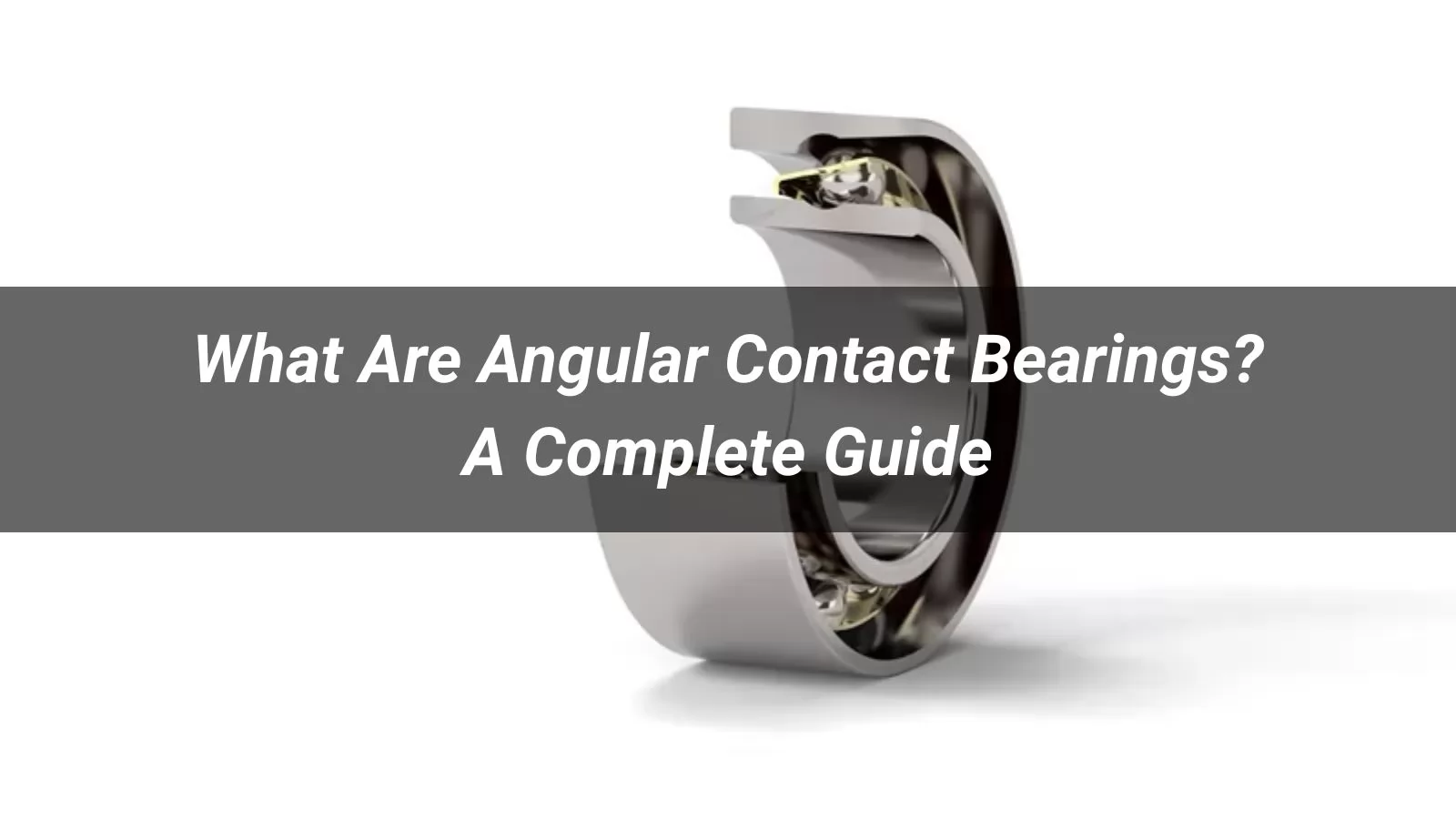
Walk onto any high-speed production floor and you'll find a question buried in half the equipment specs: what are angular contact bearings, and why does nearly every precision spindle rely on one? The answer sits at the center of modern motion design, where speed, load, and rigidity all compete for the same small space.
In short, angular contact bearings solve one specific problem — carrying radial and axial load together, through a single compact component. That's the core answer, and it matters more now than ever as machines run faster and tolerances shrink. This guide breaks down how that works and where it fits, with a particular focus on:
- Design engineers selecting bearings for spindles, motors, or gearboxes
- Procurement teams comparing bearing types before a bulk order
- Maintenance and reliability staff troubleshooting premature wear or failure
- OEMs sourcing precision or custom configurations for new equipment
From basic construction to contact angles, mounting styles, and industry applications, this guide covers the full picture of angular contact bearings — because picking the wrong one rarely fails quietly. Keep reading to find the configuration that actually fits your application.
Table of Contents
- What Is an Angular Contact Bearing?
- How Does an Angular Contact Ball Bearing Work?
- What Is the Bearing Contact Angle, and Why Does It Matter?
- Angular Contact Bearing vs Deep Groove Bearing: What's the Difference?
- Angular Contact Bearings vs Radial Bearings
- Angular Contact Bearing vs Tapered Roller Bearing: Which One Do You Need?
- Single Row, Double Row, and Duplex Angular Contact Bearings
- What Are Angular Contact Bearings Used For?
- Precision and Thin Section Angular Contact Bearings
- How Do I Choose the Right Angular Contact Bearing?
- Frequently Asked Questions
- Conclusion
What Is an Angular Contact Bearing?
Picture a bicycle wheel. Push down on it, and the hub handles the weight easily. Push it sideways, and it struggles. That sideways push is an axial load — exactly what angular contact bearings are built for.
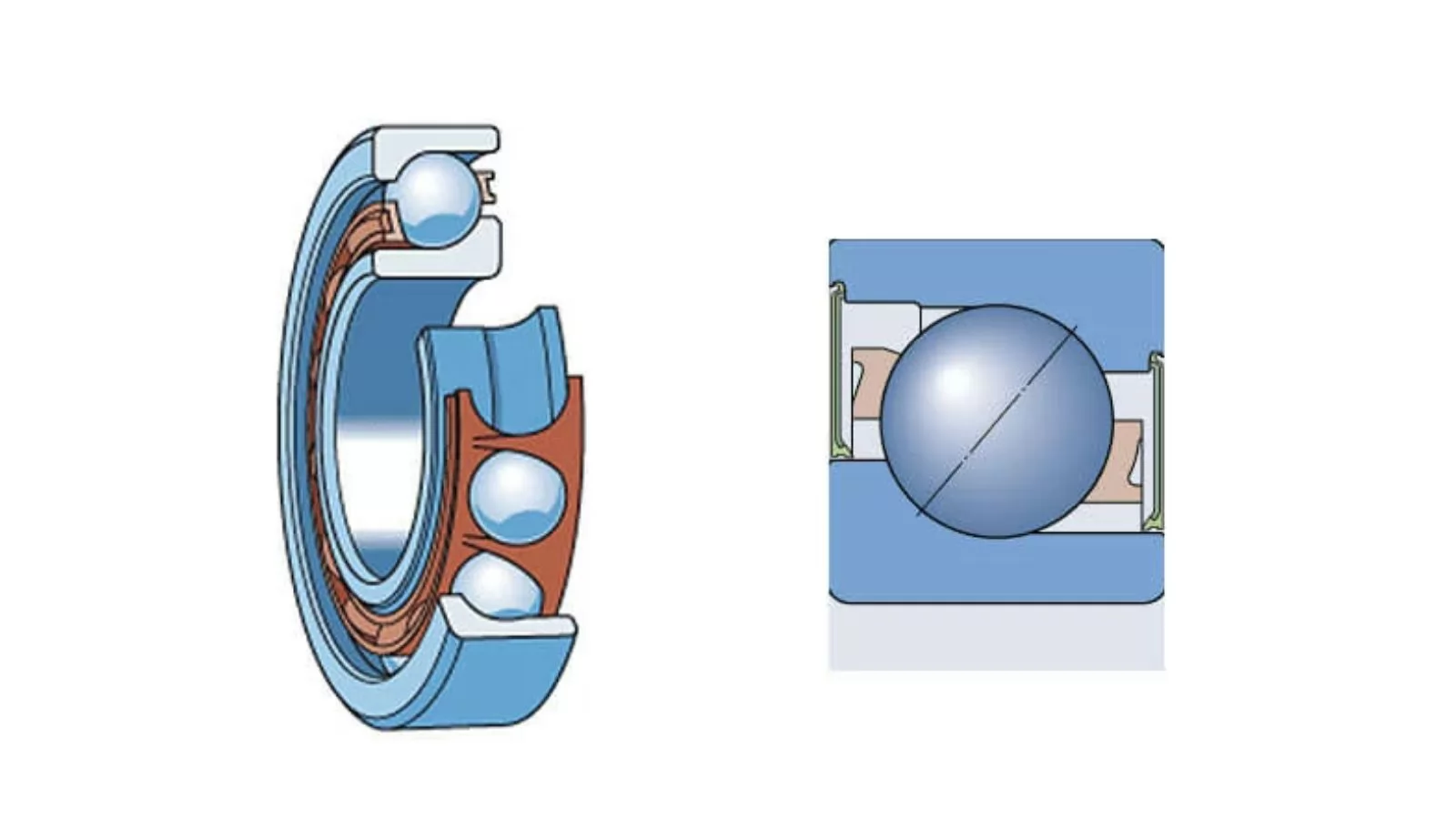
An angular contact bearing has offset inner and outer rings. That offset forces the balls to touch the raceways at an angle, not straight across. This tilted contact point is where the name comes from.
Real-world example: Inside a machine tool spindle, the cutting tool pushes back against the workpiece with every pass. A standard bearing wears out fast under that force. An angular contact bearing takes it, spin after spin, at 15,000 RPM or more.
Why the Angle Changes Everything
In a standard ball bearing, load moves straight across — ring to ball to ring. In an angular contact bearing, it moves along a diagonal line. That lets the bearing carry radial and axial load at once, in one compact part.
The trade-off is direction. Most angular contact bearings only resist axial load from one side.
Here's how the two load types compare.
| Load Type | Direction | Example |
|---|---|---|
| Radial Load | Perpendicular to the shaft | Shaft weight pressing down |
| Axial Load | Parallel to the shaft | A drill bit pushing into material |
| Combined Load | Both at once | A pump shaft under pressure and rotation |
That combination — radial plus axial, in one bearing — is the core advantage.
How Does an Angular Contact Ball Bearing Work?
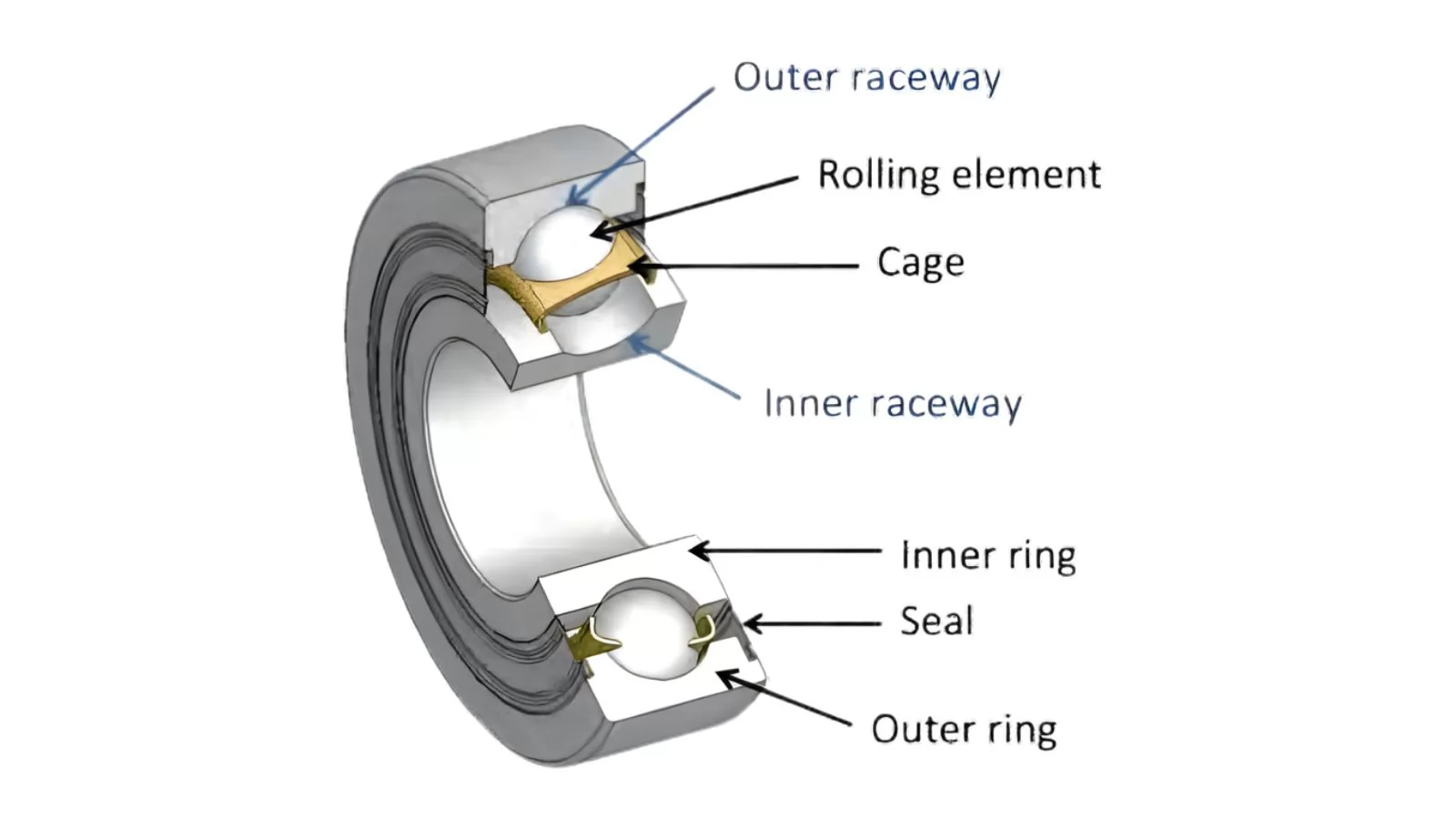
Four parts: inner ring, outer ring, balls, cage. Nothing unusual so far.
The difference is where the grooves sit. In a normal bearing, the inner and outer grooves line up directly across from each other. In an angular contact bearing, the outer groove is shifted to one side. To fit into both grooves at once, each ball has to sit at a slant, not straight up.
That slant becomes the path force travels. Push on the bearing from the side, and the load doesn't scatter — it runs along the angle, ball to raceway, raceway to housing.
An easy way to feel it: lean a ladder straight up against a wall, then lean it at an angle. Straight up, it slides the moment you push sideways on it. Angled, it grips and holds. The ball inside an angular contact bearing works the same way — angled on purpose, so it can resist a sideways shove.
More tilt, more resistance to that shove. Less tilt, less resistance — but a faster, cooler spin.
What Is the Bearing Contact Angle, and Why Does It Matter?
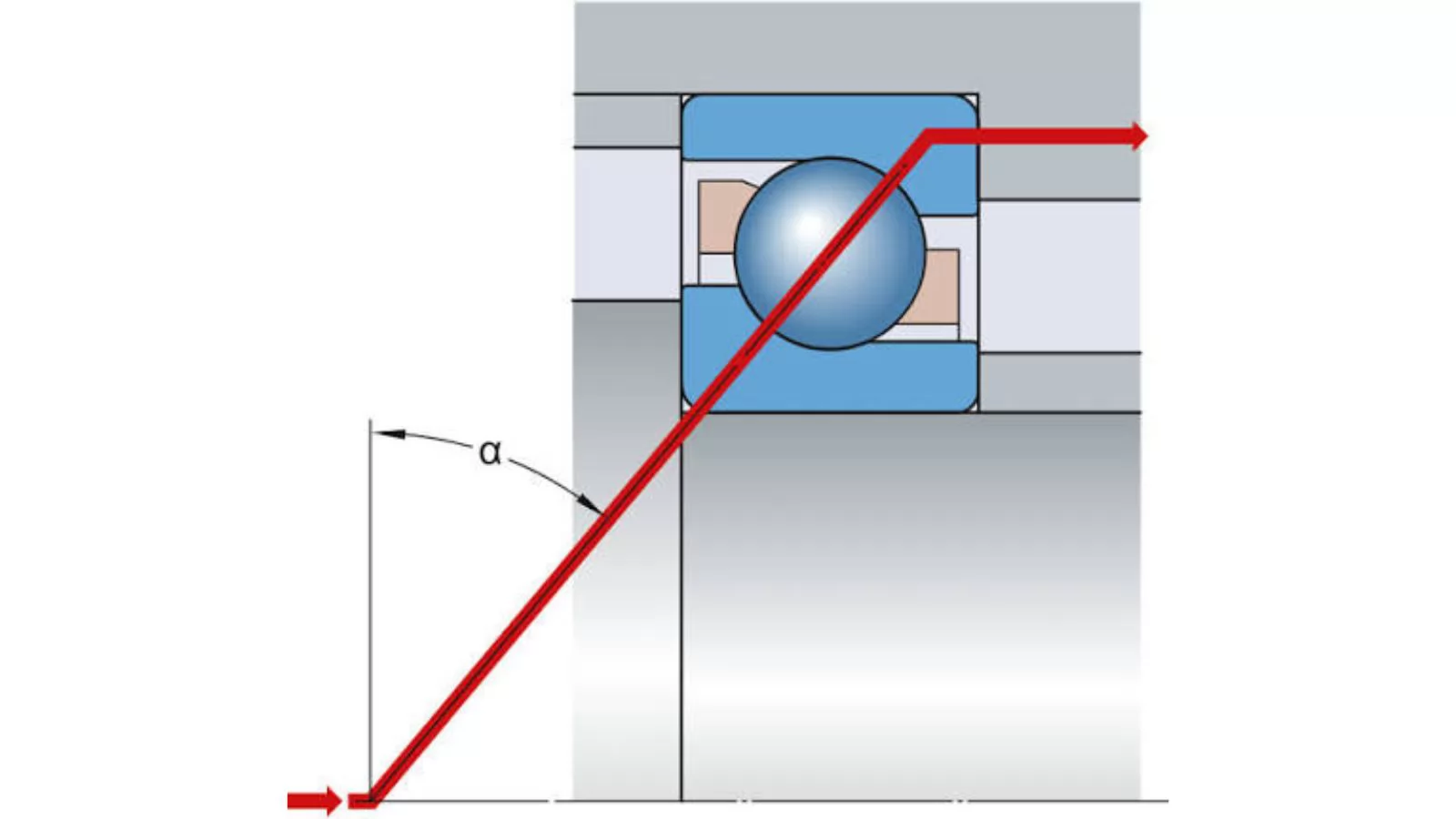
15°. 25°. 40°. These three numbers cover most angular contact bearings on the market, and each one tells a different story about what the bearing is good at.
The angle is measured where the ball touches the raceway, against the bearing's spin axis. Manufacturers pick this number first — everything else about the bearing gets built around it.
| Angle | Trade-off | Typical Use |
|---|---|---|
| 15° | Fast, cool, lower thrust capacity | Machining spindles |
| 25° | Balanced speed and thrust | General motors, pumps |
| 40° | High thrust, lower top speed | Heavy gearboxes |
No bearing gets top speed and top thrust at once. The angle is where that trade gets made.
Angular Contact Bearing vs Deep Groove Bearing: What's the Difference?
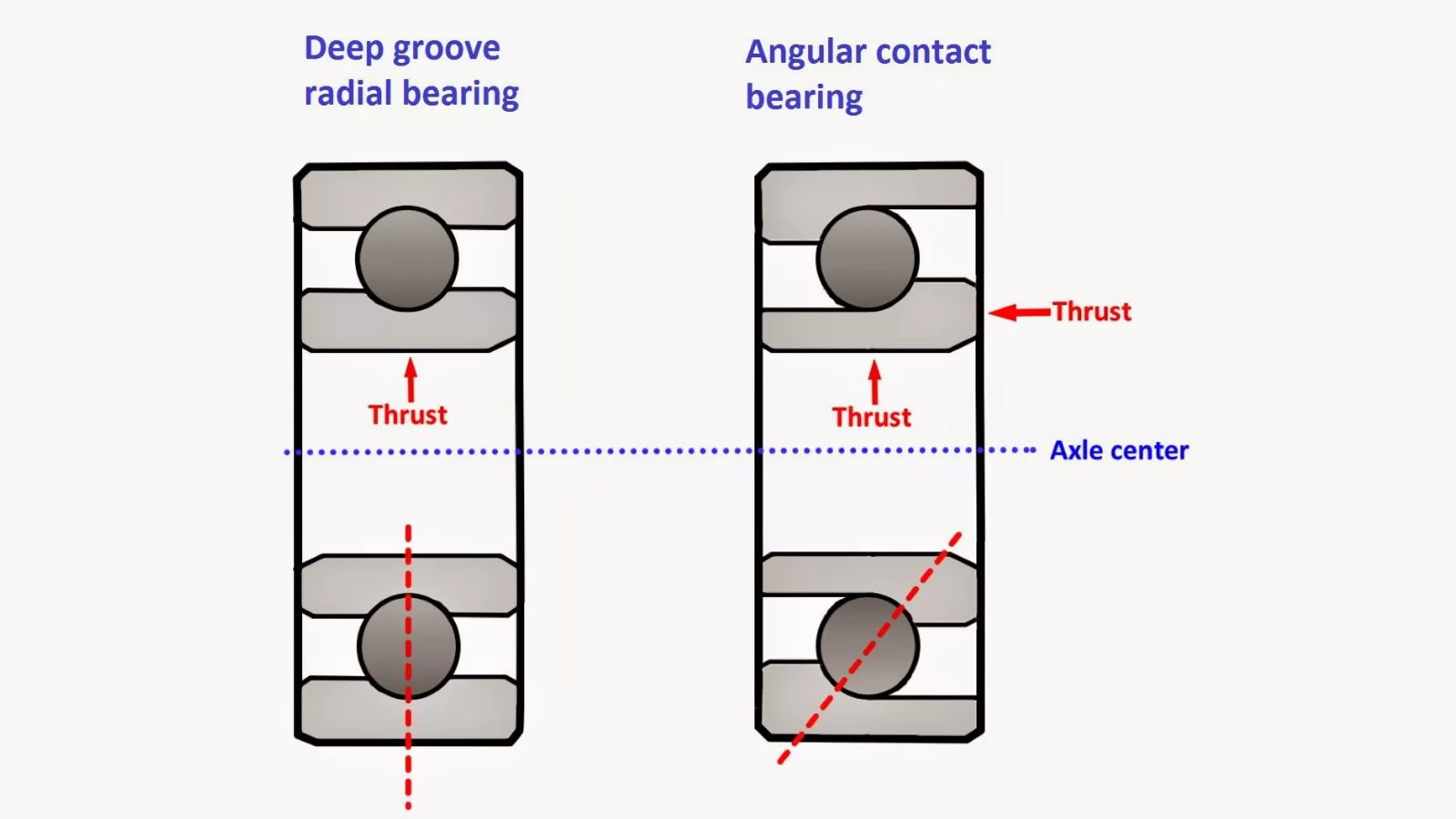
Deep groove bearings do fine with light, even loads. Angular contact bearings exist for the loads deep groove bearings can't handle — strong, directional, and constant.
A deep groove raceway sits centered, symmetrical. Load passes straight through, in any direction, without much preference. An angular contact raceway is offset on purpose, built to catch force coming at an angle.
| Deep Groove | Angular Contact | |
|---|---|---|
| Axial Load | Light, both directions | Heavy, one direction |
| Pairing Required | No | Often |
| Common Use | Fans, conveyors | Spindles, pumps |
A conveyor roller rarely needs an angular contact bearing. A pump shaft under constant pressure almost always does.
Angular Contact Bearings vs Radial Bearings
"Radial bearing" is really a category, not a specific design — deep groove bearings fall under it. Angular contact bearings sit apart because of one trait: directional axial strength.
A standard radial bearing resists downward weight well. Push it sideways, along the shaft, and it has little to offer. It wasn't built for that fight.
A blender motor makes the difference obvious. The shaft carries weight straight down — that's radial, and a basic bearing handles it fine. Now imagine that same shaft also getting shoved upward every time the blade hits a piece of ice. That upward shove is axial. Add enough of it, and the bearing needs to be angular contact, not just radial.
Angular Contact Bearing vs Tapered Roller Bearing: Which One Do You Need?
_1784079920_WNo_1600d900.webp)
Swap the ball for a cone-shaped roller, and the whole equation changes.
A ball touches its raceway at a single point — like a fingertip on glass. A tapered roller touches along a line — like a rolling pin on dough. More contact area means more load carried, at the cost of speed.
- Ball bearings win on speed. Less contact area means less friction, which means higher RPM.
- Tapered rollers win on raw capacity. More contact area spreads heavy load across more surface.
- The jobs rarely overlap. A grinding spindle needs speed. A truck axle needs tonnage.
Ask which one matters more for the application — RPM or weight — and the choice usually makes itself.
Single Row, Double Row, and Duplex Angular Contact Bearings
_1784079518_WNo_1600d900.webp)
One design doesn't fit every shaft. Three configurations split the work.
- Single row — one row of balls, one direction of axial resistance. Cheapest option, but it needs a partner bearing for load from the other side.
- Double row — two rows built into one unit, resisting load from both directions. A small internal preload keeps every ball pressed against its raceway, which cuts play under a shifting load.
- Duplex sets — two single-row bearings, ground to match each other, then mounted as a matched pair.
Duplex pairs come in three mounting styles, and the choice changes what the pair can resist.
| Mounting | Resists | Example |
|---|---|---|
| Back-to-Back | Tilting moments, thrust both ways | CNC spindle |
| Face-to-Face | Shaft misalignment | Steering columns |
| Tandem | Heavy one-direction thrust | High-pressure pumps |
Back-to-back is the default for most shops — it resists the widest range of load angles with one setup.
What Are Angular Contact Bearings Used For?
A single CNC spindle can spin past 20,000 RPM while a cutting tool shoves back against it thousands of times a minute. That's the kind of fight these bearings are built for — and it shows up far outside machine shops too.
| Industry | Application | Load Challenge |
|---|---|---|
| Automotive | Gearboxes, clutches | Shifting torque |
| Electric Motors | Rotor shaft support | Spin plus thrust together |
| Wind Energy | Turbine gearboxes | Constant heavy thrust |
| Steel Mills | Rolling mill drives | Nonstop heavy cycling |
Different machines, same underlying test: can the bearing hold its line when force stops arriving straight on.
Precision and Thin Section Angular Contact Bearings
Standard tolerances aren't tight enough for every job. Three variants pick up where standard leaves off.
- Precision grades (ABEC 5, 7, 9) are ground to tolerances measured in microns. Less runout means a cleaner cut, a smoother grind, a steadier scan.
- Thin section bearings keep the same ball-and-raceway logic but in a slimmer ring — less weight, less bulk, same load path.
- Flanged bearings add a built-in mounting lip, skipping the need for a separate housing.
A surgical robot arm puts all three demands in one place — tight tolerance for a steady hand, thin section to fit inside a slim joint, and enough load capacity to hold position under pressure. One bearing, three jobs.
How Do I Choose the Right Angular Contact Bearing?
Four questions cover most of it.
- Which direction does the load push — one side, both sides, or does the shaft tilt under it?
- How fast does it need to spin?
- How tight does the tolerance need to be?
- How much space is actually available?
Those four answers usually point to a contact angle, a row configuration, and a mounting style. When they don't, that's a question worth putting to an engineer directly.
Frequently Asked Questions
What is the purpose of an angular contact bearing?
It carries radial and axial load at the same time, through one compact part. That combined capacity is what sets it apart from a standard ball bearing.
Are angular contact bearings better?
Not universally — just better suited to certain jobs. For high-speed shafts with directional thrust, they outperform deep groove bearings. For light, evenly balanced loads, a standard bearing works fine and costs less.
Which is better, angular contact bearing or roller bearing?
Depends on the priority. Angular contact bearings run faster with less friction. Roller bearings, like tapered rollers, carry heavier loads at lower speeds. Neither wins outright — the application decides.
How to identify an angular contact ball bearing?
Look at the raceway. If the groove on one side is visibly offset or cut at a slant instead of centered, it's built for angular contact. The part number prefix, often 72xx or 73xx, is another quick clue.
Which way to install angular contact bearings?
Single-row bearings only resist thrust from one direction, so orientation matters. Match the bearing's back face to the source of axial load. For paired sets, back-to-back mounting is the standard default unless the application specifically needs face-to-face or tandem.
Do angular contact bearings need preload?
Most double-row and duplex configurations do. Preload removes internal play, keeping every ball pressed against its raceway. Without it, the bearing can develop looseness that shortens its service life under shifting loads.
What is the life of an angular contact bearing?
It varies widely with load, speed, lubrication, and contact angle — anywhere from a few years in heavy-duty industrial use to well beyond a decade in lighter, well-maintained applications. Matching the bearing to its load is the single biggest factor.
Conclusion
Angular contact bearings aren't a one-size-fits-all part. Contact angle, row configuration, mounting style, tolerance grade — each choice shifts how the bearing handles speed, load, and precision on the shop floor. Getting that match right is what separates a bearing that lasts for years from one that fails within months.
That's where the right supplier makes the difference. At Bom Bearing, we manufacture and supply angular contact bearings across standard, precision, thin section, and custom configurations — built to match the exact load direction, speed range, and space constraints of your application. Our engineering team works directly with OEMs and distributors to specify the right series before a single unit ships.
If you're comparing options or need a configuration that isn't off the shelf, reach out to our team at bom-bearing.com for a technical review and a quote.


Hot Article
-
Top 10 Chinese Bearing Brands: How to Choose?
-
Top 10 Custom Ball Bearing Factories in the USA 2026
-
Top 10 Bearing Brands in the World: 2026 Rankings
-
Top 10 Slewing Ring Bearing Manufacturers and Suppliers in China (2026)
-
Top 10 Ball Bearing Manufacturers & Suppliers in China 2026
-
Top 10 Cross Roller Bearing Manufacturers 2026
-
Top 10 Roller Bearing Suppliers in China (2026)
-
List of Custom Bearing Manufacturers: Our Top 10 Picks
Speak to One of Our Experts
Name can't be empty
Email error!
Message can't be empty
Send Message
*We respect your confidentiality and all information are protected.
People Also Viewed
-
 Top 5 Ball Bearing Suppliers in Malaysia 2026
Discover the top 5 ball bearing suppliers in Malaysia for 2026. Compare leading brands, product ranges, local contacts, and sourcing options for industrial and OEM applications.
Read More -
 Top 5 Ball Bearing Manufacturers and Suppliers in Italy 2026
Explore leading Italian bearing companies, their product capabilities, customization services, and how to choose the right ball bearing supplier for industrial and OEM applications.
Read More -
 Top 10 Cylindrical Roller Bearing Manufacturers & Suppliers in 2026: The Buyer's Guide to Choosing Right
Top 10 cylindrical roller bearing manufacturers & suppliers in 2026 — ranked by application, with specs, certifications, and pricing to help engineers and procurement teams choose the right supplier.
Read More