What Is a Thrust Ball Bearing? A Complete Guide to Types & Applications
Jul 17, 2026
BOM
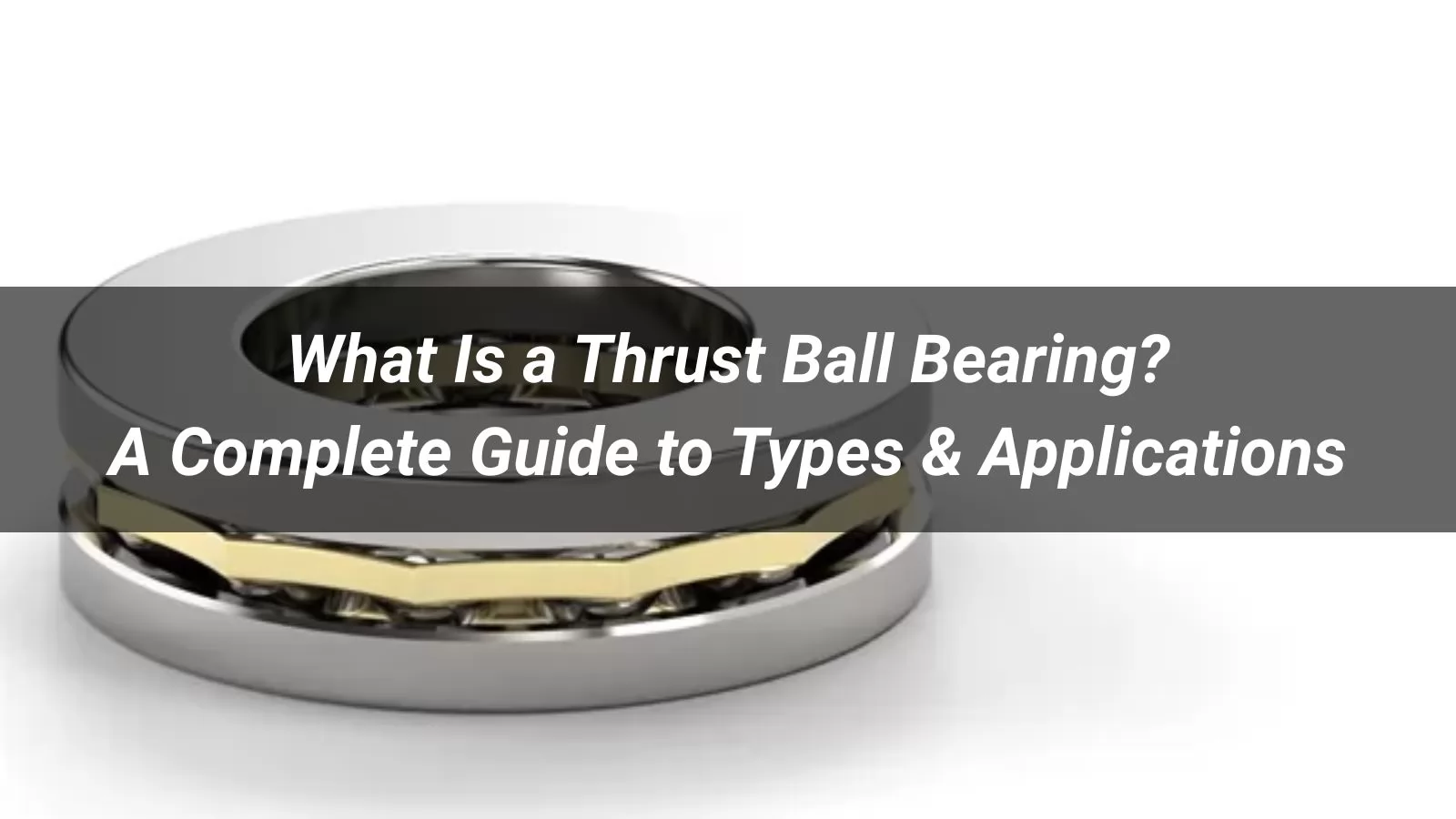
Across manufacturing plants and machine shops, engineers keep running into the same question: what is a thrust ball bearing, and why does picking the right one matter so much? As equipment runs faster and loads get heavier, choosing a bearing that can't handle axial force is one of the quickest ways to shorten a machine's life.
In short, a thrust ball bearing is a rolling-element bearing built specifically to support axial load — force that pushes along a shaft rather than against it. Demand for these bearings continues to grow alongside automation and precision machinery, where axial loads are increasingly common. This guide is especially useful for:
- Mechanical engineers selecting bearings for new equipment designs
- Maintenance technicians troubleshooting shaft or vibration issues
- Procurement teams sourcing bearings for industrial or automotive applications
This article breaks down how thrust ball bearings are built, how they work, and where they're used — because choosing the wrong type can mean premature failure, downtime, and unnecessary cost. Keep reading to find the right fit for your application.
How Is a Thrust Ball Bearing Built?
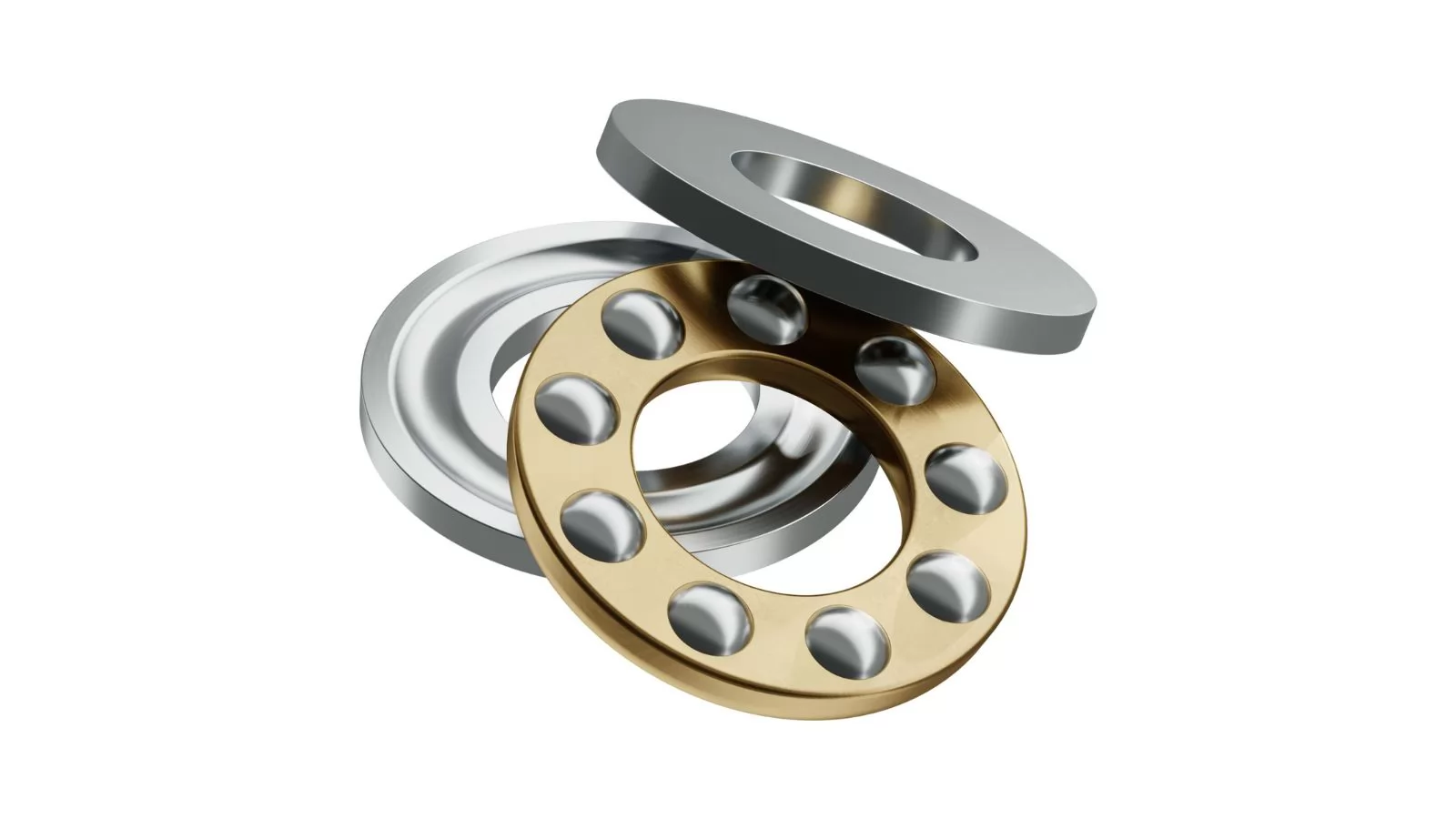
Strip one open, and you'll find three main parts working together.
Shaft Washer
This ring mounts directly on the rotating shaft. It spins with the shaft, carrying the load straight down onto the balls below.
Housing Washer
This ring stays still. It's bolted or seated into the housing, forming the stationary half of the pair.
Ball and Cage Assembly
Sandwiched between the two washers, a set of hardened steel balls sits inside a cage. The cage keeps every ball evenly spaced, so the load never bunches up on one side.
Each washer has a raceway — a shallow groove that guides the balls and keeps them from wandering off track.
Here's a quick way to see how the parts split the work:
| Component | Moves With Shaft? | Main Job |
|---|---|---|
| Shaft washer | Yes | Transfers load from shaft to balls |
| Housing washer | No | Anchors the bearing, absorbs the load |
| Balls and cage | Rolls in place | Reduces friction between washers |
That simple three-part layout is also why installation is so forgiving.
Real-world example: think of a car jack. Turn the handle, and the load plate spins smoothly while lifting a heavy car. Inside that plate sits a tiny thrust ball bearing, quietly taking the full weight so the handle turns without binding.
That's the whole point of the design — swap sliding friction for rolling friction, right where the force pushes hardest.
How Does a Thrust Ball Bearing Work?
Once the shaft starts spinning, the axial force has to go somewhere. It pushes down on the shaft washer, which presses the balls against the housing washer below.
The balls don't just sit there. They roll. That's the trick — rolling friction is far lower than sliding friction, so the shaft keeps turning smoothly even under heavy end-load.
The cage plays a quiet but critical role here. Without it, balls would drift, collide, and wear unevenly. With it, every ball carries its fair share of the load, cycle after cycle.
Think of it this way: a garlic press crushes a clove with a flat plate pushing straight down. Now imagine that plate rolling on marbles instead of grinding against the base. That's the difference a thrust ball bearing makes — the push stays, the grinding disappears.
That rolling action is also what limits how fast these bearings can spin, which is why speed matters just as much as load when picking one.
What Types of Thrust Ball Bearings Are There?
_1784253509_WNo_1600d900.webp)
Not every application pushes in just one direction. Bearing design splits mainly into two camps.
Single Direction Thrust Ball Bearings
These handle load from one side only. One shaft washer, one housing washer, one ball set. Simple to install, and they're the most common choice in gearboxes and transmissions.
Double Direction Thrust Ball Bearings
These add a middle washer shared by two ball sets, so load can push from either side. You'll find these where a shaft shifts direction under load, such as in machine tool spindles.
A third variant worth knowing: the angular contact thrust bearing. It's built with a contact angle that lets it take on a bit of radial load alongside the axial load — something a standard thrust ball bearing can't do.
Here's a side-by-side snapshot of the three:
| Type | Load Direction | Handles Radial Load? |
|---|---|---|
| Single direction thrust ball bearing | One way | No |
| Double direction thrust ball bearing | Both ways | No |
| Angular contact thrust bearing | One or both, depending on design | Limited, yes |
That radial tolerance is exactly what separates thrust ball bearings from their radial cousins — worth a closer look.
Thrust Ball Bearing vs. Radial Ball Bearing: What's the Difference?
_1784254004_WNo_1600d900.webp)
Swap the direction of the force, and you swap the bearing you need.
A radial ball bearing sits inside a spinning wheel, catching sideways push. A thrust ball bearing sits under a spinning plate, catching downward push. Mix them up, and one will fail fast.
| Feature | Thrust Ball Bearing | Radial Ball Bearing |
|---|---|---|
| Primary load | Axial (parallel to shaft) | Radial (perpendicular to shaft) |
| Typical speed range | Low to moderate | Low to high |
| Common example | Bar stool seat, clutch release | Skateboard wheel, motor shaft |
Neither type is "better" — they just aim different directions. Once you know your load direction, the next question is where these bearings actually show up in real machines.
Where Are Thrust Ball Bearings Used?
Thrust ball bearings show up wherever something spins under end-load, often in places you'd never notice.
Automotive
Push the clutch pedal, and a thrust bearing slides in to release the clutch plate. It's also tucked into steering columns, easing the twist of the wheel.
Industrial Machinery
Gearboxes and speed reducers rely on them to keep rotating shafts from creeping sideways under load.
Marine and Household Uses
Boat propeller shafts push hard against thrust bearings with every rotation. On a smaller scale, the same idea spins the drum in a washing machine or the seat of an office chair.
Quick example: next time you spin an office chair, listen closely. That smooth, quiet turn under your full body weight? A small thrust ball bearing is doing the work.
With so many possible uses, picking the right one for your machine comes down to a few practical questions.
How Do You Choose the Right Thrust Ball Bearing?
Start with direction. Does the load push one way, or both? That alone decides single vs. double direction.
Next, check for any radial load. Even a small amount means a standard thrust ball bearing won't cut it — you'll want an angular contact thrust bearing instead.
Then look at speed and space. Thrust ball bearings favor low to moderate speeds and compact housings. Push past their speed limit, and heat builds fast at the outer edge of the raceway.
Last, think about environment. Dust, moisture, or exposure to the elements may call for a sealed or banded design.
FAQs About Thrust Ball Bearings
What Is the Difference Between a Thrust Ball Bearing and a Ball Bearing?
"Ball bearing" is the broad category. A thrust ball bearing is one specific type built for axial load, while a standard (radial) ball bearing is built for sideways load.
When Would You Use a Thrust Bearing?
Use one whenever a rotating shaft pushes or pulls along its own axis — clutch release systems, gearboxes, spindles, and rotating platforms are common cases.
What Is the Disadvantage of a Thrust Ball Bearing?
It can't handle radial load and isn't suited to high speeds. Heavy loading at the outer edge of the raceway also limits its lifespan under fast rotation.
What Happens If a Thrust Bearing Fails?
The shaft loses axial support and starts drifting sideways. That leads to vibration, noise, and eventually contact damage to nearby components.
What Is Another Name for a Thrust Bearing?
Thrust bearings are also called axial bearings, since they're built to resist axial rather than radial force.
Do You Put Grease on a Thrust Bearing?
Yes. Grease reduces friction between the balls and raceways and helps prevent corrosion, especially in exposed or slow-speed applications.
Final Thoughts: Need Help Selecting a Thrust Ball Bearing?
A thrust ball bearing does one job well: carry axial load while keeping a shaft spinning smoothly. Whether you need a single direction bearing for a gearbox, a double direction bearing for a spindle, or an angular contact thrust bearing for combined loads, matching the type to your force direction and speed range is what makes it last.
At BOM Bearing, we manufacture thrust ball bearings across standard and custom sizes, built to handle the load, speed, and environment your machine demands. Our team works directly with engineers and buyers to confirm the right fit before it ships.
Not sure which type suits your setup? Send us your load direction, speed, and application details, and we'll help you find the right bearing.


Hot Article
-
Top 10 Chinese Bearing Brands: How to Choose?
-
Top 10 Custom Ball Bearing Factories in the USA 2026
-
Top 10 Bearing Brands in the World: 2026 Rankings
-
Top 10 Slewing Ring Bearing Manufacturers and Suppliers in China (2026)
-
Top 10 Ball Bearing Manufacturers & Suppliers in China 2026
-
Top 10 Cross Roller Bearing Manufacturers 2026
-
Top 10 Roller Bearing Suppliers in China (2026)
-
List of Custom Bearing Manufacturers: Our Top 10 Picks
Speak to One of Our Experts
Name can't be empty
Email error!
Message can't be empty
Send Message
*We respect your confidentiality and all information are protected.
People Also Viewed
-
 Top 5 Ball Bearing Suppliers in Malaysia 2026
Discover the top 5 ball bearing suppliers in Malaysia for 2026. Compare leading brands, product ranges, local contacts, and sourcing options for industrial and OEM applications.
Read More -
 Top 5 Ball Bearing Manufacturers and Suppliers in Italy 2026
Explore leading Italian bearing companies, their product capabilities, customization services, and how to choose the right ball bearing supplier for industrial and OEM applications.
Read More -
 Top 10 Cylindrical Roller Bearing Manufacturers & Suppliers in 2026: The Buyer's Guide to Choosing Right
Top 10 cylindrical roller bearing manufacturers & suppliers in 2026 — ranked by application, with specs, certifications, and pricing to help engineers and procurement teams choose the right supplier.
Read More