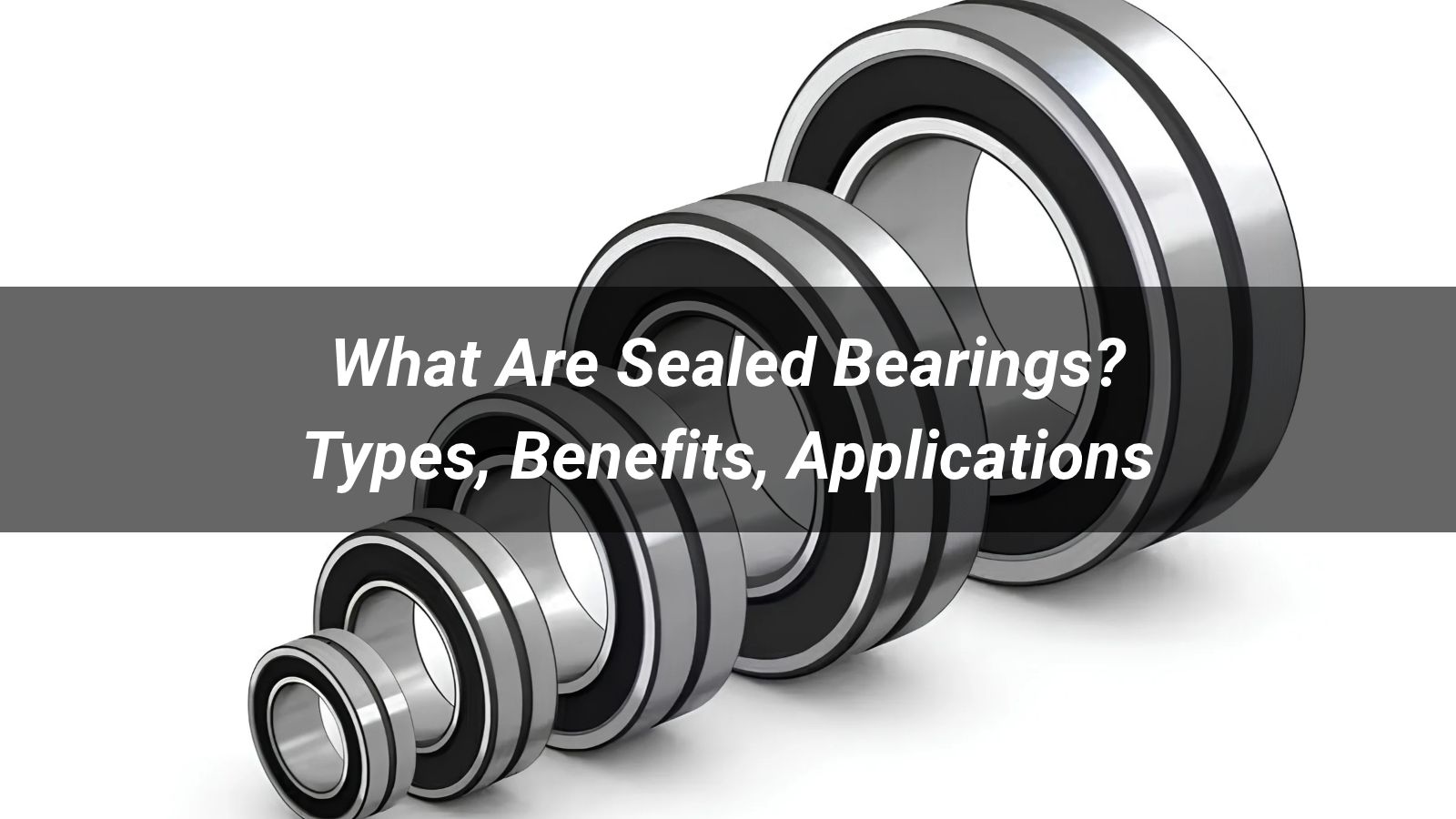
Sealed bearings play an increasingly important role in modern industrial equipment, where reliable operation, contamination control, and reduced maintenance are essential. As machinery operates in more demanding environments, choosing the right bearing protection has become a practical consideration for manufacturers and equipment operators.
What are sealed bearings? They are rolling-element bearings fitted with seals on one or both sides to keep dust, dirt, and moisture out while retaining lubricant inside. Most standard sealed ball bearings are supplied pre-greased, helping reduce routine maintenance and support reliable performance. They are particularly useful for:
- Engineers selecting bearings for new equipment designs
- Maintenance teams replacing worn or damaged bearings
- Manufacturers seeking to improve equipment reliability
- Purchasing professionals sourcing bearings for industrial applications
This guide explains sealed bearing types, working principles, benefits, limitations, and common applications, helping you choose the right design for your operating conditions—read on to make a more informed bearing selection.
What Are Sealed Bearings?
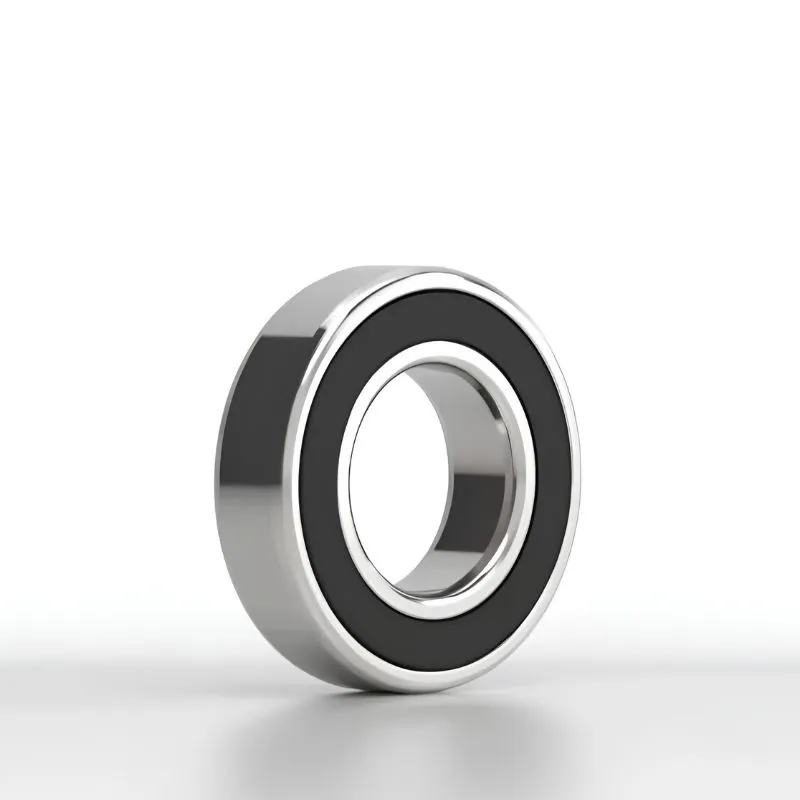
Sealed bearings are rolling-element bearings equipped with sealing elements on one or both sides. These seals help prevent dust, dirt, moisture, and other contaminants from entering the bearing. They also retain lubricant, keeping it inside where it is needed.
Unlike open bearings, sealed bearings have built-in protection. This makes them a practical choice for equipment operating in dusty, damp, or contaminated environments.
Most sealed ball bearings come pre-lubricated with grease during manufacturing. The grease stays inside the bearing, reducing the need for frequent relubrication.
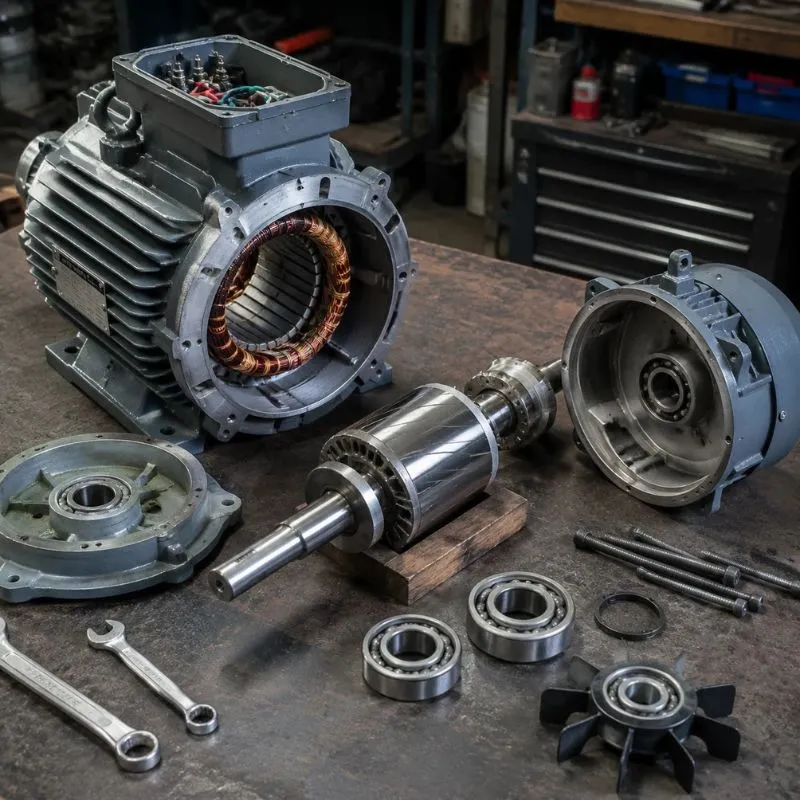
For example, imagine an electric motor running in a woodworking workshop. Fine sawdust constantly floats through the air. Without proper protection, these particles can enter the bearing, mix with the grease, and gradually damage the rolling surfaces. A sealed bearing helps keep these contaminants out, allowing the motor to run more reliably.
Key takeaway: A sealed bearing does more than support rotating loads. Its integrated seals protect internal components, retain lubricant, and help reduce maintenance requirements.
Although sealed bearings are commonly used in ball bearings, sealing designs are also available for other bearing types. Their structure and performance depend on the bearing design, seal material, and intended operating conditions.
How Do Sealed Bearings Work?
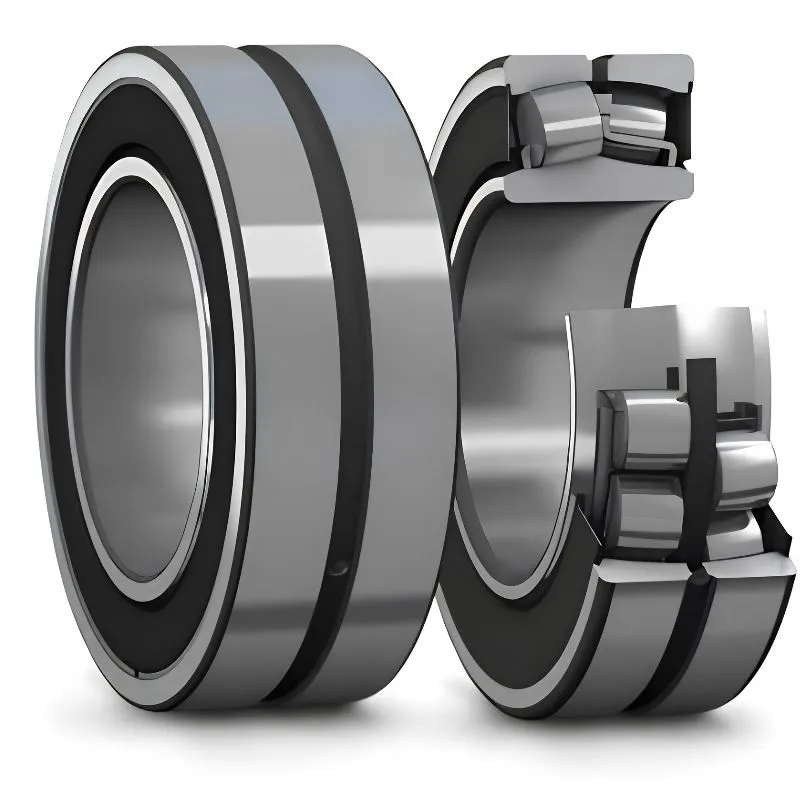
Sealed bearings work by combining two functions: supporting rotating loads and protecting internal components from contamination. Their seals act as a barrier around the rolling elements, helping keep dirt, water, and debris away from critical surfaces.
When a shaft rotates, the inner ring and rolling elements move together to reduce friction. Meanwhile, the seals help maintain a clean, lubricated space inside the bearing.
1. Preventing Contaminants from Entering
The seals form a protective barrier between the bearing interior and the surrounding environment. Depending on their design, they can block dust, dirt, moisture, and other unwanted particles.
For example, bearings used in agricultural machinery often operate in fields filled with dust, soil, and small debris. Without effective sealing, these contaminants can enter the bearing and cause premature wear.
2. Retaining Lubricant Inside the Bearing
Lubrication is essential for reducing friction and preventing metal-to-metal contact between rolling elements and raceways.
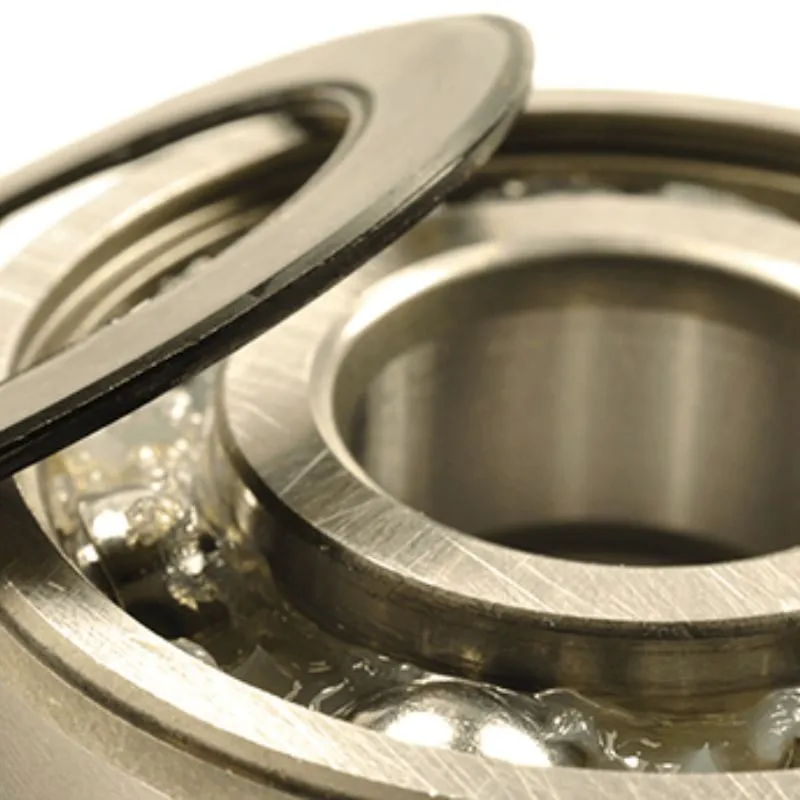
Sealed bearings help keep grease inside the bearing cavity. This allows the lubricant to remain around the rolling elements during operation, reducing grease loss and the need for frequent relubrication.
3. Reducing Wear and Extending Bearing Life
Contamination and insufficient lubrication are two common causes of bearing failure. By limiting contaminant entry and retaining lubricant, seals help reduce abrasive wear, corrosion, and friction-related damage.
However, sealing alone cannot guarantee a longer service life. Proper installation, load conditions, operating temperature, and lubrication quality also matter.
What Are the Different Types of Sealed Bearings?
Sealed bearings come in different designs. The main differences lie in how the seals interact with the bearing components and how much protection they provide.
1. Contact Sealed Bearings
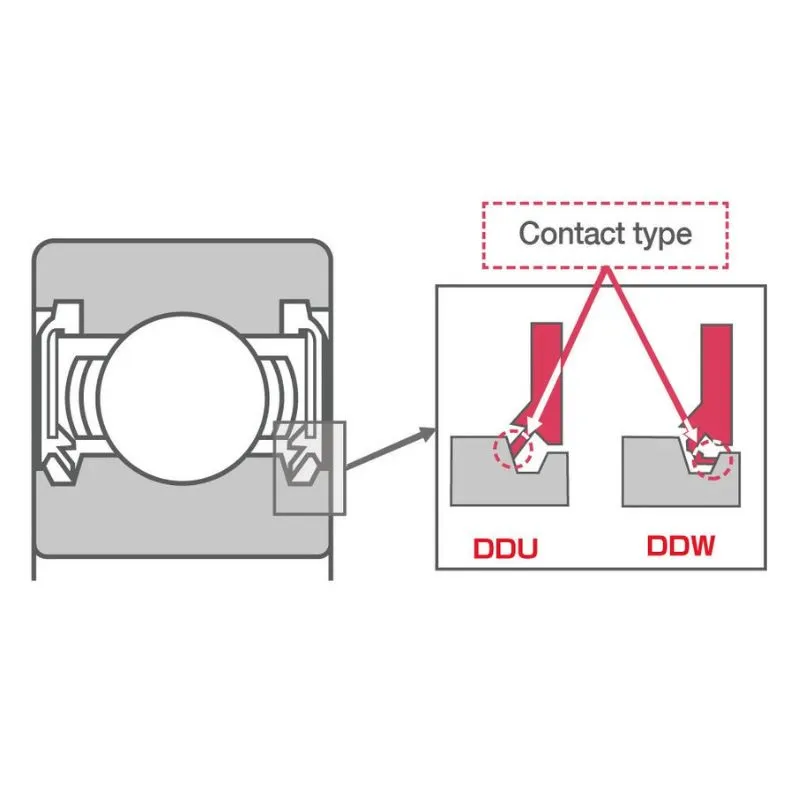
Contact seals physically touch the inner ring or a corresponding running surface. This contact creates a tighter barrier against dust, moisture, and other contaminants.
Rubber seals are commonly used in this design. They offer good contamination protection and help retain grease inside the bearing.
For example, a conveyor system in a dusty manufacturing facility may benefit from contact-sealed bearings. The seals help prevent fine particles from reaching the rolling elements and raceways.
Key characteristics:
- Good protection against dust and moisture.
- Effective grease retention.
- Higher friction than most non-contact designs.
- May have lower speed limits depending on seal design.
2. Non-Contact Sealed Bearings
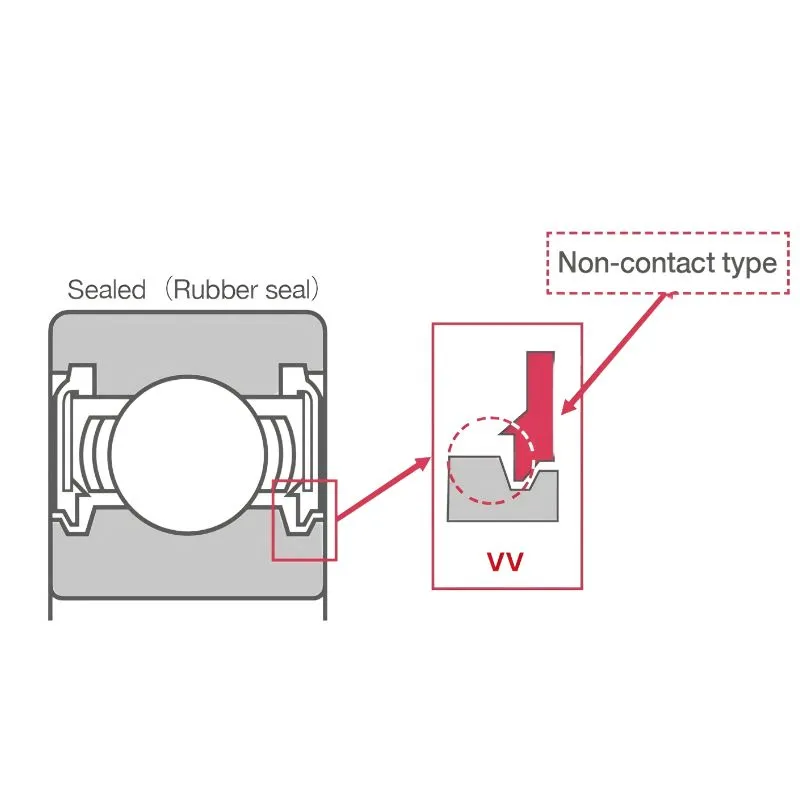
Non-contact seals create a small clearance between the seal and the rotating bearing component. Unlike contact seals, they do not continuously rub against the inner ring.
This design reduces friction and heat generation, making it suitable for applications where higher rotational speeds are important.
However, non-contact seals generally provide less protection against water and fine contaminants than well-designed contact seals.
Key characteristics:
- Low friction and reduced heat generation.
- Suitable for relatively high-speed applications.
- Good protection against larger particles.
- Generally less effective against moisture and fine contaminants than contact seals.
3. Rubber-Sealed Bearings
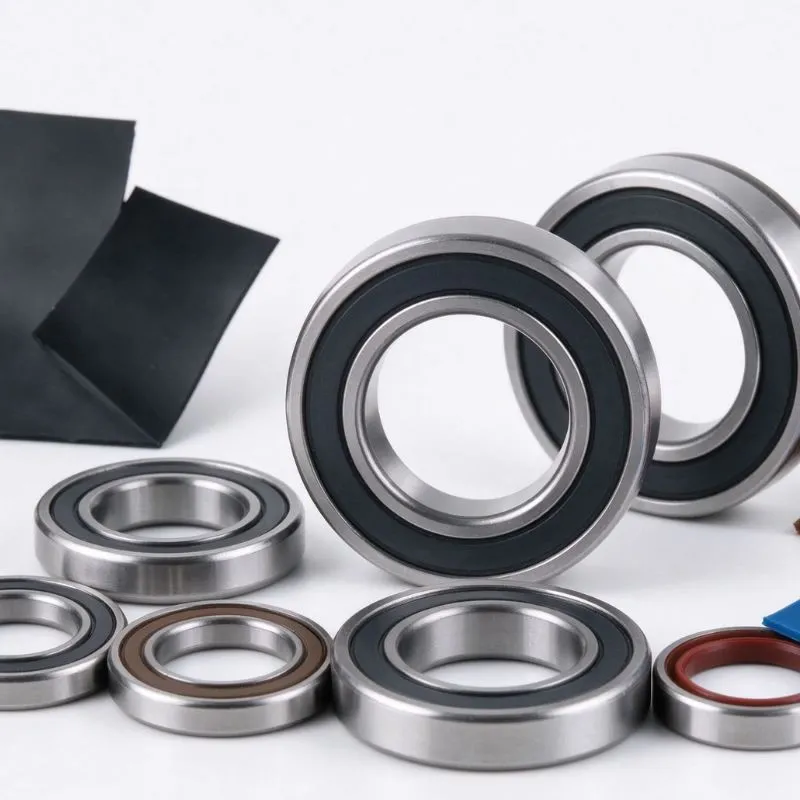
Rubber-sealed bearings use flexible sealing elements, commonly made from materials such as NBR or FKM. These materials are selected according to operating temperature, chemical exposure, and environmental conditions.
NBR seals are widely used in general industrial applications. FKM seals are often selected for environments involving higher temperatures or certain oils and chemicals.
For instance, a bearing operating near a warm engine may require a seal material with better heat resistance than one used in a standard indoor electric motor.
It is important to distinguish between seal structure and seal material. Rubber seals can be designed as either contact or non-contact seals.
What Are the Advantages of Sealed Bearings?
Sealed bearings offer several practical advantages, especially in applications where contamination, lubrication loss, and frequent maintenance are concerns.
1. Better Protection Against Contamination
Dust, dirt, water, and metal particles can damage bearing surfaces. Sealed bearings help prevent these contaminants from entering the internal cavity.
This is particularly useful in agricultural equipment, construction machinery, and industrial conveyors, where bearings are often exposed to harsh operating conditions.
2. Improved Lubricant Retention
Lubricant is essential for smooth bearing operation. Seals help keep grease inside the bearing and reduce leakage during rotation.
Better grease retention helps maintain lubrication around the rolling elements and raceways. It also reduces the risk of premature wear caused by lubricant loss.
3. Reduced Maintenance Requirements
Many sealed bearings are factory-lubricated and designed to operate without regular relubrication under specified conditions.
For example, an electric motor installed inside an industrial ventilation system may run continuously for long periods. Using suitable sealed bearings can reduce routine lubrication work and simplify maintenance planning.
4. Longer Potential Service Life
Contamination, corrosion, and inadequate lubrication can shorten bearing life. By helping control these factors, sealed bearings can improve operating reliability and reduce the risk of premature failure.
Of course, actual service life still depends on load, speed, temperature, installation quality, and operating conditions.
5. Lower Maintenance and Operating Costs
Reduced relubrication requirements mean less maintenance labor, fewer lubrication supplies, and potentially less equipment downtime.
In facilities with many motors, pumps, or conveyor rollers, these savings can add up over time. Fewer maintenance interventions also allow technicians to focus on other critical equipment.
Practical insight: The biggest advantage of sealed bearings is not simply that they have seals. It is that they combine contamination protection and lubricant retention in one compact design, helping equipment operate with less routine maintenance.
What Are the Disadvantages of Sealed Bearings?
Although sealed bearings offer excellent contamination protection and grease retention, they are not suitable for every application. Their sealing design can introduce certain limitations, especially in high-speed or high-temperature operating environments.
1. Higher Friction in Contact-Sealed Designs
Contact seals rub against the rotating bearing surface. This creates additional friction compared with non-contact seals or open bearings.
At high rotational speeds, this friction can generate extra heat and increase energy consumption. For applications requiring very high speeds, a non-contact sealing design may be a better option.
2. Potential Speed Limitations
The friction between contact seals and rotating components can limit the maximum operating speed of a bearing.
For example, a high-speed electric motor may require bearings with low-friction seals to control heat generation and maintain efficient operation.
Always check the manufacturer's speed ratings before selecting a sealed bearing.
3. Limited Relubrication Options
Many sealed bearings are factory-filled with grease and designed for long-term operation without additional lubrication. However, this also means that some designs cannot be easily regreased.
If the original lubricant deteriorates due to high temperatures or prolonged operation, replacing the bearing may be necessary rather than simply adding fresh grease.
4. Temperature and Material Limitations
Seal materials have specific temperature and chemical resistance limits. Excessive heat can cause seals to harden, crack, or lose their sealing effectiveness.
For example, standard NBR seals may not be suitable for applications exposed to sustained high temperatures. FKM or other specialized materials may be more appropriate, depending on the operating conditions.
5. Higher Initial Cost in Some Applications
Sealed bearings may cost more than comparable open bearings because of their additional sealing components and manufacturing requirements.
However, the initial purchase price is only part of the total cost. Reduced lubrication work, fewer maintenance interventions, and lower contamination-related failure risks may offset the difference over time.
Sealed vs. Shielded vs. Open Bearings: What's the Difference?
Sealed, shielded, and open bearings differ mainly in their level of protection and lubrication requirements. Understanding these differences helps you choose the right bearing for your operating environment.
The following table provides a quick comparison.
| Feature | Sealed Bearings | Shielded Bearings | Open Bearings |
|---|---|---|---|
| Structure | Rubber or polymer seals | Metal shields | No seals or shields |
| Contamination Protection | Good protection against dust and moisture, depending on seal design | Basic protection against larger particles | No integrated protection |
| Lubricant Retention | Generally good | Helps retain grease | Depends on the external lubrication system |
| Friction | Depends on whether seals contact the inner ring | Generally low | No seal-related friction |
| Maintenance | Often lower | Depends on operating conditions | May require more frequent lubrication |
| Typical Applications | Dusty or moisture-prone environments | Relatively clean environments | Enclosed or externally lubricated systems |
In simple terms, sealed bearings provide stronger contamination protection, shielded bearings offer basic protection with low friction, and open bearings are designed for applications where external lubrication and protection are available.
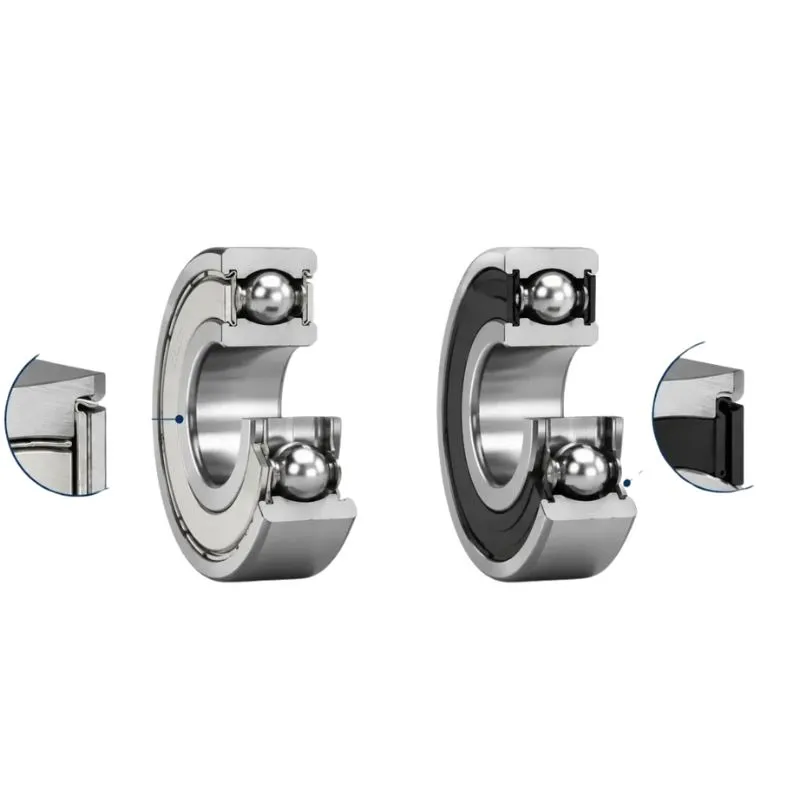
One common example is the difference between 2RS and ZZ bearings. A 2RS bearing typically has rubber seals on both sides, while a ZZ bearing has metal shields on both sides. These suffixes can vary between manufacturers, so always check the product specifications.
If you need a more detailed comparison of their structures, performance, and selection criteria, see our guide to sealed vs. shielded bearings.
Where Are Sealed Bearings Used?
Sealed bearings are widely used in equipment exposed to dust, moisture, grease loss, or other operating challenges. Their compact design and reduced maintenance requirements make them suitable for many industrial and commercial applications.
1. Automotive and Transportation Equipment
Sealed bearings are used in various automotive components, including wheel assemblies, motors, and auxiliary equipment.
Road dust, water splashes, and dirt can easily reach exposed components. Seals help protect bearing surfaces and retain lubricant during everyday operation.
2. Electric Motors and Fans
Electric motors and fans often operate for extended periods at relatively high speeds. Sealed bearings help retain grease and prevent airborne dust from entering the bearing.
For example, an industrial ventilation fan may run continuously inside a factory. Suitable sealed bearings help reduce lubrication requirements and support reliable operation.
3. Agricultural Machinery
Tractors, harvesters, seeders, and other agricultural machines frequently operate in dusty and muddy environments.
Soil, crop residue, and moisture can contaminate bearing components. Sealed bearings help keep these materials away from rolling elements and raceways.
4. Industrial Machinery and Conveyors
Conveyor systems, packaging equipment, and production machinery often contain multiple rotating components that require reliable bearing support.
Sealed bearings help protect against dust and production debris while reducing the need for frequent lubrication. This is especially useful in equipment that is difficult to access for routine maintenance.
5. Pumps and Gearboxes
Sealed bearings can be used in various pump and gearbox assemblies where lubricant retention and contamination control are important.
The appropriate design depends on factors such as operating temperature, rotational speed, load, and exposure to process fluids.
6. Food Processing and Material Handling Equipment
Food processing and material handling equipment may operate in environments involving moisture, frequent cleaning, and airborne particles.
Sealed bearings can help protect internal components from contamination. However, applications with direct washdown or strict hygiene requirements may need specialized sealing arrangements and food-grade lubricants.
Application tip: A sealed bearing is not automatically waterproof or suitable for every harsh environment. For equipment exposed to heavy water spray, chemicals, extreme temperatures, or frequent washdowns, check the seal material and the manufacturer's protection specifications before selecting a bearing.
How to Choose the Right Sealed Bearings?
Choosing the right sealed bearing involves more than matching its dimensions to your equipment. You also need to consider the operating environment, load, speed, temperature, and lubrication requirements.
Here are six important factors to consider before making a selection.
1. Operating Environment
Start by evaluating the conditions in which the bearing will operate. Consider exposure to dust, dirt, water, chemicals, and other contaminants.
For example, agricultural machinery working in muddy fields needs stronger contamination protection than an electric motor operating inside a clean factory.
For environments with frequent water exposure, consider bearings with suitable contact seals and water-resistant sealing materials.
2. Bearing Type and Seal Design
Different bearing types and sealing designs offer different performance characteristics. Contact seals generally provide stronger contamination protection, while non-contact seals are often preferred when lower friction is important.
You should also consider whether you need a deep groove ball bearing, cylindrical roller bearing, or another bearing type based on the load and movement requirements.
3. Operating Speed
Operating speed affects friction, heat generation, and seal performance. Contact seals may create additional friction at high speeds, potentially increasing operating temperatures.
If your equipment runs at high RPM, compare the manufacturer's limiting speed ratings and consider whether a low-friction sealing design is more suitable.
4. Operating Temperature
Temperature affects both lubricant performance and seal material durability. Excessive heat can cause grease to deteriorate and sealing materials to harden or deform.
For standard industrial conditions, NBR seals are commonly used. For applications involving higher temperatures or certain aggressive chemicals, FKM or other specialized materials may be more appropriate.
5. Load Requirements
Consider the radial and axial loads acting on the bearing. Different bearing designs have different load-carrying capacities.
For example, a conveyor roller may mainly experience radial loads, while a rotating assembly with axial forces may require a bearing designed to handle combined loading.
Always check the bearing's dynamic and static load ratings to ensure it can handle the expected operating conditions.
6. Bearing Dimensions and Specifications
Before purchasing, confirm the bearing's basic dimensions and technical specifications, including:
- Bore diameter: The inside diameter of the bearing.
- Outside diameter: The overall external diameter.
- Width: The bearing's axial thickness.
- Load ratings: Dynamic and static load capacities.
- Seal configuration: One-sided or two-sided sealing.
- Lubrication: Grease type and filling requirements.
Matching these specifications with your equipment helps avoid installation problems and premature bearing failure.
Selection tip: Imagine choosing a bearing for a conveyor operating in a dusty factory. A suitable contact-sealed bearing may provide better protection than a metal-shielded design. However, if the conveyor runs at very high speeds, friction and temperature ratings also need careful consideration.
Ultimately, the best sealed bearing is the one that matches your actual operating conditions, rather than simply the one with the highest level of sealing protection.
Do Sealed Bearings Need Lubrication and Maintenance?
Yes, sealed bearings still need lubrication, but many require less routine maintenance than open bearings. Most standard sealed ball bearings are factory-lubricated with grease before shipment.
The seals help retain this grease and protect it from external contamination. As a result, many sealed bearings can operate for extended periods without additional lubrication.
Do Sealed Bearings Come Pre-Lubricated?
Most standard sealed ball bearings are supplied with grease already inside. The manufacturer selects the lubricant and filling quantity according to the bearing design and intended operating conditions.
However, not every sealed bearing uses the same grease. Temperature, speed, load, and application requirements all influence lubricant selection.
Can You Regrease Sealed Bearings?
In most cases, standard double-sealed bearings are not designed for routine relubrication. Their seals help retain the original grease, and removing them may damage the sealing components.
Some specialized sealed bearings feature relubrication provisions. Always check the manufacturer's instructions before attempting to add grease or remove a seal.
How Often Should Sealed Bearings Be Replaced?
There is no fixed replacement interval for all sealed bearings. Their service life depends on operating speed, load, temperature, lubrication quality, contamination, and installation conditions.
A bearing running under moderate loads in a clean environment may last much longer than one exposed to continuous vibration, excessive heat, or heavy contamination.
Rather than relying only on a calendar schedule, monitor bearing condition and follow the equipment manufacturer's maintenance recommendations.
What Are the Signs of Sealed Bearing Failure?
Recognizing early warning signs can help prevent unexpected equipment downtime. Common symptoms include:
Unusual noise: Grinding, clicking, or rumbling sounds during operation.
Excessive heat: The bearing or surrounding housing becomes unusually hot.
Increased vibration: The equipment develops abnormal vibration or rough rotation.
Visible grease leakage: Grease escapes from the bearing seals.
Rough rotation: The bearing no longer rotates smoothly.
How Can You Maintain Sealed Bearings?
Although sealed bearings require less frequent lubrication, basic maintenance remains important.
- Keep the bearing housing and surrounding areas clean.
- Avoid excessive installation force that could damage the seals.
- Prevent excessive loads and operating temperatures.
- Monitor unusual noise, vibration, and heat.
- Replace bearings when they show signs of damage or wear.
- Follow the manufacturer's installation and maintenance guidelines.
Maintenance reminder: Sealed does not mean maintenance-free. The seals reduce contamination and grease loss, but regular equipment inspections are still essential for reliable operation.
Frequently Asked Questions
Here are some common questions about sealed bearing design, lubrication, and selection.
How Do You Know If a Bearing Is Sealed?
Check both sides of the bearing. Sealed bearings typically have rubber or polymer sealing elements covering the openings around the inner ring. Common markings include 2RS or 2RS1, although suffixes vary by manufacturer. For example, a 6204-2RS bearing typically has rubber seals on both sides.
Do Sealed Bearings Need to Be Greased?
Most standard sealed ball bearings come pre-lubricated with grease and do not require regular regreasing. The seals help retain the factory-filled lubricant. Additional grease is only needed if the bearing is specifically designed for relubrication.
Are Sealed Bearings Better Than Open Bearings?
For applications exposed to dust, dirt, or moisture, sealed bearings are generally a better choice because they provide built-in contamination protection and retain grease. Open bearings are more suitable when external lubrication and sealing systems are available, such as inside certain enclosed industrial assemblies.
Are Sealed Bearings Watertight?
No. Standard sealed bearings are not necessarily watertight. Their ability to resist water depends on the seal design, material, and water exposure conditions. For example, a standard 2RS bearing can resist splashes, but it should not automatically be used for continuous water immersion or high-pressure washdown.
Can I Repack a Sealed Bearing?
Most standard sealed bearings are not designed to be repacked. Their seals are intended to retain factory-filled grease, and removing them can damage the sealing lips. If the grease has deteriorated or the bearing shows signs of wear, replacing the bearing is usually the better option.
Is a Sealed Bearing Better Than a Ball Bearing?
These are not directly comparable categories. A sealed bearing can be a ball bearing. "Ball bearing" describes the rolling elements, while "sealed" describes its sealing arrangement. For example, a 6204-2RS is a sealed deep groove ball bearing. The right choice depends on the load, speed, contamination level, and operating environment.
Conclusion
Sealed bearings play an important role in protecting internal components from dust, moisture, and other contaminants while retaining lubricant. They are widely used in electric motors, automotive equipment, agricultural machinery, and industrial systems. However, choosing the right bearing requires careful consideration of seal design, operating speed, load capacity, temperature, and lubrication requirements.
At BOM, we are a China-based bearing manufacturer specializing in standard, non-standard, and integrated bearing solutions. With over 20 years of industry experience, we provide bearing solutions for automation, robotics, agricultural machinery, and various industrial applications. Whether you need standard ball bearings or customized bearing designs, our team can help evaluate your application requirements and identify suitable solutions.
Looking for a reliable bearing manufacturing partner? Contact BOM to discuss your requirements, including bearing dimensions, sealing configurations, operating conditions, and expected performance. Send us your specifications today to get professional technical support and a customized quotation.